

Common Smartphone Repair Terms: What Every DIYer Needs
Most british DIY smartphone repair enthusiasts agree that decoding technical jargon is one of the biggest hurdles when starting out. Understanding essential terms directly impacts your chances of a successful fix and finding the right replacement parts. Nearly half of repair mistakes come from misunderstandings of basic component names or functions. This quick guide helps you build confidence by clarifying commonly used repair terms so you can upgrade your smartphone skills with every project.
Table of Contents
- Defining Essential Smartphone Repair Terms
- Different Types of Replacement Parts Explained
- How Key Repair Components Function
- Understanding Oem, Aftermarket, And Refurbished
- Common Mistakes And Risks In Diy Repairs
Key Takeaways
| Point | Details |
|---|---|
| Understand Key Terms | Familiarise yourself with essential smartphone repair terminology to diagnose and troubleshoot effectively. |
| Choose Quality Parts | Prioritise OEM parts for reliability, while being cautious with aftermarket and refurbished options to avoid performance issues. |
| Recognise Repair Risks | Mitigate risks of DIY repairs by using proper tools and anti-static equipment, and ensure you understand the device architecture. |
| Maintain Warranty Awareness | Be mindful that unauthorized repairs can void warranties and lead to data loss, necessitating careful handling during repairs. |
Defining Essential Smartphone Repair Terms
Navigating the world of smartphone repair requires understanding a complex vocabulary that can feel like a foreign language to newcomers. Whether you are a DIY enthusiast or an aspiring technician, mastering these key terms is crucial for successful device restoration. Mobile phone repair terminology encompasses a wide range of technical concepts that help professionals diagnose, troubleshoot, and resolve device issues effectively.
Some fundamental terms every smartphone repair enthusiast should know include baseband (the specialised processor managing cellular communications), digitizer (the layer responsible for translating touch input into digital signals), and bootloader (the low-level software that initializes hardware during device startup). Understanding these components helps diagnose potential problems more accurately. For instance, a faulty digitizer might cause unresponsive touch interactions, while bootloader issues can prevent your device from booting correctly.
Additionally, repair terminology extends to hardware components and diagnostic techniques. Capacitors store electrical charge, charging ICs manage power delivery, and ESD (Electrostatic Discharge) represents a critical safety consideration during repairs. Professionals must understand these terms to prevent accidental device damage and perform precise interventions. Learning to recognise specific components and their functions transforms a novice into a skilled repair technician.
Pro tip: Always keep a repair terminology reference guide nearby during your smartphone repair projects to quickly decode technical jargon and prevent misunderstandings.
Here’s a quick reference guide to essential smartphone repair terms and their roles:
| Term | Main Function | Repair Relevance |
|---|---|---|
| Baseband | Manages cellular communication | Diagnoses connectivity faults |
| Digitiser | Converts touch to digital signals | Identifies touch input issues |
| Bootloader | Starts hardware and system software | Assesses boot failures |
| Capacitor | Stores and releases electrical charge | Pinpoints power fluctuations |
| Charging IC | Controls charging and power flow | Resolves battery/charging faults |
| ESD | Prevents damage from static electricity | Ensures safe component handling |
Different Types of Replacement Parts Explained
Smartphone repairs demand a nuanced understanding of various replacement components, each playing a critical role in device functionality. Basic smartphone components represent a complex ecosystem of interconnected parts that require precise knowledge and careful handling. Repair enthusiasts must familiarise themselves with the intricate landscape of potential replacement options to ensure successful device restoration.
The most frequently replaced components include screens, batteries, charging ports, and camera modules. Screen replacements are particularly common, with different technologies like LCD, OLED, and AMOLED presenting unique challenges. Lithium-ion batteries degrade over time, necessitating periodic replacement, while charging ports suffer from mechanical wear due to repeated cable insertions. Camera modules can be damaged through physical impacts or internal component failures, requiring specialised knowledge to replace effectively.
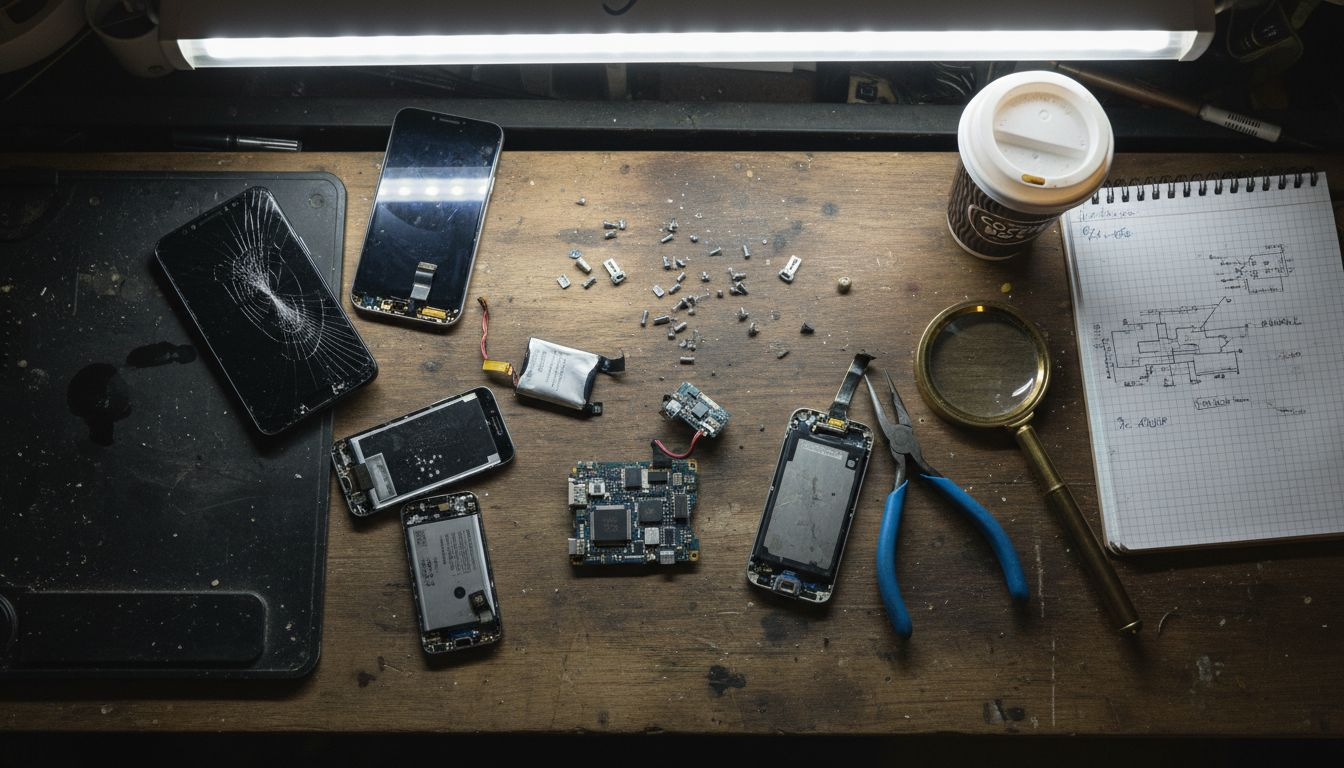
Moreover, smartphone repairs extend beyond visible components to include critical internal parts like motherboards, logic boards, and flex cables. These intricate components demand advanced technical understanding and precision. Mobile parts replacement techniques vary significantly depending on the specific device model, manufacturer specifications, and the extent of damage. Professional-grade repair work involves not just replacing parts, but understanding their complex interactions and potential compatibility issues.
Pro tip: Always verify the exact model compatibility and source high-quality replacement parts from reputable suppliers to minimise the risk of further device damage during repairs.
How Key Repair Components Function
Understanding the intricate functionality of smartphone components is crucial for successful repairs. Smartphone reparability assessment reveals the complex interdependence of various parts that enable device performance. Each component plays a unique role in maintaining the overall operational integrity of modern mobile devices, requiring precise knowledge and careful handling.
The display assembly represents a critical repair component, combining multiple layers including the protective glass, digitiser, and LCD or OLED panel. This intricate system translates physical touch inputs into digital signals, serving as the primary user interface. Batteries function as the device’s power source, utilising lithium-ion technology to store and distribute electrical energy. These components degrade over time, with factors like charging cycles, temperature, and usage patterns affecting their longevity and performance.
Internal components such as logic boards, processors, and communication modules form the smartphone’s technological core. These sophisticated electronic systems manage everything from cellular communications to data processing, graphics rendering, and system-wide operations. Maintenance and component replacement requires understanding how these interconnected parts communicate and support each other, ensuring the device’s overall functionality remains intact during repair processes.
Pro tip: Always use anti-static equipment and work in a clean, well-lit environment when handling delicate smartphone components to prevent accidental damage and ensure successful repairs.
Understanding OEM, Aftermarket, And Refurbished
Part quality considerations in smartphone repairs reveal critical distinctions between three primary component types. OEM (Original Equipment Manufacturer) parts represent the gold standard in smartphone replacement, manufactured directly by the device’s original producer. These components guarantee exact specifications, precise compatibility, and maintain the device’s original performance characteristics.
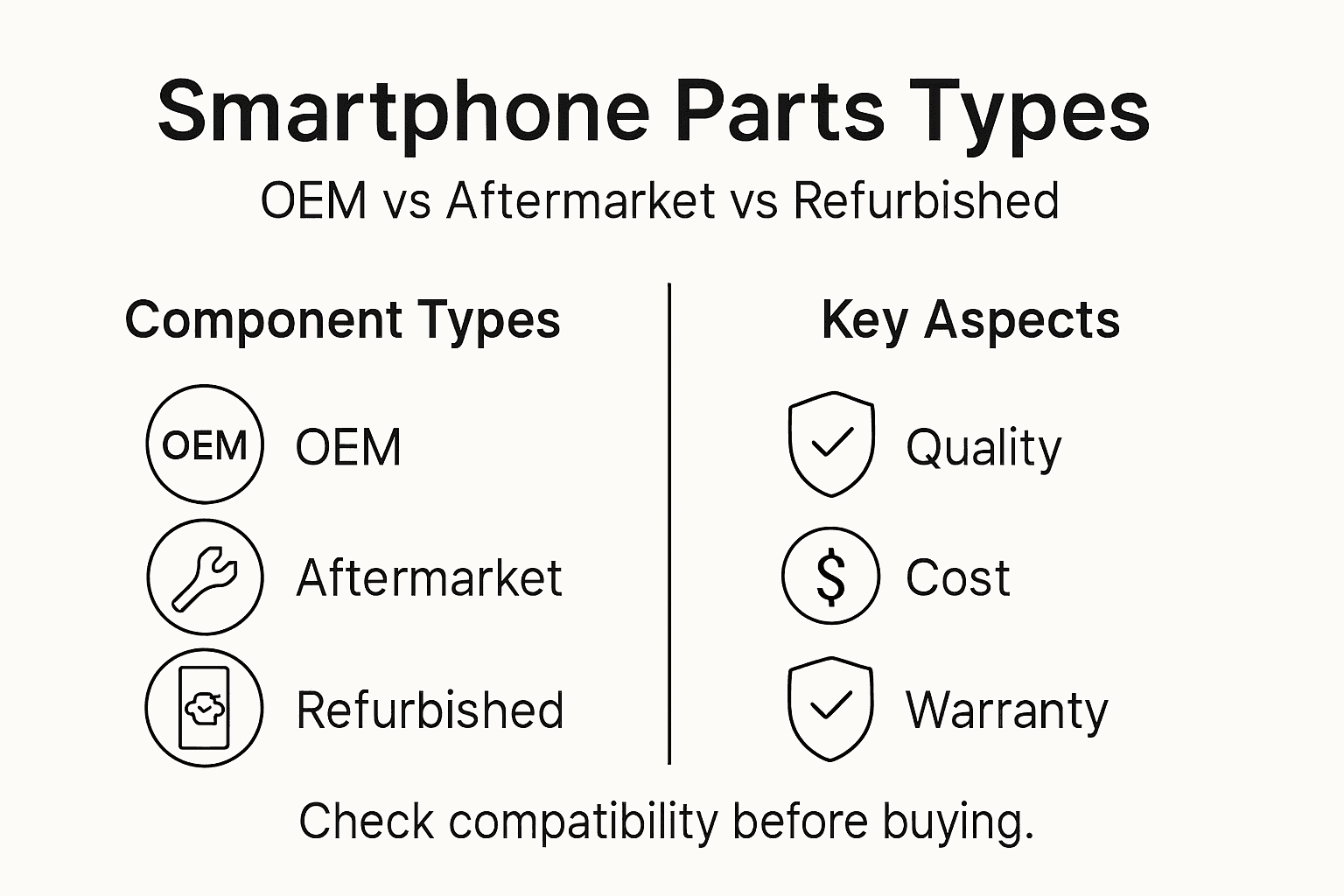
In contrast, aftermarket parts are third-party manufactured alternatives that offer more economical repair solutions. These components vary significantly in quality, ranging from near-original performance to substantially lower-grade alternatives. Pricing typically reflects their manufacturing standards, with budget options presenting potential risks of reduced functionality or shorter operational lifespans. OEM parts selection criteria emphasise strict manufacturing standards and guaranteed device integrity as primary considerations for discerning repair professionals and enthusiasts.
The third category, refurbished parts, represents restored components that have been professionally reconditioned to functional status. These parts offer an environmentally conscious and budget-friendly alternative, particularly attractive for consumers seeking cost-effective repair solutions. Refurbished components undergo comprehensive testing and restoration processes, ensuring they meet acceptable performance standards while providing significant cost savings compared to brand-new replacement parts.
Pro tip: Always verify the warranty and return policy when selecting non-OEM replacement parts, and prioritise reputable suppliers with transparent quality assurance processes.
Compare the main attributes of OEM, aftermarket, and refurbished parts:
| Part Type | Quality Level | Cost Range | Warranty Availability |
|---|---|---|---|
| OEM | Highest, original | Expensive | Manufacturer-backed |
| Aftermarket | Variable, third-party | Affordable to low | Limited or none |
| Refurbished | Restored, tested | Moderate to low | Seller-specific |
Common Mistakes And Risks In DIY Repairs
DIY repair risks present significant challenges for smartphone enthusiasts attempting independent repairs. The most critical dangers involve irreversible damage to delicate electronic components, which can transform a simple repair into a costly replacement scenario. Inexperienced technicians often underestimate the precision required when handling intricate smartphone internals, leading to potential catastrophic failures.
Common mistakes include improper tool usage, electrostatic discharge damage, and inadequate component understanding. Electrostatic sensitivity represents a particularly insidious risk, where even minor static electricity can permanently destroy sensitive electronic circuits. Practitioners must use proper anti-static equipment and work in controlled environments to mitigate these risks. Incorrect tool selection can also cause mechanical damage, with inappropriate screwdrivers or prying implements potentially fracturing circuit boards or breaking delicate connectors.
The most significant risks extend beyond physical damage to potential warranty voiding and data loss. Many manufacturers explicitly state that unauthorized repairs can immediately terminate product warranties, leaving consumers financially vulnerable. Furthermore, incorrect repair attempts may result in complete data destruction, making professional data recovery both challenging and expensive. Precise understanding of device architecture, specialised tools, and meticulous technique are essential for minimising these substantial risks.
Pro tip: Invest in professional-grade anti-static equipment and practice on older, non-essential devices before attempting repairs on your primary smartphone.
Master Smartphone Repair with Quality Parts from Buy2fix
The article highlights the challenge every DIY smartphone repairer faces understanding essential terms like digitiser, charging IC, and bootloader while navigating complex repairs. The fear of damaging delicate components or choosing low-quality replacement parts can be overwhelming. At Buy2fix, we understand these pain points and provide a trusted one-stop shop offering the highest quality mobile phone repair parts, including LCD screens, charging ports, flex cables, and motherboard components. Our comprehensive inventory supports popular brands such as iPhone, Samsung Galaxy, and Huawei, ensuring you find exactly what you need.
Take control of your repairs with confidence and avoid common mistakes by sourcing genuine or premium quality aftermarket parts from Buy2fix. Benefit from free UK Mainland shipping, a 30-day return policy, and one-year warranty on all items. Ready to upgrade your repair skills with reliable components and expert service Visit Buy2fix Landing Page and explore our extensive range of Mobile Phone Repair Parts to start your next successful repair today.
Frequently Asked Questions
What is a baseband in smartphone repair?
The baseband is a specialised processor responsible for managing all cellular communications within a smartphone. Understanding its function is crucial for diagnosing connectivity issues.
What does a digitiser do in a smartphone?
A digitiser is the layer that translates touch inputs into digital signals, enabling interaction with the device’s display. If it malfunctions, the screen may become unresponsive to touch.
Why is it important to understand different types of replacement parts?
Understanding the types of replacement parts—OEM, aftermarket, and refurbished—helps you choose the right components for repairs while ensuring compatibility and maintaining device performance.
What are the risks associated with DIY smartphone repairs?
Common risks in DIY repairs include irreversible damage to delicate components, voiding warranties, and potential data loss. Using the correct tools and techniques is essential to minimise these risks.
Recommended
Let customers speak for us
Took a while to get here but it was all good, watch looks brand new after replacement

What a fantastic 👏🏻 stylish case that has helped my phones temperature in the heatwave!!
Perfect 👌🏻 also it's cool as f##k

I love it!

The acid test of any company is how they respond when things go wrong. The Buy2Fix team were efficient in dealing with my emails and resolved the issue to my complete satisfaction

For Samsung Galaxy A26 SM-A266B Original Earpiece Speaker with Cable

Very good communication throught. Good product

Well made part very strong easy to fit great value for the money

Well packed, with fast shipping :)

Exactly what the doctor ordered…great color, comfort, and durability. Trust this watch band!

Brilliant strap, second purchase, bought bracelet before. Excellent value. Thank you

Great item for splitting your Audio signal

Outstanding product!
Next level customer service.

Satisfied will use it soon hoping it will work...

Very satisfied but the delivery needs to get more faster...

Good price,quick delivery
