

Identifying Genuine Phone Parts – Ensuring Quality Repairs
More than 60 percent of British smartphone repair jobs face setbacks due to wrongly sourced parts. For the skilled technician or small business owner, separating fact from fiction about genuine phone components can directly impact customer trust and device reliability. This article addresses common myths, explains the real differences among part types, and equips British professionals with practical tips to safeguard every repair with authentic quality.
Table of Contents
- Defining Genuine Phone Parts And Common Myths
- Distinguishing Genuine, Oem, And Aftermarket Parts
- Essential Features Of Authentic Components
- Risks Of Counterfeit Parts In Repairs
- Best Practices For Verifying Authenticity
Key Takeaways
| Point | Details |
|---|---|
| Genuine Parts Definition | Genuine phone parts are those sourced directly from the original equipment manufacturer or are engineered to meet original specifications. |
| Distinction Among Parts | It’s essential for technicians to differentiate between genuine, OEM, and aftermarket parts due to their varying impacts on performance and warranty. |
| Counterfeit Risks | The use of counterfeit parts can lead to significant risks including device failure and compromised user safety. |
| Verification Best Practices | Implementing robust verification methods is crucial for ensuring component authenticity to safeguard device functionality. |
Defining Genuine Phone Parts and Common Myths
Understanding what constitutes a genuine phone part requires recognising the nuanced landscape of mobile device repair. Not all replacement components are created equal, and distinguishing between authentic manufacturer parts and high-quality alternatives is crucial for professional repair technicians. Credible repair sources consistently highlight that genuine parts originate directly from the original equipment manufacturer (OEM) or are precisely engineered to match original specifications.
Many repair professionals encounter persistent myths surrounding mobile phone components. The most prevalent misconception is that only manufacturer-authorised service centres can provide quality repairs. In reality, certified third-party repair shops can access and utilise genuine or equivalent high-performance parts that meet stringent technical standards. Professional repair networks demonstrate that expertise and component quality matter more than brand-specific service locations.
To identify genuine phone parts, technicians should focus on several key indicators. Authentic components typically feature:
- Precise manufacturing tolerances
- Matching original device specifications
- Consistent material quality
- Verifiable serial numbers or manufacturer markings
- Compatibility with device firmware and software systems
Expert Tip: Always cross-reference part specifications with manufacturer technical documentation and maintain a trusted network of verified parts suppliers to ensure consistent repair quality.
Distinguishing Genuine, OEM, and Aftermarket Parts
Understanding the critical differences between genuine, OEM, and aftermarket phone parts is essential for professional repair technicians seeking to maintain high-quality device restoration standards. Detailed technical analyses reveal that these component categories represent distinctly different manufacturing approaches, each with unique implications for device performance, reliability, and long-term functionality.

Original Equipment Manufacturer (OEM) parts represent components produced directly by the device’s original manufacturer, guaranteeing precise engineering standards and complete compatibility. In contrast, aftermarket parts are manufactured by third-party companies, which can result in significant variations in quality, performance, and technical specifications. Comprehensive industry research demonstrates that while aftermarket components may offer cost advantages, they frequently compromise device integrity and potential warranty coverage.
To effectively distinguish between these part categories, repair professionals should evaluate several critical factors:
- Manufacturing origin and certification
- Precise component specifications
- Material quality and durability
- Compatibility with specific device models
- Manufacturer warranty implications
- Performance consistency under various operational conditions
Key identification techniques include:
- Examining manufacturer packaging and markings
- Verifying part serial numbers against official databases
- Assessing material composition and engineering precision
- Consulting manufacturer technical documentation
- Reviewing component testing and certification records
Expert Tip: Maintain a comprehensive reference library of manufacturer specifications and invest in relationships with reputable parts suppliers to ensure consistent, high-quality repair outcomes.
The following table highlights critical differences and business impacts of Genuine, OEM, and Aftermarket phone parts:
| Part Type | Manufacturing Source | Device Performance Impact | Warranty Implications |
|---|---|---|---|
| Genuine | Direct from device manufacturer | Optimal reliability | Full warranty continuity |
| OEM | Manufacturer’s authorised supplier | High compatibility | Generally maintained |
| Aftermarket | Third-party, non-authorised provider | Variable, may degrade | Risk of voided warranty |
Essential Features of Authentic Components
Identifying authentic mobile phone components requires a sophisticated understanding of technical and visual indicators that distinguish genuine parts from substandard alternatives. Professional diagnostics reveal that genuine components possess multiple layers of verification beyond surface-level appearances.
Authentic phone parts demonstrate consistent characteristics that professional technicians can systematically evaluate. These critical attributes include precise manufacturing tolerances, exceptional material quality, comprehensive performance consistency, and precise engineering alignment with original device specifications. Beyond visual inspection, genuine components must maintain rigorous standards of electrical compatibility, thermal performance, and structural integrity that aftermarket alternatives frequently fail to replicate.
Key features distinguishing authentic components encompass:
- Manufacturer-specific serial number sequences
- Precision-engineered surface textures
- Exact dimensional measurements
- Consistent material composition
- Manufacturer-specific packaging and documentation
- Holographic or laser-etched authentication markers
- Seamless software and firmware compatibility
Technical verification techniques for confirming component authenticity include:
- Cross-referencing serial numbers with manufacturer databases
- Conducting comprehensive diagnostic software tests
- Performing detailed visual and microscopic inspections
- Measuring electrical performance characteristics
- Evaluating thermal and stress resistance properties
Pro Tip: Develop a systematic verification protocol that combines visual, technical, and diagnostic assessments to ensure absolute component authenticity.
Risks of Counterfeit Parts in Repairs
Counterfeit mobile phone components represent a significant threat to device performance, user safety, and long-term technological reliability. Understanding aftermarket part risks reveals multiple critical challenges that professional repair technicians must carefully navigate to protect both device functionality and customer satisfaction.
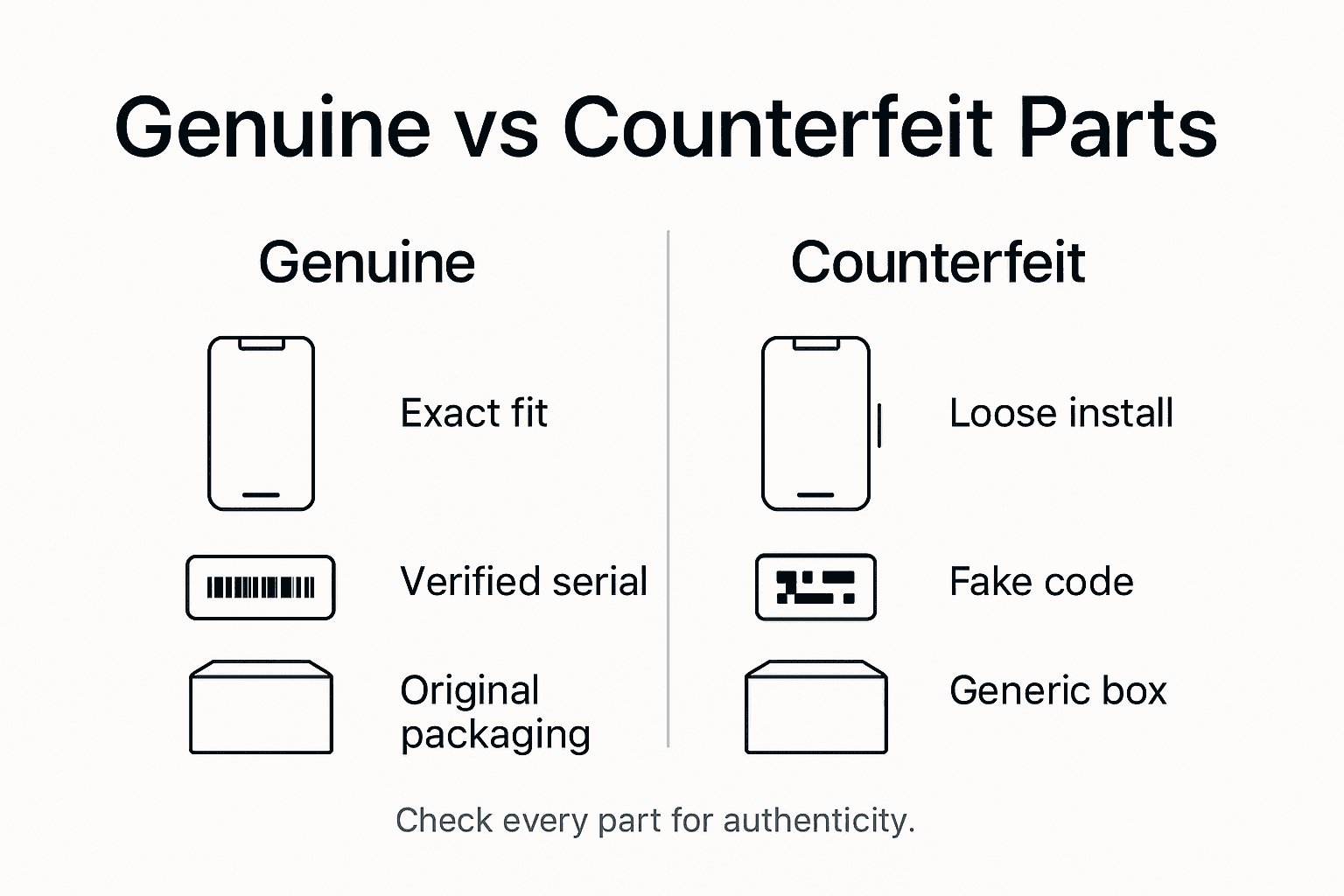
Unlike genuine components, counterfeit parts introduce multiple systemic risks that extend far beyond initial installation. These substandard components frequently compromise electrical integrity, thermal management, and structural stability. Potential consequences include reduced battery life, unpredictable device performance, increased susceptibility to overheating, diminished signal reception, and catastrophic hardware failures that can render expensive smartphones completely non-functional.
Specific risks associated with counterfeit phone parts include:
- Electrical short-circuit potential
- Compromised internal component compatibility
- Reduced mechanical durability
- Inferior material composition
- Potential data security vulnerabilities
- Voided manufacturer warranties
- Unpredictable performance degradation
The most significant areas of vulnerability for counterfeit components involve:
- Battery and power management systems
- Display and touch-sensitive interfaces
- Motherboard and internal connectivity modules
- Camera and imaging sensor assemblies
- Charging and data transfer ports
Pro Tip: Implement rigorous component authentication protocols and maintain comprehensive supplier documentation to mitigate the risks associated with potentially substandard replacement parts.
For quick reference, here are major risks linked to counterfeit mobile components and their effect on repairs:
| Risk Area | Typical Counterfeit Consequence | Business/Technical Impact |
|---|---|---|
| Power management | Electrical shorts, battery failure | Increased repair callbacks |
| Device connectivity | Unstable performance, signal loss | Damaged customer reputation |
| Data security | Potential vulnerabilities | Risk of data breaches |
| Warranty coverage | Voided manufacturer guarantee | Loss of service protections |
Best Practices for Verifying Authenticity
Ensuring the authenticity of mobile phone components requires a comprehensive, methodical approach that goes beyond superficial visual inspection. Professional mobile part protection strategies demand rigorous verification techniques that safeguard device performance and customer investments.
Professional repair technicians must develop a multi-layered authentication protocol that incorporates technical, visual, and documentary evidence. This systematic approach involves examining packaging integrity, verifying manufacturer documentation, conducting detailed physical inspections, and performing comprehensive diagnostic tests. Each verification step serves as a critical checkpoint to eliminate the risk of incorporating counterfeit or substandard components into device repairs.
Key verification methods include:
- Examining holographic authentication markers
- Cross-referencing serial number databases
- Analysing packaging print quality and consistency
- Verifying manufacturer quality control stamps
- Conducting electrical performance diagnostics
- Comparing component specifications against official technical documentation
- Assessing material composition and manufacturing precision
Technical authentication techniques demand systematic investigation through:
- Visual microscopic component analysis
- Electrical resistance and conductivity testing
- Thermal performance assessments
- Firmware and software compatibility checks
- Material composition spectroscopic analysis
Pro Tip: Develop a standardised authentication checklist and invest in precision diagnostic equipment to create a comprehensive component verification workflow.
Guarantee Authenticity and Superior Quality with Buy2fix
The challenge of identifying genuine phone parts and avoiding counterfeit components is critical for anyone committed to quality repairs. As outlined in the article, pinpointing authentic components requires recognising precise manufacturing tolerances, verified serial numbers, and high compatibility standards — all vital to safeguarding device performance and customer trust. At Buy2fix, we understand these pain points deeply which is why we offer a comprehensive range of original and best quality aftermarket parts that meet rigorous quality control. Whether you need LCD screens, camera modules, or charging ports for leading brands like iPhone and Samsung Galaxy, our carefully sourced inventory supports your professional repair standards.
Do not risk warranty issues or unpredictable device failures due to counterfeit parts. Explore our extensive stock of mobile phone repair parts at Buy2fix today, benefit from free UK Mainland shipping, and enjoy the security of our one-year warranty. Equip yourself with genuine components tested for material quality and performance compatibility. Visit our Mobile Phone Repair Parts collection now to elevate your repair solutions. Take control of your repair quality and act now to maintain your reputation and customer satisfaction.
Frequently Asked Questions
What are genuine phone parts?
Genuine phone parts are components that originate directly from the original equipment manufacturer (OEM) or are precisely engineered to meet original specifications, ensuring quality and compatibility with the device.
How can I identify genuine phone parts?
To identify genuine phone parts, look for precise manufacturing tolerances, matching original device specifications, verifiable serial numbers or manufacturer markings, and consistent material quality.
What is the difference between OEM and aftermarket phone parts?
OEM parts are produced directly by the original manufacturer, ensuring high quality and compatibility, while aftermarket parts are made by third-party companies and may vary significantly in quality and performance.
What are the risks of using counterfeit phone parts?
Using counterfeit phone parts can lead to electrical shorts, reduced mechanical durability, compromised internal compatibility, decreased device performance, potential data security vulnerabilities, and voided manufacturer warranties.
Recommended
Let customers speak for us
Well made part very strong easy to fit great value for the money

Well packed, with fast shipping :)

Exactly what the doctor ordered…great color, comfort, and durability. Trust this watch band!

Brilliant strap, second purchase, bought bracelet before. Excellent value. Thank you

Great item for splitting your Audio signal

Outstanding product!
Next level customer service.

Very satisfied but the delivery needs to get more faster...

Good price,quick delivery

Best phone case ever! This is my second one as I broke my first. Would defo recommend

Great fitting Apple Watch bands

For Apple Watch Ultra 3 / 2 / 1 49mm RedPepper Armor Metal Case Integrated Silicone Watch Band(Steel Black White)

Good price and quick postage

Perfect fit.

Absolutely necessary

Second Purchase and still a very happy customer. Keep up the good work.
