

Mobile car audio near me: your 2026 installation guide
TL;DR:
- Mobile car audio installation provides expert sound system upgrades delivered directly to your home or workplace, eliminating the need for shop visits. Choosing certified installers with measurement tools and proper wiring ensures quality results, especially for modern vehicles requiring integration modules. Mobile installation offers convenience, flexible scheduling, and comparable quality to traditional shops for most upgrades, with costs varying based on system complexity and vehicle make.
Mobile car audio near me is a professional car sound system installation service that comes directly to your home, workplace, or driveway, combining expert-level setup with the convenience of not moving your vehicle at all. Rather than dropping your car at a shop and waiting days, a qualified installer arrives with the tools, hardware, and expertise to transform your in-car sound on your schedule. Installers typically carry DSP (digital signal processor) software, RTA (real-time analyser) microphones, premium OFC (oxygen-free copper) wiring kits, and integration modules for modern vehicles. The growing popularity of mobile installs reflects a genuine shift in what car owners expect: quality results without the inconvenience of traditional shop visits.
What services do mobile car audio installers near me offer?
Mobile car audio installers cover a broader range of work than most people expect. The service goes well beyond swapping a head unit, and understanding the full scope helps you plan your upgrade properly.
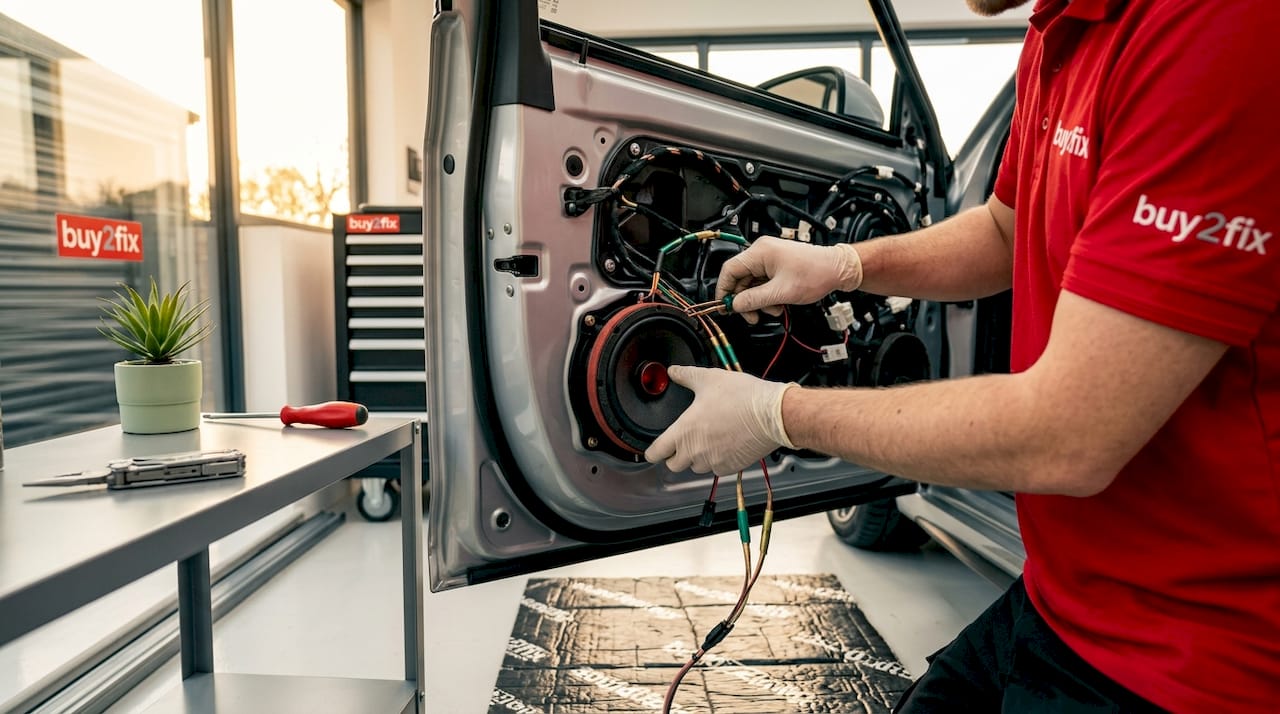
Speaker replacement and upgrades are the most common request. A skilled installer will remove factory speakers, assess the door cavity for deadening requirements, and fit aftermarket units from brands such as Focal, JL Audio, or Hertz. Proper fitment rings and acoustic foam are part of a quality job, not optional extras.
Head unit and stereo system swaps involve replacing the factory radio with an aftermarket unit from Alpine, Pioneer, or Sony. On modern vehicles, this often requires a steering wheel control adaptor and a CANBUS interface to retain factory features such as parking sensors and climate display.
The full list of services a reputable mobile installer should offer includes:
- Amplifier installation and power wiring
- Subwoofer and enclosure fitting
- DSP tuning using RTA microphones for accurate frequency calibration
- Sound deadening and acoustic treatment
- Reversing camera and parking sensor integration
- Dash cam and GPS tracker fitting
Pro Tip: Ask your installer whether they carry sound deadening material such as Dynamat or STP Gold on the day. Fitting it during a speaker install adds minimal time but makes a significant difference to bass response and road noise.
Professional system planning for power, grounding, cable routing, and fitment is what separates a great install from a mediocre one. Skipping this planning stage is the single biggest cause of rattles, distortion, and blown components.
How do you choose a mobile car audio installer near me?
Choosing the right installer matters more than choosing the right equipment. A poor installation ruins even the best hardware, so apply these criteria before you book.
-
Ask about certifications and training. Installers with MECP (Mobile Electronics Certified Professional) accreditation have passed standardised tests on wiring, signal theory, and vehicle integration. This is the industry benchmark.
-
Confirm they use measurement tools. Any installer claiming to tune a DSP without an RTA microphone is guessing. Certification and proper measurement tools are the clearest indicators of professional-grade work.
-
Request a written labour warranty. A confident installer backs their work in writing. Verbal promises are worthless if a wiring fault develops three months later.
-
Ask to see photos of previous installations. Clean cable routing, proper use of heat-shrink connectors, and tidy amplifier rack builds are visible proof of care and skill.
-
Clarify the wiring specification. OFC (oxygen-free copper) wiring carries current more efficiently and lasts longer than CCA (copper-clad aluminium). CCA is cheaper but corrodes faster and can cause voltage drop under load, which degrades amplifier performance.
-
Check vehicle protection practices. A professional installer uses seat covers, floor mats, and panel removal tools that do not scratch trims. Ask directly how they protect your vehicle during the job.
Pro Tip: Quality consultations focus on your listening goals and how you use the vehicle rather than pushing specific products. If an installer jumps straight to upselling without asking questions, treat that as a warning sign.
Smart evaluation questions about warranties, tools, and wiring standards reduce the risk of post-installation problems such as rattles, interference, or blown components significantly.
Mobile installation vs traditional shop: which is better?
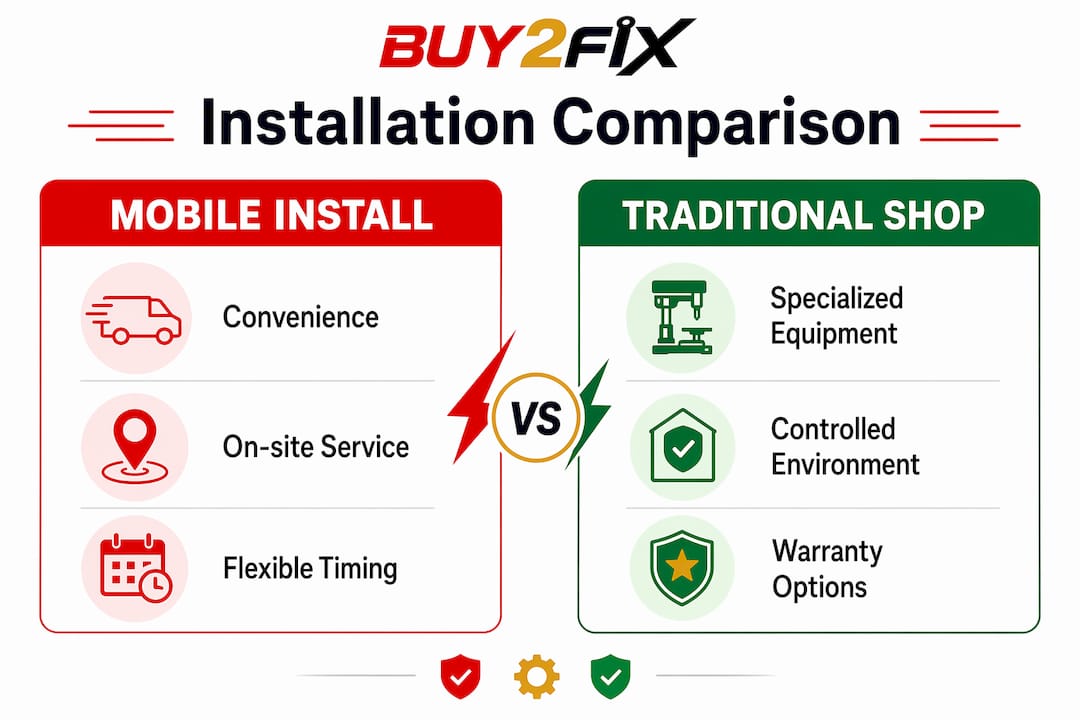
The choice between a mobile installer and a traditional car audio shop depends on your priorities. Neither option is universally superior.
| Factor | Mobile installation | Traditional shop |
|---|---|---|
| Convenience | Installer comes to you; no travel required | You drop the car off and collect later |
| Scheduling | Flexible; evenings and weekends often available | Fixed shop hours; may require days’ notice |
| Vehicle security | Car stays on your property throughout | Car left unattended at a third-party premises |
| Workshop environment | Outdoor or driveway conditions; weather-dependent | Controlled indoor environment with full tooling |
| Complex builds | May be limited by space and equipment | Better suited to full custom builds and fabrication |
| Cost | Comparable; travel charge may apply | Overhead costs often built into labour rates |
Mobile installers offer on-site installation at your property, which removes the anxiety of leaving your vehicle unattended. For straightforward upgrades such as speakers, a head unit, or a single amplifier, a mobile installer delivers results that match any shop. For complex custom fabrication, such as a bespoke subwoofer enclosure or full interior audio build, a shop with a dedicated workshop has a practical advantage.
Scheduling flexibility and vehicle security are the two reasons most car owners choose mobile installation over a traditional shop visit. If you drive daily and cannot afford downtime, mobile is the obvious choice.
What do mobile car audio installs cost and how long do they take?
Realistic expectations on cost and time prevent the most common source of frustration: discovering the job takes twice as long or costs more than anticipated.
| Installation type | Typical time | Approximate cost (labour + hardware) |
|---|---|---|
| Speaker upgrade only | 1 to 3 hours | £80 to £250 |
| Head unit swap | 1 to 2 hours | £100 to £300 |
| Amplifier and subwoofer | 3 to 5 hours | £250 to £600 |
| Full system with DSP tuning | Full day or more | £600 to £1,500+ |
Speaker-only upgrades are often same-day jobs, while full system installs with DSP calibration can take a full day or longer. This is not inefficiency. It reflects the genuine complexity of routing power cables, setting crossover points, and tuning the system to the vehicle’s acoustic environment.
Several factors push costs upward:
- Vehicle make and model. Premium brands such as BMW, Mercedes-Benz, and Audi use proprietary CANBUS systems that require specific integration modules, adding both parts cost and labour time.
- System complexity. Each additional component adds wiring, signal routing, and tuning time.
- Wiring quality. OFC wiring costs more than CCA but is worth the investment for any system above entry level.
Labour and wiring now represent a significant share of total installation costs, often matching or exceeding the hardware price itself. Budget accordingly rather than treating labour as a minor line item.
Modern vehicles frequently require integration modules or DSP amplifiers to retain factory features such as Bose or Harman Kardon system logic, parking sensors, and speed-dependent volume. This “integration tax” is unavoidable on cars built after 2015 and should be factored into your budget from the outset.
How to prepare for and book a mobile car audio installation
Preparation on your side makes the installer’s job faster and the result better. Follow these steps before the appointment.
- Confirm availability and location requirements. Check that your driveway or parking space provides enough room for the installer to work safely on both sides of the vehicle. A flat, covered space is ideal.
- Communicate your system goals clearly. Tell the installer whether you prioritise bass, clarity, or a balanced sound. Mention your typical listening volume and music genres. Listening goals and vehicle use should drive the system design, not the other way around.
- Provide full vehicle details in advance. Year, make, model, and trim level affect every aspect of the install. A 2022 Ford Focus Active has different integration requirements to a 2018 Volkswagen Golf GTI.
- Verify the installer carries insurance. Public liability insurance protects you if accidental damage occurs to your vehicle during the installation.
- Check the warranty terms in writing before work begins. A reputable installer such as those operating under the Radio Ray model offers transparent pricing and written warranties before touching the vehicle.
- Clear the boot and rear seats. If an amplifier or subwoofer is being fitted, remove personal items from the boot area beforehand. It saves time and protects your belongings.
- Expect a brief test and sign-off. After installation, skilled installers require time to tune and verify the system properly. Do not rush this stage. A 20-minute tuning session after a full install is not padding; it is the difference between a good system and a great one.
Key takeaways
The single most important factor in a mobile car audio installation is not the equipment you choose but the quality of the installer who fits it.
| Point | Details |
|---|---|
| Installer quality over hardware | Poor installation ruins good equipment; prioritise certified, warranted installers. |
| Integration tax on modern cars | Vehicles built after 2015 often need CANBUS modules, adding cost and complexity. |
| Labour costs match hardware | Budget as much for wiring and labour as for the components themselves. |
| Mobile suits most upgrades | Speaker, head unit, and amp installs are well within mobile installer capability. |
| Preparation speeds the job | Clear communication, vehicle details, and a suitable workspace reduce installation time. |
What I have learned from watching too many rushed installs
I have seen the same mistake repeated more times than I can count: a car owner spends £400 on a quality amplifier and subwoofer, then tries to save £50 by booking the cheapest installer available. Six weeks later, the bass is distorted, there is a 50Hz whine through the speakers, and a door trim is cracked. The equipment was fine. The installation was not.
The installers worth your money are the ones who ask questions before quoting. They want to know what music you listen to, how loud you typically drive, and whether you use the car for long motorway runs or short urban trips. That conversation shapes every decision from crossover settings to wiring gauge. An installer who skips it is not saving you time. They are cutting corners.
I am also sceptical of any mobile installer who cannot show you photos of recent work. Cable management is visible evidence of how someone thinks. Neat, routed, heat-shrunk wiring tells you the installer takes pride in the parts you cannot see. A tangle of zip-tied cables tells you the opposite.
One thing I genuinely value about mobile installation is the transparency it creates. You are present. You can ask questions during the job. You see exactly what goes into your vehicle. That accountability tends to produce better work than an anonymous shop drop-off where nobody is watching.
If you are upgrading a vehicle built after 2015, budget for integration from the start. Discovering mid-install that your car needs a specific DSP module is not a surprise you want. Research your vehicle’s audio architecture beforehand, or choose an installer who does that research for you.
— Adewale
How Buy2fix supports your car audio upgrade
Buy2fix stocks a broad range of automotive electronics, wiring accessories, and integration components suited to both DIY installers and professional fitters working on mobile car audio near me jobs. Whether you need OFC power cable, speaker adaptors, or CANBUS integration modules for a specific vehicle, Buy2fix carries the parts that make clean, professional installs possible. For guidance on finding and assessing the right local installer, the Buy2fix mobile installation guide covers the key steps in detail. You can also read the installer selection tips to avoid the most common booking mistakes. Start your search at Buy2fix for parts, advice, and support.
FAQ
What does a mobile car audio installer actually do?
A mobile car audio installer travels to your location and fits audio components including speakers, head units, amplifiers, subwoofers, and DSP processors directly in your vehicle. The service covers everything from basic speaker swaps to full system builds with acoustic tuning.
How long does a mobile car audio installation take?
Speaker upgrades typically take one to three hours, while a full system installation with DSP tuning can take a full day or longer. Installation scope strongly affects timeline, so confirm the expected duration with your installer before booking.
Is mobile car audio installation as good as a shop?
For most upgrades, yes. Most sound problems stem from poor planning and rushed installs rather than the location. A certified mobile installer with proper tools delivers results equivalent to a shop for speaker, head unit, and amplifier work.
What should I ask a mobile installer before booking?
Ask about MECP certification, whether they use RTA microphones for DSP tuning, what wiring specification they use (OFC vs CCA), and whether they provide a written labour warranty. These four questions separate professional installers from casual fitters.
Why does car audio installation cost more on newer vehicles?
Modern vehicles built after 2015 often use proprietary CANBUS systems that require specific integration modules to retain factory features. This integration requirement adds both parts cost and labour time, which is why installation on a newer BMW or Mercedes-Benz costs more than on an older vehicle with a standard wiring setup.
Recommended
Let customers speak for us
Well made part very strong easy to fit great value for the money

Well packed, with fast shipping :)

Exactly what the doctor ordered…great color, comfort, and durability. Trust this watch band!

Brilliant strap, second purchase, bought bracelet before. Excellent value. Thank you

Great item for splitting your Audio signal

Outstanding product!
Next level customer service.

Very satisfied but the delivery needs to get more faster...

Good price,quick delivery

Best phone case ever! This is my second one as I broke my first. Would defo recommend

Great fitting Apple Watch bands

For Apple Watch Ultra 3 / 2 / 1 49mm RedPepper Armor Metal Case Integrated Silicone Watch Band(Steel Black White)

Good price and quick postage

Perfect fit.

Absolutely necessary

Second Purchase and still a very happy customer. Keep up the good work.
