

Mobile Phone Repair Basics: Essential Skills and Risks
Every british mobile phone repair project comes with its own unique set of challenges, yet more than 65 percent of repairs fail due to using the wrong parts or tools. For british DIY fixers and small shop owners, sourcing the right high-quality replacements can be the difference between a quick fix and a costly mistake. This guide breaks down what professional phone repair really involves and reveals how the smartest choices can protect your bottom line while keeping your services reliable.
Table of Contents
- What Mobile Phone Repair Involves
- Types Of Repairs And Replacement Parts
- Essential Tools And Workbench Setup
- Safety, Legal, And Warranty Considerations
- Common Mistakes To Avoid When Repairing
Key Takeaways
| Point | Details |
|---|---|
| Mobile Phone Repair Requires Skill | Successful mobile phone repair hinges on technical expertise, tool proficiency, and understanding of electronic systems. |
| Use of Quality Parts Is Essential | Selecting between OEM and aftermarket components significantly impacts repair quality and device performance. |
| Workspace Organisation Increases Efficiency | A clean, structured workspace with proper tools and equipment is crucial for effective repair processes. |
| Legal Considerations Are Critical | Understanding manufacturer warranties and obtaining customer consent are vital to avoid liabilities in repairs. |
What Mobile Phone Repair Involves
Mobile phone repair is a sophisticated technical skill that requires understanding complex electronic systems and precision workmanship. Professionals and enthusiasts alike must develop a comprehensive set of skills to diagnose, disassemble, and restore damaged mobile devices effectively. From addressing physical damage to resolving intricate software issues, repair work demands meticulous attention to detail and specialised technical knowledge.
The repair process typically involves multiple critical stages. Comprehensive training programmes like those at TSI University demonstrate that successful mobile phone repair requires mastering several key competencies. These include understanding circuit diagrams, identifying component failures, using specialised diagnostic tools, and executing precise repair techniques. Technicians must be adept at handling delicate components, managing microscopic connections, and troubleshooting both hardware and software problems.
Key areas of mobile phone repair encompass screen replacements, battery exchanges, charging port repairs, water damage restoration, and motherboard component replacements. Diagnostic skills are paramount, as technicians must quickly assess whether an issue stems from hardware malfunction or software corruption. Proper repair also demands an extensive toolkit, including precision screwdrivers, anti-static wristbands, magnifying glasses, soldering equipment, and specialised smartphone opening tools. Impact Vocational Training Center highlights the importance of understanding basic electronics and circuit diagrams as foundational knowledge for successful repairs.
Pro Repair Tip: Always work in a clean, well-lit environment with an anti-static mat to prevent electrical discharge and protect sensitive electronic components during mobile phone repairs.
- Physical damage assessment requires keen visual inspection and diagnostic tools
- Software diagnostics involve understanding operating system interactions
- Specialised knowledge of different device models is crucial for accurate repairs
- Continuous learning about emerging technologies is essential for staying current
Types Of Repairs And Replacement Parts
Mobile phone repairs encompass a diverse range of technical interventions targeting specific device components and functionality issues. Understanding the nuanced types of repairs and replacement parts is crucial for successful mobile device restoration. Technicians must develop expertise in identifying precise problems and selecting appropriate replacement components to ensure optimal device performance.

The most common repair types include screen replacements, which address cracked, damaged, or malfunctioning display panels. Battery exchanges represent another critical repair category, particularly for devices experiencing power degradation or charging inconsistencies. Common small part replacements require specialised knowledge and careful component selection, with technicians needing to understand intricate differences between original manufacturer and aftermarket components.
Replacement parts broadly fall into two primary categories: Original Equipment Manufacturer (OEM) and aftermarket components. Understanding the differences between OEM and aftermarket parts is essential for making informed repair decisions. OEM parts are produced directly by the original device manufacturer, offering guaranteed compatibility and consistent quality. Aftermarket parts, while often more cost-effective, may vary in performance and reliability. Additional repair categories include charging port restoration, camera module replacements, motherboard component repairs, and liquid damage remediation.
Here is a comparison of OEM vs aftermarket mobile phone replacement parts:
| Feature | OEM Parts | Aftermarket Parts |
|---|---|---|
| Manufacturer | Original device brand | Third-party supplier |
| Compatibility | Fully guaranteed | May vary between devices |
| Reliability | High and consistent | Variable, can differ widely |
| Cost | Generally higher | Usually lower |
| Warranty Support | Maintains manufacturer warranty | Often voids manufacturer warranty |
| Common Use Case | Professional and warranty repairs | Cost-saving or out-of-warranty |
Pro Diagnostic Tip: Always verify part compatibility by cross-referencing device model numbers and checking precise specification requirements before purchasing replacement components.
- Screen replacements require exact model matching
- Battery exchanges demand careful electrical specification verification
- Charging port repairs involve intricate connector alignments
- Motherboard component replacements need specialised technical expertise
Essential Tools And Workbench Setup
A well-organised mobile phone repair workspace is fundamental to achieving professional and efficient repair outcomes. Research on phone repair shop operations emphasises the critical importance of strategic workbench design and comprehensive tool selection. Technicians must create an environment that supports precision work, minimises potential damage to sensitive electronic components, and enables systematic repair processes.
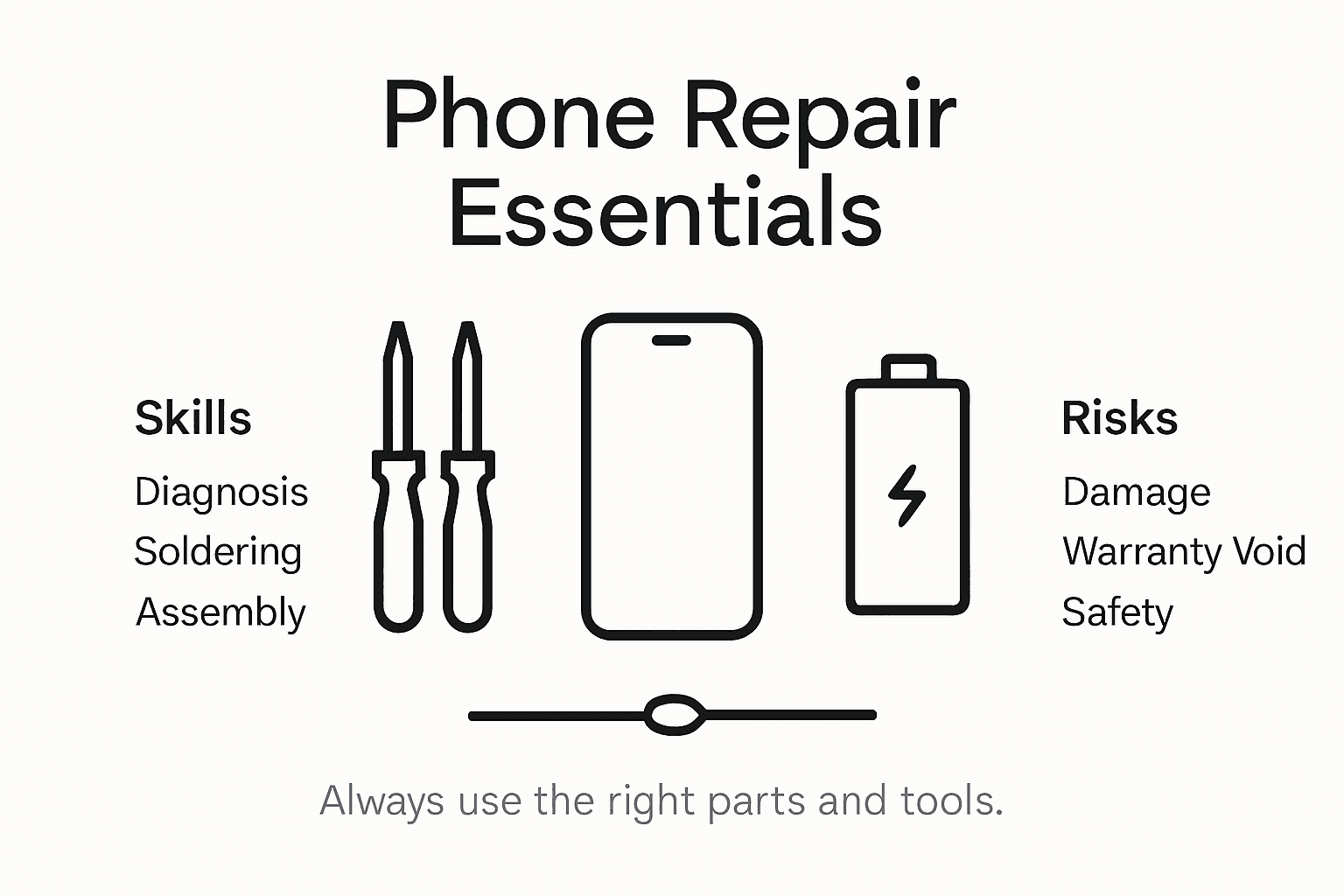
Essential toolkit components include a range of precision instruments designed for delicate electronic work. Fundamental tools comprise high-quality magnetic screwdriver sets with multiple bit sizes, anti-static tweezers, precision metal spudgers, specialised smartphone opening tools, digital multimeters, and high-resolution magnifying glasses or microscopes. Professional technicians also invest in heat guns for component removal, soldering stations with temperature control, and ultrasonic cleaning equipment for thorough component maintenance.
Workbench setup demands meticulous attention to environmental control and organisation. Technicians should prioritise a clean, well-lit workspace with static-free surfaces, ideally featuring an anti-static mat and proper grounding mechanisms. Efficient workstations incorporate modular storage solutions for categorising tiny components, with clearly labelled compartments for screws, connectors, and replacement parts. Proper lighting, preferably using adjustable LED task lights, helps technicians identify minute details and perform intricate repairs with maximum accuracy.
Pro Workspace Tip: Create a systematic component tracking system using magnetic project mats with printed grid layouts to prevent losing small parts during complex smartphone repairs.
Below is a reference table of essential tools and their primary repair functions:
| Tool | Main Repair Use | Special Advantage |
|---|---|---|
| Precision screwdriver set | Removing device screws | Prevents screw head damage |
| Soldering station | Component reattachment | Enables fine soldering work |
| Anti-static tweezers | Handling delicate components | Reduces static risk |
| Digital multimeter | Diagnosing electrical problems | Precise measurements |
| Magnetic project mat | Organising small components | Minimises part loss |
- Invest in high-quality, precision-engineered tools
- Maintain a clean, well-organised workspace
- Use anti-static equipment to protect electronic components
- Implement proper lighting and magnification solutions
Safety, Legal, And Warranty Considerations
Mobile phone repair involves complex legal and safety considerations that extend far beyond technical expertise. DIY phone repair risks include potential warranty violations and significant financial implications, making it crucial for technicians and enthusiasts to understand the intricate landscape of legal and warranty protection before attempting repairs.
Manufacturer warranties typically provide comprehensive coverage for device defects, but this protection becomes immediately vulnerable when unauthorised repairs are undertaken. Most major smartphone manufacturers explicitly state that any non-authorised intervention can completely invalidate existing warranty provisions. Professional servicing guidelines emphasise the importance of maintaining warranty coverage through approved repair channels, which requires adherence to strict manufacturer-specified protocols and using genuine replacement components.
Legal considerations in mobile phone repairs encompass multiple dimensions, including consumer protection regulations, intellectual property rights, and potential liability for device damage. Technicians must navigate complex legal frameworks that vary between jurisdictions, understanding specific consumer rights and manufacturer policies. Critical legal aspects include obtaining informed consent from device owners, maintaining transparent documentation of repair processes, and ensuring that replacement parts meet minimum safety and performance standards.
Pro Legal Tip: Always obtain written customer consent detailing potential risks and warranty implications before commencing any smartphone repair procedure.
- Understand manufacturer warranty terms thoroughly
- Use only approved replacement components
- Maintain detailed repair documentation
- Obtain explicit customer consent before repairs
Common Mistakes To Avoid When Repairing
DIY phone repair mistakes can lead to catastrophic device damage and costly consequences, making it critical for technicians and enthusiasts to understand the most common pitfalls in mobile device restoration. Inexperienced repair attempts often result in irreversible harm to sophisticated electronic systems, transforming a simple repair into an expensive replacement scenario.
Fundamental errors frequently emerge from inadequate preparation and technical understanding. The most prevalent mistakes include using inappropriate tools, failing to ground oneself against static electricity, and attempting repairs without proper diagnostic procedures. Technicians must meticulously document device disassembly, carefully organise small components, and maintain an organised workspace to prevent losing critical microscopic parts during the repair process.
Precision and patience are paramount when handling delicate electronic components. Common critical mistakes include applying excessive force during component removal, using incorrect screwdriver sizes, mishandling sensitive flex cables, and failing to protect circuit boards from electrostatic discharge. Technicians must develop a systematic approach, understanding that smartphone internals represent intricate ecosystems where even minor disruptions can trigger comprehensive system failures. Proper tool selection, gentle manipulation, and understanding each device’s unique internal architecture are essential for successful repairs.
Pro Repair Tip: Always work on a clean, well-lit anti-static surface and use magnetic project mats to track and organise tiny components during smartphone disassembly.
- Never rush through repair procedures
- Invest in high-quality, device-specific repair tools
- Protect components from static electricity
- Document every disassembly step with photographs
Master Mobile Phone Repair With Quality Parts and Tools
Understanding the essential skills and risks of mobile phone repair is only the first step towards confident and successful device restoration. Whether you are tackling screen replacements, battery exchanges, or intricate motherboard repairs, having access to reliable, high-quality parts is critical to avoid common pitfalls and warranty issues. The article highlights the importance of precise diagnostic abilities and using approved components — challenges easily solved when you source from a trusted supplier.
At Buy2fix, we specialise in providing UK-based customers and professional technicians with an extensive selection of genuine and high-quality aftermarket mobile phone repair parts. From LCD screens to charging ports, every component is rigorously tested to meet strict quality standards while protecting your device’s warranty. We also offer expert advice and an organised inventory designed to support the unique demands of each repair project. Take your mobile repair skills to the next level with our competitive pricing and free UK mainland shipping.
Start your repair journey with the best tools and trusted parts available at Buy2fix. Do not compromise on quality or risk costly mistakes. Visit us today and equip yourself with everything needed for safe and professional mobile phone repairs.
Frequently Asked Questions
What skills are essential for mobile phone repair?
Essential skills for mobile phone repair include understanding circuit diagrams, diagnosing hardware and software issues, using specialised tools, and executing precise repair techniques. Technicians must also be adept at working with delicate components and maintaining a clean workspace.
What are the common types of mobile phone repairs?
Common types of mobile phone repairs include screen replacements, battery exchanges, charging port repairs, water damage restoration, and motherboard component replacements. Each type requires specific expertise and careful selection of replacement parts.
What tools do I need for mobile phone repair?
Essential tools for mobile phone repair include precision screwdrivers, anti-static tweezers, digital multimeters, soldering stations, and special smartphone opening tools. A clean workspace with anti-static surfaces is also critical to prevent damage to components.
How can I avoid common mistakes when repairing a mobile phone?
To avoid common mistakes, ensure you use the correct tools, work in an anti-static environment, document each disassembly step, and be patient when handling components. Proper preparation and organisation are key to successful repairs.
Recommended
- 7 Common Beginner Phone Repair Mistakes and How to Avoid Them – buy2fix
- 7 Key DIY Phone Repair Pros Cons Every User Should Know – buy2fix
- 7 Essential Common Mobile Repair Tools You Need – buy2fix
- 7 Common Causes of Phone Damage and How to Prevent Them – buy2fix
- Akkus reparieren Guide: So bringen Sie Ihre Akkus zurück ins Leben - accu.blog
Let customers speak for us
For Samsung Galaxy A26 SM-A266B Original Earpiece Speaker with Cable

Very good communication throught. Good product

Well made part very strong easy to fit great value for the money

Well packed, with fast shipping :)

Exactly what the doctor ordered…great color, comfort, and durability. Trust this watch band!

Brilliant strap, second purchase, bought bracelet before. Excellent value. Thank you

Great item for splitting your Audio signal

Outstanding product!
Next level customer service.

Very satisfied but the delivery needs to get more faster...

Good price,quick delivery

Best phone case ever! This is my second one as I broke my first. Would defo recommend

Great fitting Apple Watch bands

For Apple Watch Ultra 3 / 2 / 1 49mm RedPepper Armor Metal Case Integrated Silicone Watch Band(Steel Black White)

Good price and quick postage

