

Repairing Tablet vs Phone: Key Costs and Risks
Cracking a tablet screen or watching your phone slow down can feel frustrating, especially when repair options seem confusing and expensive. For many in the UK, fixing devices instead of replacing them is not just about saving money but also supporting a greener future. Understanding the core differences between tablet and phone repairs unlocks smarter, more sustainable choices for DIY enthusiasts seeking reliable parts and solutions.
Table of Contents
- Tablet vs Phone Repairs: Core Differences
- Repair Process Complexity by Device Type
- Parts, Pricing, and Availability Compared
- Common Mistakes in DIY Repairs
- Environmental Impact of Repair Choices
Key Takeaways
| Point | Details |
|---|---|
| Repair Complexity | Tablet repairs are generally more complex and expensive due to larger screens and integrated components compared to phones. |
| Parts Availability | Phone parts are usually more accessible and cost-effective, while tablet components can be limited and more expensive. |
| Technical Skills | Repairing tablets often requires advanced skills and precision, while phone repairs can be managed with basic technical knowledge. |
| Environmental Impact | Choosing to repair devices contributes to sustainability by reducing electronic waste and conserving resources compared to replacements. |
Tablet vs Phone Repairs: Core Differences
Repairing tablets and phones might seem similar at first glance, but significant differences emerge when examining component complexity, repair accessibility, and overall cost structures. Right to Repair movement research highlights critical distinctions in manufacturer restrictions that impact device repairability.
Key differences between tablet and phone repairs encompass several crucial dimensions:
- Screen Size: Tablets typically feature larger screens requiring more expensive replacement components
- Component Integration: Mobile phones have more compact, standardised designs compared to tablets
- Manufacturer Restrictions: Both device types suffer from limited repair access, but restrictions vary by brand
- Parts Availability: Phone replacement parts are generally more readily accessible than tablet components
The complexity of repair processes varies significantly between these device categories. Consumer repair analyses indicate that screen repairs for phones often represent more cost-effective solutions compared to complete device replacement. Tablet repairs, conversely, tend to be more expensive due to larger screen sizes and intricate internal architectures.
Professional technicians must navigate nuanced challenges when addressing tablet versus phone repairs. While both device types share fundamental electronic principles, tablets frequently demand more specialised skills and precision during component replacement. Factors like device age, manufacturer model, and available spare parts dramatically influence repair feasibility and overall costs.
Here’s a side-by-side overview of technical challenges in tablet versus phone repairs:
| Challenge Type | Tablets | Phones |
|---|---|---|
| Disassembly Difficulty | Complex, time-consuming | Easier, more straightforward |
| Spare Parts Sourcing | Limited, less standardised | Abundant, widely available |
| Skill Level Required | Advanced, precise handling | Moderate, basic technical skill |
| Typical Repair Cost | Higher, less predictable | Lower, generally consistent |
Pro tip: Always verify warranty status and manufacturer repair policies before attempting any independent device repairs to prevent potential voiding of existing coverage.
Repair Process Complexity by Device Type
Electronic device repairs present unique challenges that vary dramatically between tablets and phones, with NASA’s systems engineering research revealing significant differences in repair complexity and methodology. Understanding these nuanced variations is crucial for technicians and consumers alike when approaching device maintenance.
Key factors influencing repair complexity include:
- Physical Structure: Tablets have larger, more integrated components requiring more intricate disassembly
- Component Accessibility: Phones typically feature more modular designs enabling easier part replacement
- Internal Architecture: Tablets often have more complex internal layouts compared to standardised phone designs
- Repair Tool Requirements: Different device types demand specialised tools and technical expertise
Government technology assessments demonstrate that technology repair processes involve multifaceted challenges beyond simple mechanical interventions. Professional technicians must consider numerous variables when diagnosing and addressing device-specific repair requirements, including software integration, hardware configuration, and manufacturer-specific design constraints.
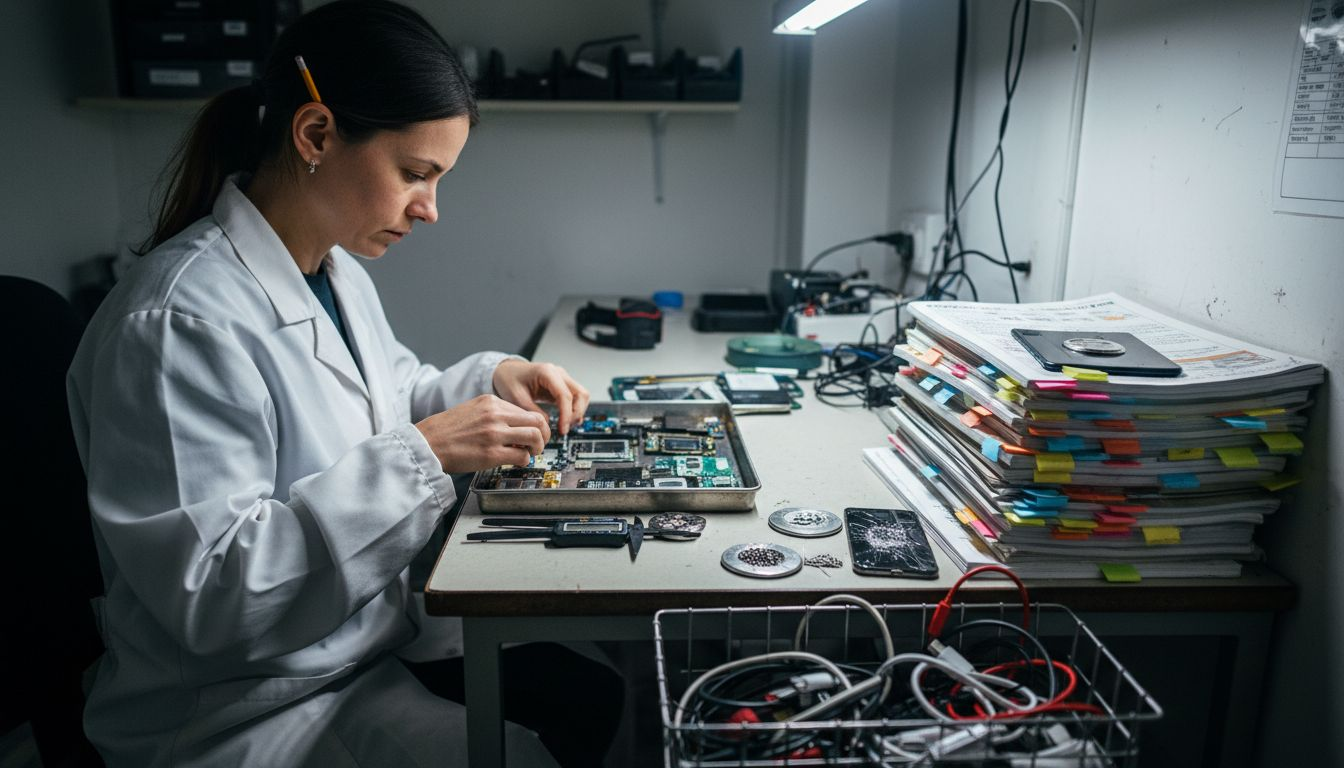
The repair landscape continues to evolve, with increasing emphasis on standardisation and accessibility. Modern repair techniques demand comprehensive understanding of device-specific intricacies, technical skill, and adaptive problem-solving strategies. Technicians must remain flexible, continuously updating their knowledge to address the dynamic challenges presented by emerging device technologies.
Pro tip: Invest in device-specific diagnostic tools and stay updated with manufacturer repair guidelines to enhance your technical repair capabilities.
Parts, Pricing, and Availability Compared
Device repair parts present a complex landscape of pricing and accessibility, with significant variations between phone and tablet components. Government contracting data reveals critical insights into the economic challenges of technology part procurement, highlighting substantial differences in supply chain dynamics.
Key considerations for parts pricing and availability include:
- Market Scale: Phone parts markets are typically larger and more competitive
- Supply Chain Complexity: Tablets often have more fragmented and limited parts availability
- Manufacturing Standardisation: Phones benefit from more uniform component designs
- Price Variability: Tablet replacement parts tend to be more expensive due to lower production volumes
The repair ecosystem is further complicated by variations in manufacturer approaches. Tablet parts procurement demonstrates significant challenges, with less standardised components creating barriers for technicians and consumers seeking affordable repair solutions. Phones typically offer more predictable parts markets, with greater interchangeability and more competitive pricing structures.
Economic factors continue to shape the repair landscape, with emerging trends towards more accessible and cost-effective component sourcing. Professional repair technicians must navigate these complex market dynamics, balancing cost considerations with the need for quality replacement parts that ensure device functionality and longevity.
Pro tip: Research multiple parts suppliers and compare pricing across different sources to identify the most cost-effective repair solutions for specific device models.
Common Mistakes in DIY Repairs
DIY device repairs present numerous potential pitfalls that can transform a simple fix into an expensive disaster. Studies of human error mechanisms reveal consistent patterns of mistakes that inexperienced technicians repeatedly make, highlighting the critical importance of systematic and careful approach.
Common mistakes in tablet and phone repairs include:
- Tool Mismanagement: Using incorrect or inappropriate repair tools
- Electrostatic Discharge: Failing to ground yourself before handling sensitive electronic components
- Diagnostic Errors: Misidentifying the root cause of device malfunction
- Reassembly Problems: Improper component replacement or incorrect screw alignment
- Warranty Voiding: Performing repairs that nullify existing manufacturer warranties
Technical error recognition research demonstrates that most DIY repair mistakes stem from overconfidence and insufficient preparation. Technicians often underestimate the complexity of modern device architectures, leading to cascading errors that can render devices completely non-functional. Understanding these potential pitfalls is crucial for anyone attempting independent repairs.
Successful device repair requires more than technical knowledge. Patience, methodical documentation, and a willingness to seek professional guidance when encountering complex issues are essential skills. Professional technicians recommend taking photographs during disassembly, organizing small components carefully, and maintaining a calm, focused approach throughout the repair process.
Pro tip: Always create a clean, organised workspace with magnetic screw trays and systematic component tracking before beginning any device repair.
Environmental Impact of Repair Choices
Sustainable electronics research demonstrates that device repair represents a critical strategy for reducing environmental footprint and supporting circular economy principles. Choosing to repair tablets and phones rather than replace them can significantly mitigate the substantial ecological consequences associated with electronic waste generation.
Key environmental considerations in repair choices include:
- Raw Material Conservation: Reducing demand for new resource extraction
- Carbon Emission Reduction: Minimising manufacturing-related greenhouse gases
- E-Waste Minimisation: Preventing electronic devices from entering landfill streams
- Energy Preservation: Avoiding the energy-intensive process of creating new electronics
- Resource Lifecycle Extension: Maximising existing device utility
Interdisciplinary environmental initiatives highlight the broader implications of repair choices. Each repaired device represents a tangible contribution to sustainability, preventing unnecessary waste and reducing the complex environmental challenges associated with consumer electronics production.
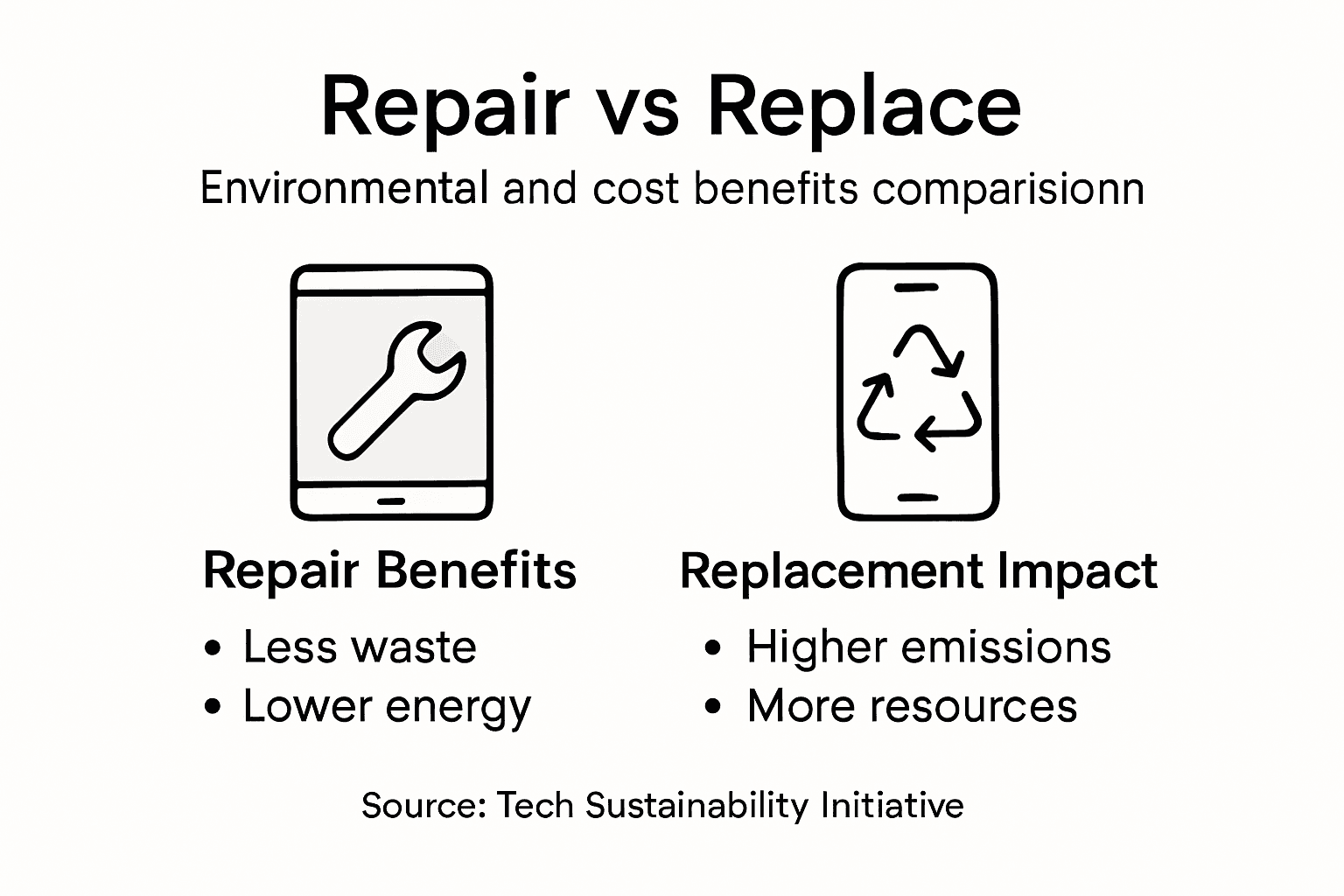
The environmental benefits extend beyond immediate waste reduction. Repair practices challenge the current disposable technology model, encouraging manufacturers to design more sustainable, long-lasting products. By prioritising repair, consumers can directly influence industry practices and support more environmentally responsible technology consumption patterns.
The following table highlights environmental benefits of device repairs:
| Environmental Benefit | Tablet & Phone Repair | Device Replacement |
|---|---|---|
| E-waste Generation | Reduced, prolongs use | Increased, more landfill |
| Resource Consumption | Lower, minimal extraction | Higher, needs new materials |
| Carbon Footprint | Reduced, less manufacturing | Elevated, new production involved |
| Manufacturer Incentive | Promotes sustainability | Sustains disposable approach |
Pro tip: Consider the total environmental cost of replacement versus repair, factoring in resource consumption, energy use, and potential waste generation before making device replacement decisions.
Expert Solutions for Tablet and Phone Repairs at Competitive Costs
Understanding the key costs and risks involved in repairing tablets versus phones is essential to making informed decisions that save time and money. The article highlights challenges such as complex disassembly, limited parts availability for tablets, and potential warranty issues. We know these pain points well and offer a wide range of reliable mobile phone repair parts and tablet components designed to simplify your repair process whether you are a DIY enthusiast or a professional technician.
At Buy2fix, you gain access to quality-tested replacement screens, flex cables, charging ports, and more from major brands like iPhone and Samsung. Our competitive pricing and free UK mainland shipping provide the affordability and convenience you need to confidently tackle repairs while avoiding common pitfalls. Don’t let costly repair challenges hold you back. Visit Buy2fix now and equip yourself with the best parts to restore your device and extend its life today.
Frequently Asked Questions
What are the main differences in repair costs between tablets and phones?
Repair costs for tablets are generally higher due to their larger screens and complex internal structures, whereas phone repairs tend to be more cost-effective due to more standardised components.
Why is the disassembly process more challenging for tablets than for phones?
Tablets typically have a more intricate physical structure with larger, integrated components that require complex disassembly, whereas phones often feature more modular designs that facilitate easier part replacement.
How do manufacturer restrictions impact device repairability?
Both tablets and phones face limitations regarding repair access from manufacturers, but these restrictions can vary by brand, affecting the availability of replacement parts and the feasibility of repairs.
What environmental benefits come from choosing to repair rather than replace devices?
Repairing devices helps conserve raw materials, reduce carbon emissions from manufacturing, minimise electronic waste, and extend the lifecycle of existing electronics, contributing to a more sustainable approach to technology.
Recommended
- Tablet Repair Challenges: Solutions for UK Technicians – buy2fix
- Tablet Repair Parts: Ensuring Device Longevity – buy2fix
- Tablet Repair Troubleshooting: Expert Fixes That Work – buy2fix
- Complete Guide to Phone Screen Repair Costs – buy2fix
- Guide: What Are Cell Phone Stipends? Hidden Costs and Smarter Options
- 7 būtiski soļi mobilā telefona remonta pārbaudes sarakstā
Let customers speak for us
For Samsung Galaxy A26 SM-A266B Original Earpiece Speaker with Cable

Very good communication throught. Good product

Well made part very strong easy to fit great value for the money

Well packed, with fast shipping :)

Exactly what the doctor ordered…great color, comfort, and durability. Trust this watch band!

Brilliant strap, second purchase, bought bracelet before. Excellent value. Thank you

Great item for splitting your Audio signal

Outstanding product!
Next level customer service.

Very satisfied but the delivery needs to get more faster...

Good price,quick delivery

Best phone case ever! This is my second one as I broke my first. Would defo recommend

Great fitting Apple Watch bands

For Apple Watch Ultra 3 / 2 / 1 49mm RedPepper Armor Metal Case Integrated Silicone Watch Band(Steel Black White)

Good price and quick postage

