


News
LCD Panel Types: Choosing the Right Display
Over 80 percent of digital screens in British homes rely on LCD panels for stunning visuals and reliable performance. From smartphones to advanced medical equipment, these displays power almost every modern device imaginable. Understanding how LCD technology shapes daily life is essential for anyone choosing a display or navigating repairs. This guide breaks down LCD panel types, explains their performance, and highlights what truly sets each technology apart in today’s fast-moving world.
Table of Contents
- Defining LCD Panels And Their Role
- Main LCD Panel Types Explained
- Comparing TN, IPS, And OLED Displays
- Performance Features And Key Differences
- Real-World Repair Implications And Costs
Key Takeaways
| Point | Details |
|---|---|
| LCD Panels Are Multidisciplinary | LCD technology integrates physics, chemistry, and electronic engineering, elevating visual experiences across devices. |
| Diverse Panel Types for Specific Needs | TN, IPS, and VA panels cater to various applications, each offering unique performance characteristics. |
| Cost Implications for Repairs | Replacement costs vary significantly between display technologies, necessitating careful evaluation by repair specialists. |
| Contextual Performance Considerations | Selecting the right display technology demands an understanding of user requirements, such as response time or colour accuracy. |
Defining LCD Panels and Their Role
Liquid Crystal Displays (LCDs) represent a sophisticated visual technology that has fundamentally transformed how we interact with electronic devices. These remarkable panels serve as the visual interface for everything from smartphones and tablets to medical equipment and industrial control systems. Understanding the intricate configurations of LCD displays reveals their complexity and pivotal role in modern technological ecosystems.
At their core, LCD panels are sophisticated optical systems composed of liquid crystal molecules suspended between polarised glass substrates. These molecules can be precisely manipulated by electrical currents, allowing them to change light transmission characteristics and generate visual images. Researchers have extensively documented the material composition and device configurations that enable these remarkable displays, highlighting how advanced engineering transforms simple molecular interactions into vibrant, high-resolution visual experiences.
The significance of LCD technology extends far beyond mere visual representation. These panels represent a critical intersection of physics, chemistry, and electronic engineering, enabling unprecedented levels of information display and user interaction. LCD panels are characterised by several key attributes that make them superior to older display technologies:
- Exceptional energy efficiency
- Low heat generation
- High colour reproduction accuracy
- Lightweight and compact design
- Superior image clarity and sharpness
Professional technicians and repair specialists understand that LCD panels are not simply display components, but complex systems requiring precise understanding and meticulous handling. Their intricate nature demands specialised knowledge and carefully controlled manufacturing processes to ensure optimal performance and reliability.
Main LCD Panel Types Explained
LCD technology has evolved to encompass several distinct panel types, each with unique characteristics designed to meet specific display requirements. Comparative studies of display technologies reveal significant variations in performance and application, highlighting the importance of understanding these different configurations.
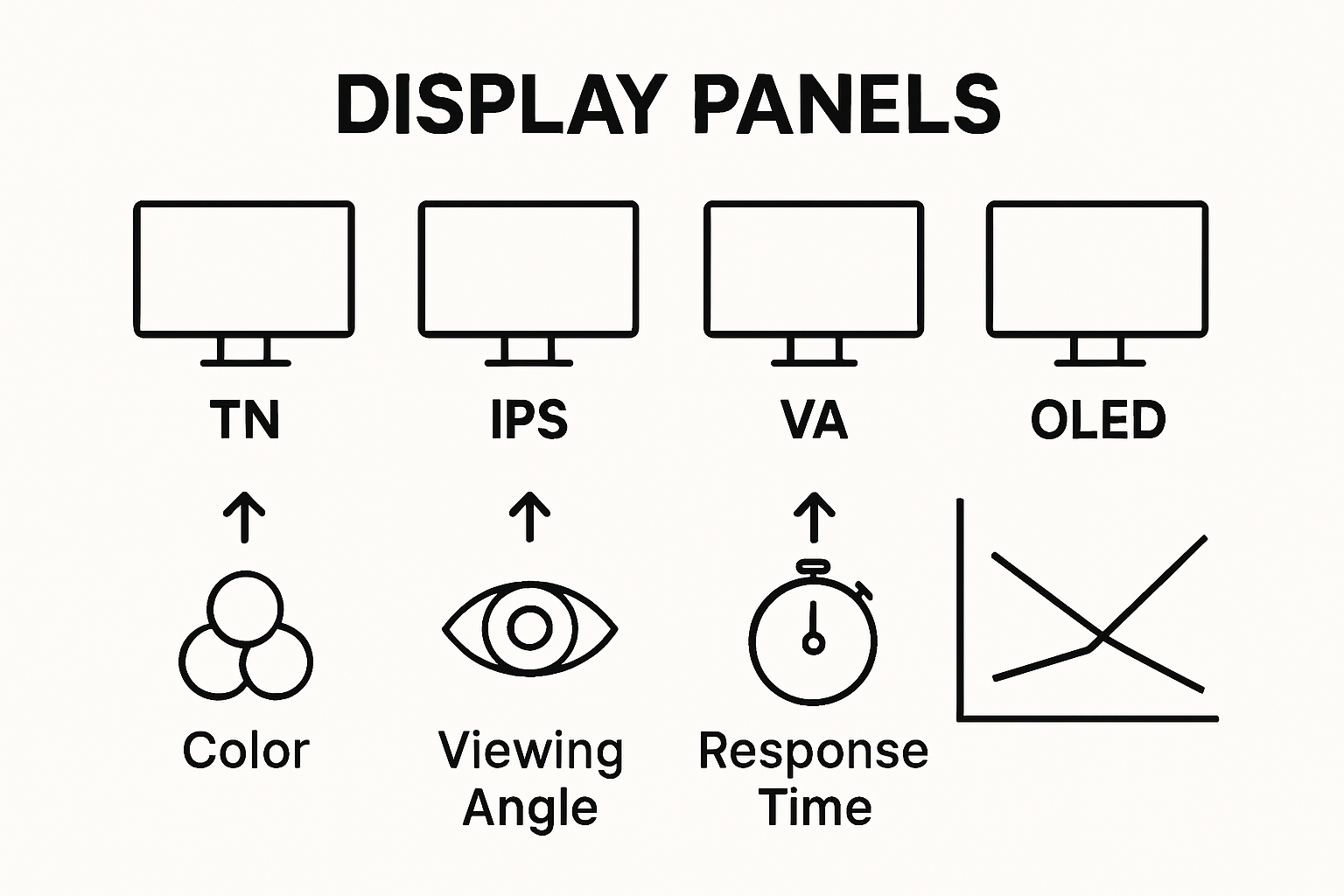
The primary LCD panel types include Twisted Nematic (TN), In-Plane Switching (IPS), and Vertical Alignment (VA) panels. Each type offers distinct advantages and limitations:
-
Twisted Nematic (TN):
- Lowest cost
- Fastest response times
- Ideal for gaming displays
- Limited viewing angles
- Lower colour reproduction
-
In-Plane Switching (IPS):
- Superior colour accuracy
- Wide viewing angles
- Excellent colour consistency
- Slightly slower response times
- Higher production costs
-
Vertical Alignment (VA):
- Highest contrast ratios
- Deep black levels
- Good colour reproduction
- Moderate viewing angles
- Potential motion blur issues
Technological comparisons demonstrate how these panel types differ in power consumption, screen refresh rates, and overall performance, making each suited to specific applications. Professional technicians and repair specialists must understand these nuanced differences to recommend the most appropriate display technology for specific device requirements.

Ultimately, the choice of LCD panel type depends on precise use cases. Gamers might prioritise TN panels for rapid response times, while graphic designers would likely prefer IPS panels for colour accuracy and consistency. Medical professionals and industrial users might select VA panels for their superior contrast and image quality, ensuring critical visual information is displayed with maximum clarity and precision.
Comparing TN, IPS, and OLED Displays
Comprehensive research into display technologies reveals significant performance variations between Twisted Nematic (TN), In-Plane Switching (IPS), and Organic Light-Emitting Diode (OLED) display panels. Each technology offers unique characteristics that make them suitable for different applications, with trade-offs between colour reproduction, response time, power efficiency, and overall visual performance.
TN panels represent the most economical option, characterised by their rapid response times and low manufacturing costs. In contrast, IPS displays excel in colour accuracy and viewing angles, making them preferred by graphic designers and professionals requiring precise visual representation. OLED technology introduces a fundamentally different approach, offering several distinctive advantages:
- Pixel-level light emission
- Superior contrast ratios
- Deeper black levels
- More vibrant colour reproduction
- Lower power consumption
- Potential for flexible display designs
Technical comparisons of display technologies demonstrate nuanced performance differences, particularly when examining factors like brightness, colour accuracy, and energy efficiency. Professional technicians must carefully evaluate these characteristics to recommend the most appropriate display technology for specific use cases.
Ultimately, the selection between TN, IPS, and OLED displays depends on precise application requirements. Gamers might prioritise TN panels for their rapid response times, while multimedia professionals would likely prefer OLED or IPS technologies for their superior colour reproduction and visual consistency. The ongoing evolution of display technologies continues to blur traditional performance boundaries, offering increasingly sophisticated visual solutions across diverse technological domains.
Performance Features and Key Differences
Comprehensive performance analyses of display technologies reveal intricate differences between LCD and alternative display technologies, highlighting critical metrics that dramatically impact visual experience and device functionality. These performance features extend far beyond simple visual representation, encompassing complex engineering trade-offs that influence everything from power consumption to colour reproduction.
The key performance differentiators across display technologies can be systematically categorised into several critical domains:
-
Response Time:
- TN Panels: Fastest (1-5 milliseconds)
- IPS Panels: Moderate (4-8 milliseconds)
- OLED: Near-instantaneous
-
Colour Accuracy:
- TN Panels: Limited colour range
- IPS Panels: Excellent colour reproduction
- OLED: Superior colour saturation
-
Power Consumption:
- TN Panels: Low to moderate
- IPS Panels: Moderate
- OLED: Variable, dependent on displayed content
Detailed performance evaluations of Mini-LED and OLED displays demonstrate that technological advancements continue to blur traditional performance boundaries. Professional technicians must understand these nuanced characteristics to recommend optimal display solutions for specific applications.
Ultimately, display performance is not about absolute superiority but contextual appropriateness. Gamers might prioritise response times, graphic designers demand colour accuracy, while industrial applications require durability and consistent performance. Each display technology represents a sophisticated engineering solution, carefully balanced to meet diverse technological requirements across multiple domains.
Real-World Repair Implications and Costs
Screen replacement costs for different display technologies vary significantly, presenting complex financial considerations for repair professionals and device owners. Understanding these nuanced cost implications requires a comprehensive analysis of factors beyond simple part pricing, including device type, panel complexity, and technological sophistication.
The repair cost landscape for different display types can be systematically broken down:
-
Smartphone Displays:
- TN Panels: Lowest replacement cost
- IPS Panels: Moderate pricing
- OLED Panels: Highest replacement expense
-
Laptop Screen Repairs:
- Budget Models: £50-£150
- Mid-Range Screens: £150-£300
- Professional/High-Resolution Panels: £300-£600
-
Key Cost Influencing Factors:
- Panel Technology
- Screen Size
- Device Manufacturer
- Repair Complexity
- Professional Labour Charges
Comprehensive research into display repair economics reveals that professional technicians must carefully evaluate whether repair or replacement represents the most cost-effective solution. This decision involves assessing not just immediate repair expenses, but also long-term device performance and potential future maintenance requirements.
Professional repair specialists understand that cost-effectiveness extends beyond initial replacement expenses. Factors such as panel durability, manufacturer warranty, device age, and potential performance degradation all play crucial roles in determining the most financially prudent approach to screen repairs. Ultimately, each repair scenario demands a nuanced, individualised assessment that balances technical complexity, economic considerations, and client-specific requirements.
Find the Perfect LCD Panel for Your Repair Needs
Choosing the right LCD panel type can feel overwhelming given the technical differences between TN, IPS, and OLED displays. Whether you need a fast-response screen for gaming devices or a colour-accurate panel for professional use, understanding these distinctions is critical to achieving optimal repair results. At Buy2fix, we specialise in supplying a wide selection of LCD panels and display assemblies, designed to meet the specific requirements discussed in the article.
Benefit from our quality-assured mobile phone and tablet repair parts, expertly sourced to support both DIY enthusiasts and repair professionals. Explore our extensive inventory covering major brands and diverse panel technologies to ensure you select the right display for any device. Act now to access premium components with free UK mainland shipping and a one-year warranty. Visit Buy2fix and browse our Mobile Phone Repair Parts and Tablet & Laptop Parts categories to find your ideal replacement screen today.
Frequently Asked Questions
What are the main types of LCD panels?
The primary types of LCD panels are Twisted Nematic (TN), In-Plane Switching (IPS), and Vertical Alignment (VA). Each type has unique characteristics that cater to different display needs.
What is the difference between TN, IPS, and VA panels?
TN panels are known for their low cost and fast response times but have limited viewing angles and colour accuracy. IPS panels excel in colour accuracy and viewing angles but come at a higher cost and slightly slower response times. VA panels offer the highest contrast ratios and deep black levels, but may experience motion blur in faster scenes.
Which LCD panel type is best for gaming?
For gaming, Twisted Nematic (TN) panels are often preferred due to their rapid response times, making them suitable for fast-paced gaming scenarios. However, some gamers may also value the colour accuracy and viewing angles of IPS panels.
How do OLED displays compare to LCD panels?
OLED displays differ from LCD panels in that they emit light at the pixel level, offering superior contrast ratios, deeper black levels, and more vibrant colours. However, they can vary in power consumption based on the content displayed, making them distinct from conventional LCD technologies.
Recommended
- Types of LCD Screens: A Guide for Repair Experts – buy2fix
- Understanding What is an LCD Display: A Comprehensive Guide – buy2fix
- Understanding the Difference Between AMOLED and LCD Displays – buy2fix
- Understanding the Difference Between LCD and OLED Displays – buy2fix
- DLP vs LCD: Panduan Lengkap Teknologi Projektor - Projector Display
Let customers speak for us
item was packaged safely, no damage. it’s now October and since replacing it in January i’ve had no issues.

Great

They had what I was looking for ... ordering was easy, payment was easy, delivery was as promised.
-

Absolutely love this case! Heavy, sturdy and full coverage

Thank You! I really love it! 😊

For Garmin Forerunner 165 20mm Two Color Textured Silicone Watch Band(Teal)

For Samsung Galaxy S26+ 5G R-JUST Sliding Camera Life Waterproof Holder Phone Case(Black)

I ❤️ love it, it's absolutely amazing I'm sooo happy 😊

Great

I saw this item and it was just what I was looking for. I found it here but not in Amazon or e-bay. However, it was in UK, I was surprised to find that they were able to ship it to the US. Excellent company, would do business with again

This is great for when out and about, to sharpen either coloured pencils, or watercolour pencils….would order again.

Great items would bye again

I have purchased several items from this store before. Recently, I encountered an issue with my latest order. After reporting the problem to customer support, they were consistently attentive and made every effort to resolve the situation. Upon investigation, they acknowledged the issue and promptly fixed it. This experience has increased my level of trust in this store.
Thank you so much. I'm so happy.
