


News
Protecting Mobile Data During Repairs: Best Practices
Data protection mistakes during a simple mobile repair can put far more than just a handset at risk. With British mobile devices now holding everything from personal messages to passwords and health records, each job carries real privacy responsibilities for technicians. This article offers practical best practices and trusted security frameworks to help you confidently protect sensitive information and navigate complex UK data regulations, all while maintaining customer trust at the heart of your service.
Table of Contents
- Protecting Mobile Data: What It Involves
- Types Of Mobile Data At Risk
- Secure Data Handling During Repairs
- Legal Responsibilities Under UK Law
- Common Data Protection Mistakes To Avoid
Key Takeaways
| Point | Details |
|---|---|
| Comprehensive Mobile Data Protection | Implement robust privacy measures, including encryption and strict access controls, to safeguard user data effectively. |
| Understanding Data Risks | Recognise the types of sensitive data at risk, such as personal identification and financial information, to prioritise protection strategies. |
| Secure Repair Practices | Establish strict protocols for data handling during repairs, including backup procedures and customer consent for transparency. |
| Adherence to Legal Obligations | Comply with data protection regulations to avoid heavy fines and ensure systematic protection of personal information. |
Protecting Mobile Data: What It Involves
Mobile data protection represents a critical safeguarding process that extends far beyond simple password protection. At its core, the process involves implementing robust privacy by design principles that ensure comprehensive security for personal information stored on mobile devices.
Protecting mobile data encompasses several key strategic approaches:
- Collecting only essential user information
- Implementing strong encryption protocols
- Establishing clear privacy policies
- Ensuring compliance with data protection regulations like GDPR
- Restricting unauthorized data access during device processes
The fundamental goal of mobile data protection is maintaining user trust through comprehensive security measures. This means developing systematic approaches that minimise potential vulnerabilities and protect sensitive personal information throughout a device’s lifecycle.
Technical standards like the ETSI TS 103 732 provide crucial frameworks for securing smartphones, covering critical aspects such as cryptographic support, user authentication, and secure communication channels. These standards help establish baseline protection mechanisms that technicians and manufacturers can implement to safeguard user data effectively.
Key protection strategies involve implementing multi-layered security protocols that address potential risks at every stage of device interaction. This includes securing data during repairs, managing access permissions, and ensuring that personal information remains confidential and protected.
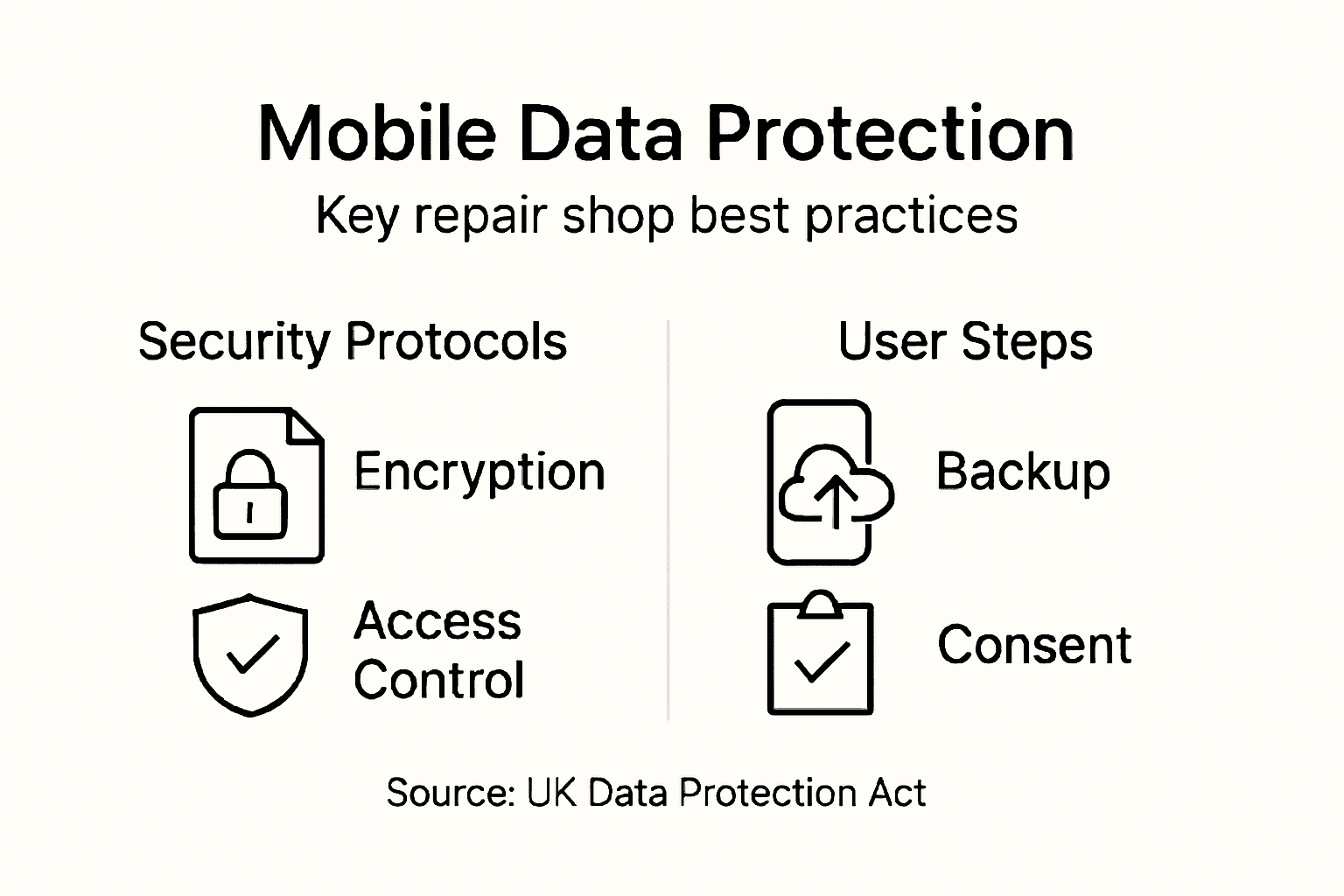
Pro tip: Always request explicit consent and document data handling procedures before initiating any mobile device repair to maintain transparent and ethical data protection practices.
Types Of Mobile Data At Risk
Mobile devices have become digital repositories of incredibly sensitive personal information, creating a complex landscape of data that requires vigilant protection. Diverse data types span multiple domains of personal and professional life, each presenting unique privacy challenges and potential vulnerabilities during device repairs.
The primary categories of mobile data at risk include:
-
Personal Identification Information
- Full names
- Home addresses
- Contact details
-
Communication Records
- SMS messages
- Email content
- Call logs and duration
-
Financial Data
- Banking app credentials
- Payment information
- Transaction histories
-
Biometric and Health Data
- Fitness tracking metrics
- Medical app information
- Location-based health records
Technical experts recognise that mobile devices capture an unprecedented volume of personal information, making them potential treasure troves of sensitive data. The breadth of information stored ranges from mundane daily communications to highly confidential personal and professional interactions.
Location tracking represents a particularly intrusive form of data collection, with smartphones continuously generating detailed movement profiles. These digital footprints can reveal extensive personal patterns, including home and work locations, frequented establishments, and travel histories.
The following table highlights different types of mobile data and potential impacts if compromised:
| Data Type | Unique Risk Factor | Consequence of Breach |
|---|---|---|
| Personal Identification | Identity theft risk | Unauthorised account access |
| Communication Records | Eavesdropping risk | Privacy violation, blackmail |
| Financial Data | Direct monetary loss | Fraudulent transactions |
| Biometric and Health Data | Sensitive profiling | Medical privacy infringement |
| Location History | Detailed movement exposure | Personal safety threats |
Pro tip: Regularly audit the permissions granted to mobile applications and remove access for apps that no longer require detailed personal information.
Secure Data Handling During Repairs
Mobile device repairs present a critical moment of vulnerability for sensitive personal information. Security frameworks demand comprehensive protocols to protect user data throughout the repair process, ensuring comprehensive confidentiality and integrity.
Essential steps for secure data handling include:
-
Pre-Repair Data Protection
- Complete device backup
- Implement temporary data encryption
- Obtain explicit customer consent
-
Access Control Measures
- Limit repair technician access
- Use multi-factor authentication
- Document all interaction logs
-
Data Isolation Techniques
- Create isolated repair workstations
- Use segregated network environments
- Implement strict data access permissions
Repair environments must function as secure zones where sensitive information remains strictly protected. This requires a systematic approach that combines technical safeguards with rigorous procedural controls, minimising potential risks of unauthorised data exposure.

Technical professionals must treat each device as a potential reservoir of confidential information, implementing robust security protocols that prevent inadvertent data leakage. This involves not just technological solutions, but also comprehensive staff training and strict operational guidelines.
Pro tip: Develop and consistently enforce a standardised data handling checklist that technicians must complete before, during, and after each device repair.
Legal Responsibilities Under UK Law
Mobile repair businesses operate within a complex legal landscape that demands rigorous adherence to data protection regulations. Legal responsibilities under UK law extend far beyond simple technical compliance, requiring comprehensive approaches to safeguarding personal information.
Key legal obligations for mobile repair providers include:
-
Data Processing Requirements
- Process data lawfully and transparently
- Collect only necessary information
- Obtain explicit customer consent
-
Security Mandate
- Implement robust technical protections
- Prevent unauthorized data access
- Maintain comprehensive security records
-
Breach Notification Protocols
- Report data incidents within 72 hours
- Inform affected individuals
- Document investigation processes
The UK Data Protection Act 2018 and UK GDPR establish strict frameworks that demand proactive data management. These regulations require repair businesses to demonstrate not just intention, but systematic evidence of data protection strategies, placing significant accountability on service providers.
Penalties for non-compliance can be severe, with potential fines reaching up to £17.5 million or 4% of global annual turnover. This substantial financial risk underscores the critical importance of implementing comprehensive data protection mechanisms throughout the repair process.
Here is a summary of major regulatory requirements for UK mobile repair businesses:
| Regulation Element | Practical Implication | Potential Consequences |
|---|---|---|
| Lawful Processing | Data collected must be justified | Improper data use risks legal action |
| Explicit Consent | Customers must agree to all data handling | Lack of consent renders processing unlawful |
| Data Breach Notification | Incidents must be reported swiftly | Failure to notify may result in heavy fines |
| Security Protocols | Technical safeguards required at all times | Weak protocols increase liability |
| Documentation | Audit trail of actions is mandatory | Poor records lead to compliance risk |
Pro tip: Create and maintain a detailed documentation trail demonstrating your organisation’s data protection protocols and individual consent mechanisms.
Common Data Protection Mistakes To Avoid
Data protection during mobile repairs is a minefield of potential risks that can compromise sensitive personal information. Critical data protection oversights frequently undermine even the most well-intentioned repair processes, creating significant vulnerabilities for both technicians and customers.
Most prevalent data protection mistakes include:
-
Pre-Repair Negligence
- Failing to backup customer data
- Skipping device encryption checks
- Overlooking consent documentation
-
Access Control Failures
- Permitting unrestricted personnel access
- Weak authentication protocols
- Inadequate user permission tracking
-
Compliance Violations
- Collecting excessive personal information
- Neglecting regulatory requirements
- Insufficient data handling documentation
Technical professionals must recognise that these mistakes are not merely procedural errors, but potential legal and ethical breaches. Each oversight represents a potential pathway for data compromise, potentially exposing businesses to significant financial and reputational damage.
Comprehensive protection requires a systematic approach that goes beyond technical measures, integrating robust processes, continuous staff training, and a proactive culture of data privacy and security awareness.
Pro tip: Implement a mandatory pre-repair checklist that explicitly documents data protection steps and customer consent for every single device serviced.
Elevate Your Mobile Repair Practice with Reliable Parts and Privacy Protection
Protecting mobile data during repairs demands meticulous attention to detail and high-quality components you can trust. The article highlights critical pain points such as managing access control, maintaining data confidentiality, and ensuring secure data handling throughout repair processes. At Buy2fix, we understand these challenges and empower repair professionals and DIY enthusiasts with an extensive range of premium Mobile Phone Repair Parts designed to meet stringent data protection and technical standards.
Choose from expertly tested replacement components including LCD screens, charging ports, and motherboard parts that support secure device servicing and help you uphold your legal and ethical responsibilities. Ready to enhance your repair workflow while safeguarding your customers’ sensitive information? Explore our full inventory and benefit from free UK Mainland shipping and a one-year warranty by visiting Buy2fix today. Take the next step towards professional-grade repairs with trustworthy parts and compliance peace of mind.
Frequently Asked Questions
What are the key strategies for protecting mobile data during repairs?
To protect mobile data during repairs, it is essential to backup the device, implement temporary data encryption, restrict technician access, use multi-factor authentication, and document all interactions to ensure confidentiality and integrity.
How can I ensure my personal information is secure before my device is repaired?
Before device repairs, you should back up your data, encrypt sensitive information, and obtain explicit consent for data handling procedures to better maintain your privacy.
What are the legal responsibilities of mobile repair businesses regarding data protection?
Mobile repair businesses must comply with data protection regulations by processing data lawfully, implementing security measures, maintaining records of data handling, and notifying individuals in case of a breach within a stipulated time frame.
What common mistakes should I avoid to ensure my data is protected during repairs?
Common mistakes to avoid include failing to back up data, neglecting encryption, allowing unrestricted access to repair technicians, and not adequately documenting customer consent for data handling.
Recommended
- Mobile Phone Repair Basics: Essential Skills and Risks – buy2fix
- 7 Essential Tips for Repairing and Reusing Old Cell Phones – buy2fix
- 7 Must-Know Latest Mobile Repair Trends 2025 Revealed – buy2fix
- Common Phone Repair Mistakes: Costly DIY Errors – buy2fix
- RFID Protection: Shielding Privacy in Everyday Life
Let customers speak for us
item was packaged safely, no damage. it’s now October and since replacing it in January i’ve had no issues.

Great

They had what I was looking for ... ordering was easy, payment was easy, delivery was as promised.
-

Absolutely love this case! Heavy, sturdy and full coverage

Thank You! I really love it! 😊

For Garmin Forerunner 165 20mm Two Color Textured Silicone Watch Band(Teal)

For Samsung Galaxy S26+ 5G R-JUST Sliding Camera Life Waterproof Holder Phone Case(Black)

I ❤️ love it, it's absolutely amazing I'm sooo happy 😊

Great

I saw this item and it was just what I was looking for. I found it here but not in Amazon or e-bay. However, it was in UK, I was surprised to find that they were able to ship it to the US. Excellent company, would do business with again

This is great for when out and about, to sharpen either coloured pencils, or watercolour pencils….would order again.

Great items would bye again

I have purchased several items from this store before. Recently, I encountered an issue with my latest order. After reporting the problem to customer support, they were consistently attentive and made every effort to resolve the situation. Upon investigation, they acknowledged the issue and promptly fixed it. This experience has increased my level of trust in this store.
Thank you so much. I'm so happy.
