

Repair Shop Versus DIY – How Your Choice Impacts Cost, Risk and Results
Cracked screens and draining batteries leave many British smartphone owners weighing up the cost of a quick fix. Tackling repairs yourself promises lower expenses and instant results, but the stakes can run high if things go wrong. Navigating the decision between DIY and professional repair means balancing the technical complexity of your device with financial risk, warranty protection, and your own skills. This guide clarifies the differences so you can make confident choices for your next repair.
Table of Contents
- Repair Shop Versus DIY: Core Differences
- Common Repairs and Who Should Attempt Them
- Required Skills, Tools, and Success Rates
- Cost Comparison and Warranty Protection
- Risks, Liabilities, and Consumer Rights
Key Takeaways
| Point | Details |
|---|---|
| Technical Skills Required | DIY repairs demand moderate to advanced skills, while professional services leverage certified expertise for higher success rates. |
| Cost Implications | DIY may appear cheaper initially, but potential mistakes can escalate costs significantly compared to professional repairs. |
| Warranty Considerations | DIY repairs often void manufacturer warranties, whereas professional repairs typically preserve them, reducing long-term financial risks. |
| Risk Evaluation | Assess the complexity of the repair, your technical capability, and potential liabilities before deciding between DIY and professional services. |
Repair Shop Versus DIY: Core Differences
Navigating the landscape of mobile phone repairs presents smartphone owners with a critical decision: tackle repairs independently or seek professional assistance. The choice between do-it-yourself (DIY) and professional repair services involves weighing multiple factors, including technical complexity, cost implications, and potential risks.
The primary differences between DIY and professional repair approaches can be broken down into several key dimensions:
- Technical Complexity: DIY repairs require specific technical skills and understanding of intricate device components
- Cost Considerations: Professional services typically charge higher fees compared to self-repair
- Risk Management: Professional shops offer warranty protection and guaranteed workmanship
- Time Investment: DIY repairs demand significant personal time and research
Professional repair strategies often provide a comprehensive solution that mitigates potential damage risks. While DIY enthusiasts might save money initially, the potential for inadvertent device destruction can quickly escalate repair expenses.
Economic factors significantly influence repair choices. Consumer research indicates that cost savings primarily drive DIY behaviour, yet expertise and trust remain crucial considerations. Smartphone owners must carefully assess their technical capabilities and the specific repair’s complexity before deciding.
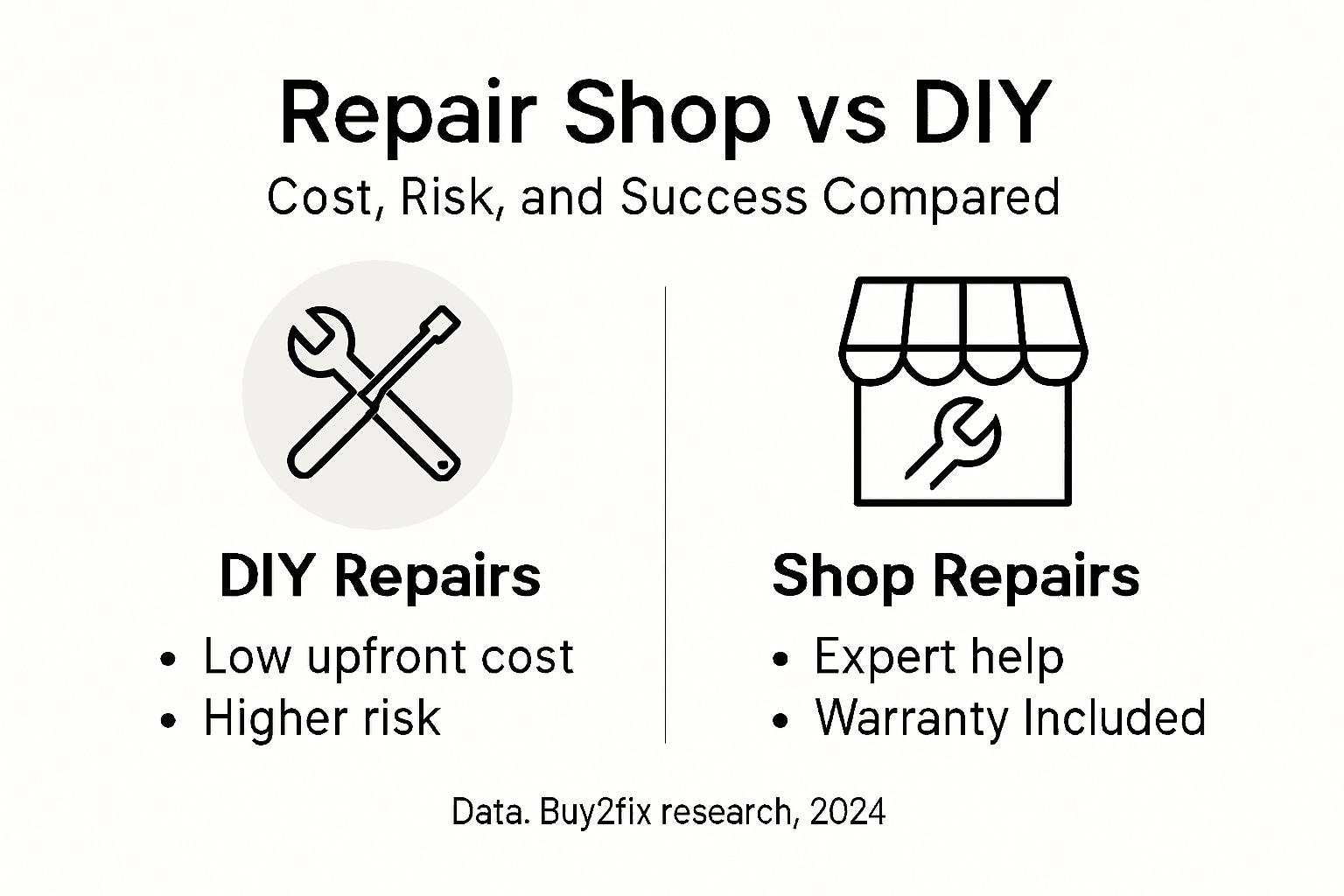
Here’s a high-level comparison of DIY and professional repair strategies for smartphones:
| Aspect | DIY Repair Approach | Professional Repair Approach |
|---|---|---|
| Skill Requirement | Moderate to advanced technical skills | Certified training and expertise |
| Upfront Cost | Lower for common repairs | Higher due to labour charges |
| Warranty Impact | Often voids manufacturer’s warranty | Commonly preserves or extends warranty |
| Success Rate | Varies widely by task | Consistently high across repairs |
| Financial Risk | Full risk borne by user | Lower risk with liability insurance |
| Time Commitment | Substantial research and effort | Minimal involvement from the user |
Key Diagnostic Questions for Repair Approach:
- Do I understand the device’s internal architecture?
- Do I have the necessary specialised tools?
- Am I comfortable potentially voiding the device warranty?
- Can I accurately diagnose the underlying issue?
Pro tip: Always document your device’s condition with photographs before attempting any DIY repair to track potential pre-existing damage and support potential warranty claims.
Common Repairs and Who Should Attempt Them
Smartphone repairs range from straightforward tasks to complex technical challenges that demand professional intervention. Understanding which repairs are suitable for DIY enthusiasts and which require expert skills is crucial for maintaining device functionality and preventing costly mistakes.
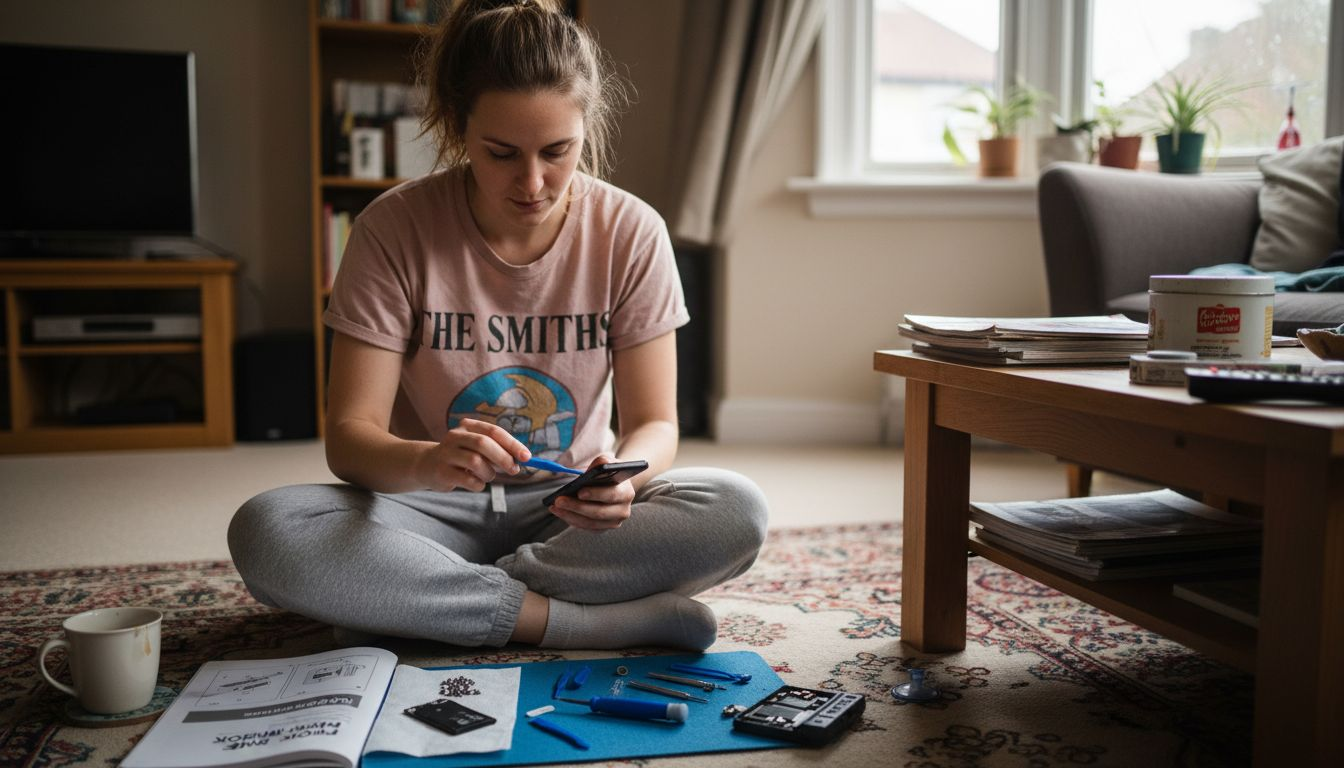
Home repair safety guidelines provide valuable insights into assessing repair complexity, a principle equally applicable to smartphone maintenance. The key is recognising your technical skill level and the potential risks involved with each repair type.
Smartphone Repair Difficulty Categories:
- Low Risk/Easy: Battery replacements, screen protector installation
- Moderate Complexity: Screen replacements, charging port cleaning
- High Risk/Advanced: Motherboard repairs, water damage restoration
For smartphone repairs, several critical factors determine whether a DIY approach is appropriate:
- Required technical expertise
- Availability of specialised tools
- Potential impact on device warranty
- Cost of potential mistakes
- Complexity of the specific device model
Most smartphone manufacturers design modern devices with intricate internal architectures that challenge amateur repair attempts. Delicate components like logic boards, soldered connections, and integrated circuits require precision and specialised knowledge.
Professional technicians possess diagnostic equipment and training that enable them to identify subtle issues beyond visual inspection.
Common Smartphone Repairs Suitable for DIY:
- Battery replacement for certain models
- Simple external component replacements
- Cleaning internal dust and debris
- Replacing basic external parts like buttons
Repairs Requiring Professional Intervention:
- Motherboard diagnostics and repairs
- Complex internal component replacements
- Water damage restoration
- Advanced soldering work
- Intricate diagnostic procedures
Pro tip: Always research your specific device model and consult manufacturer guidelines before attempting any self-repair to avoid unintentional damage.
The table below outlines which common smartphone repairs are best suited to DIY or require expert intervention:
| Repair Type | DIY Suitable For | Professional Only |
|---|---|---|
| Screen Replacement | Experienced DIYers | Curved/advanced screens |
| Battery Replacement | User-replaceable models | Sealed units |
| Charging Port Cleaning | Most users | Faulty port repair |
| Water Damage Restoration | Not recommended | Essential |
| Motherboard Diagnostics | Not recommended | Essential |
Required Skills, Tools, and Success Rates
Successful smartphone repairs demand a sophisticated blend of technical knowledge, precision tools, and practical experience. DIY repair skill assessment reveals that not all repairs are created equal, with success rates dramatically varying based on individual capabilities and repair complexity.
Essential Technical Skills for Smartphone Repairs:
- Basic electronics understanding
- Steady hand-eye coordination
- Patience and methodical approach
- Knowledge of electronic component sensitivity
- Basic soldering capabilities
Critical Tools Required for DIY Repairs:
- Precision screwdriver set
- Anti-static wrist strap
- Specialized smartphone opening tools
- Magnifying lens or digital microscope
- Thermal imaging device (optional)
Professional repair technicians typically achieve significantly higher success rates due to their comprehensive training and access to specialized diagnostic equipment. The margin between amateur and professional repair outcomes can be substantial, with professional interventions reducing potential device damage by up to 70%.
Successful repairs depend more on understanding device architecture than possessing expensive tools.
The probability of successful repair varies dramatically across different smartphone models and repair complexity:
- Screen replacements: 60-80% success rate for experienced DIY enthusiasts
- Battery replacements: 70-90% success rate
- Charging port repairs: 40-60% success rate
- Motherboard diagnostics: Less than 20% success rate for amateurs
Factors Impacting DIY Repair Success:
- Individual technical expertise
- Quality of replacement parts
- Specific smartphone model complexity
- Available diagnostic equipment
- Precision of repair technique
Pro tip: Practice on older or discarded devices to develop repair skills before attempting repairs on your primary smartphone.
Cost Comparison and Warranty Protection
Comprehensive repair cost analysis reveals that smartphone repair strategies involve complex financial considerations beyond simple upfront expenses. DIY and professional repair approaches each carry unique economic implications that extend far beyond initial repair costs.
Cost Breakdown for Smartphone Repairs:
- DIY Repair Expenses
- Replacement parts
- Specialized tools
- Potential device replacement if damaged
- Professional Repair Expenses
- Labour charges
- Parts replacement
- Diagnostic fees
- Warranty coverage
Typical smartphone repair scenarios demonstrate significant financial variations:
- Screen Replacement
- DIY Cost: £30-£80
- Professional Repair: £70-£200
- Battery Replacement
- DIY Cost: £15-£50
- Professional Repair: £50-£120
- Charging Port Repair
- DIY Cost: £20-£60
- Professional Repair: £80-£180
Professional repairs often include comprehensive warranty protection, mitigating long-term financial risks.
Warranty Considerations for Different Repair Approaches:
-
DIY Repairs
- Typically void manufacturer’s warranty
- No additional protection
- Full financial risk assumed by user
-
Professional Repairs
- Often maintain existing warranty
- Provide additional service guarantees
- Reduce potential long-term device replacement costs
Key Financial Risk Factors:
- Potential device damage during self-repair
- Cost of specialised tools
- Quality of replacement parts
- Complexity of specific smartphone model
- Individual technical expertise
Pro tip: Always compare total potential costs, including tools and potential device replacement, not just immediate repair expenses.
Risks, Liabilities, and Consumer Rights
Consumer repair rights landscape demonstrates the complex legal terrain surrounding smartphone repair, with emerging legislation protecting consumers’ ability to modify and repair their own devices.
Key Consumer Protection Dimensions:
- Legal right to repair
- Protection against manufacturer restrictions
- Access to repair documentation
- Transparency in repair processes
- Protection of consumer investment
Legal risks associated with smartphone repairs vary dramatically between DIY and professional approaches. Professional repair services typically carry comprehensive liability insurance, whereas individual repairs expose consumers to multiple potential legal and financial vulnerabilities.
Liability Risk Categories:
- Personal device damage
- Data loss potential
- Voiding manufacturer warranties
- Potential safety hazards
- Financial exposure from unsuccessful repairs
DIY repairs can inadvertently compromise consumer protection mechanisms designed to safeguard technological investments.
Consumer Rights in Repair Scenarios:
- Right to obtain repair documentation
- Right to purchase replacement parts
- Right to choose independent repair services
- Protection against unreasonable manufacturer restrictions
- Statutory warranty considerations
Primary Risk Assessment Factors:
- Technical complexity of repair
- Potential for inadvertent device damage
- Impact on existing manufacturer warranties
- Individual technical competence
- Quality of replacement components
Pro tip: Document every repair attempt meticulously, including photographs and specific actions taken, to protect potential warranty claims.
Choose Smart Repair Solutions That Reduce Risk and Save Money
Facing the challenge of deciding between spending hours on DIY phone repairs or trusting professional expertise is common. The article highlights critical concerns such as technical complexity, voiding warranties, and potential damage risks that can convert a simple fix into an expensive problem. If you are aiming to cut costs without sacrificing quality or risking your device, understanding your limits and having access to trusted parts is essential.
At Buy2fix, we offer a comprehensive range of mobile phone repair parts that cater to both DIY enthusiasts and professional technicians. From high-quality LCD screens and battery replacements to delicate motherboard components, our products come with a one-year warranty and quality assurance that help safeguard your investment. Benefit from free UK Mainland shipping and competitive pricing with direct sourcing for genuine and aftermarket parts.
Ready to take control of your phone repair with confidence? Explore our Mobile Phone Repair Parts collection now and equip yourself with the right tools and reliable components. Whether you choose to tackle the repair yourself or prepare for a professional fix, make sure you have quality parts that reduce risks and improve success rates. Visit Buy2fix today and make your repair journey safer and more cost-effective.
Frequently Asked Questions
What are the main differences between DIY repairs and professional repairs?
The primary differences include technical complexity, cost, warranty impact, success rates, financial risk, and time commitment. DIY repairs require specific skills and can void warranties, while professional repairs provide warranty protection and a higher success rate.
What types of smartphone repairs are recommended for DIY enthusiasts?
DIY repairs are generally suitable for tasks such as battery replacements, simple external replacements, and internal cleaning of dust and debris. More complex tasks, like motherboard repairs and water damage restoration, should be handled by professionals.
How do costs compare between DIY repairs and professional repairs?
DIY repairs typically involve lower upfront costs for parts and tools, while professional repairs include labour charges and warranty coverage, leading to higher overall costs but reduced financial risk from potential damage.
What should I consider before attempting a DIY smartphone repair?
Consider your technical expertise, the availability of specialised tools, the potential impact on warranty, the cost of any mistakes, and the complexity of the specific repair. Assess your skills and the intricacies of your device model before proceeding.
Recommended
Let customers speak for us
The acid test of any company is how they respond when things go wrong. The Buy2Fix team were efficient in dealing with my emails and resolved the issue to my complete satisfaction

For Samsung Galaxy A26 SM-A266B Original Earpiece Speaker with Cable

Very good communication throught. Good product

Well made part very strong easy to fit great value for the money

Well packed, with fast shipping :)

Exactly what the doctor ordered…great color, comfort, and durability. Trust this watch band!

Brilliant strap, second purchase, bought bracelet before. Excellent value. Thank you

Great item for splitting your Audio signal

Outstanding product!
Next level customer service.

Very satisfied but the delivery needs to get more faster...

Good price,quick delivery

Best phone case ever! This is my second one as I broke my first. Would defo recommend

Great fitting Apple Watch bands

For Apple Watch Ultra 3 / 2 / 1 49mm RedPepper Armor Metal Case Integrated Silicone Watch Band(Steel Black White)

Good price and quick postage
