


News
Smartphone Motherboard – Crucial Facts for Repair Success
Most british smartphone repairs hinge on a single, often misunderstood component. The motherboard forms the backbone of every modern device, containing layers of critical electronics and complex systems. For DIY enthusiasts and repair professionals alike, believing common myths about this intricate part can lead to costly mistakes. This guide breaks down the real structure and technical roles of the smartphone motherboard, highlighting the essentials that every british repair expert needs to know for dependable results.
Table of Contents
- Defining The Smartphone Motherboard And Common Myths
- Main Types And Layouts Across Popular Brands
- Essential Motherboard Features For Accurate Repairs
- Diagnosing Faults: Methods And Key Challenges
- Risks, Costs, And Limits Of Diy Motherboard Repair
Key Takeaways
| Point | Details |
|---|---|
| Smartphone Motherboard Complexity | A smartphone motherboard is a multilayered platform critical for device performance, comprising numerous electronic components that require specialised knowledge for repair. |
| Types of Motherboard Designs | Manufacturers typically use rigid, flexible, and rigid-flex PCB designs, each tailored for specific functional requirements in smartphones. |
| Risks of DIY Repairs | DIY motherboard repairs pose significant risks, including potential irreparable damage and voiding warranties; professional repairs ensure higher success rates and preserve device integrity. |
| Diagnostic Importance | Advanced diagnostic techniques are essential for accurately identifying motherboard faults, leveraging modern tools and methodologies for optimal repair outcomes. |
Defining the smartphone motherboard and common myths
A smartphone motherboard represents the critical central nervous system of mobile devices, serving as the primary printed circuit board (PCB) that interconnects and enables communication between essential electronic components. Mainboard architecture fundamentally determines a smartphone’s performance, reliability, and functionality.
Contrary to popular misconceptions, a smartphone motherboard is not merely a simple circuit board but a sophisticated multilayered platform integrating numerous intricate electronic subsystems. The board contains complex microprocessors, memory modules, power management circuits, and communication interfaces that collectively enable smartphone functionality. Professional repair technicians understand that each microscopic connection and component plays a critical role in the device’s overall performance.
Common myths surrounding smartphone motherboards often misrepresent their complexity and significance. Many individuals mistakenly believe that motherboard damage is always irreparable or that replacement requires extensive technical knowledge. In reality, experienced technicians can diagnose and resolve many motherboard issues through systematic troubleshooting and precise component-level interventions. Understanding the smartphone logic board structure helps demystify these complex electronic ecosystems.
Pro tip: Always discharge static electricity and use anti-static equipment when handling smartphone motherboards to prevent accidental component damage.
Main types and layouts across popular brands
Smartphone motherboard design is a complex engineering discipline with multiple PCB configuration types. Manufacturers predominantly utilise three primary circuit board architectures: rigid, flexible, and rigid-flex designs, each serving distinct functional requirements within mobile device ecosystems.
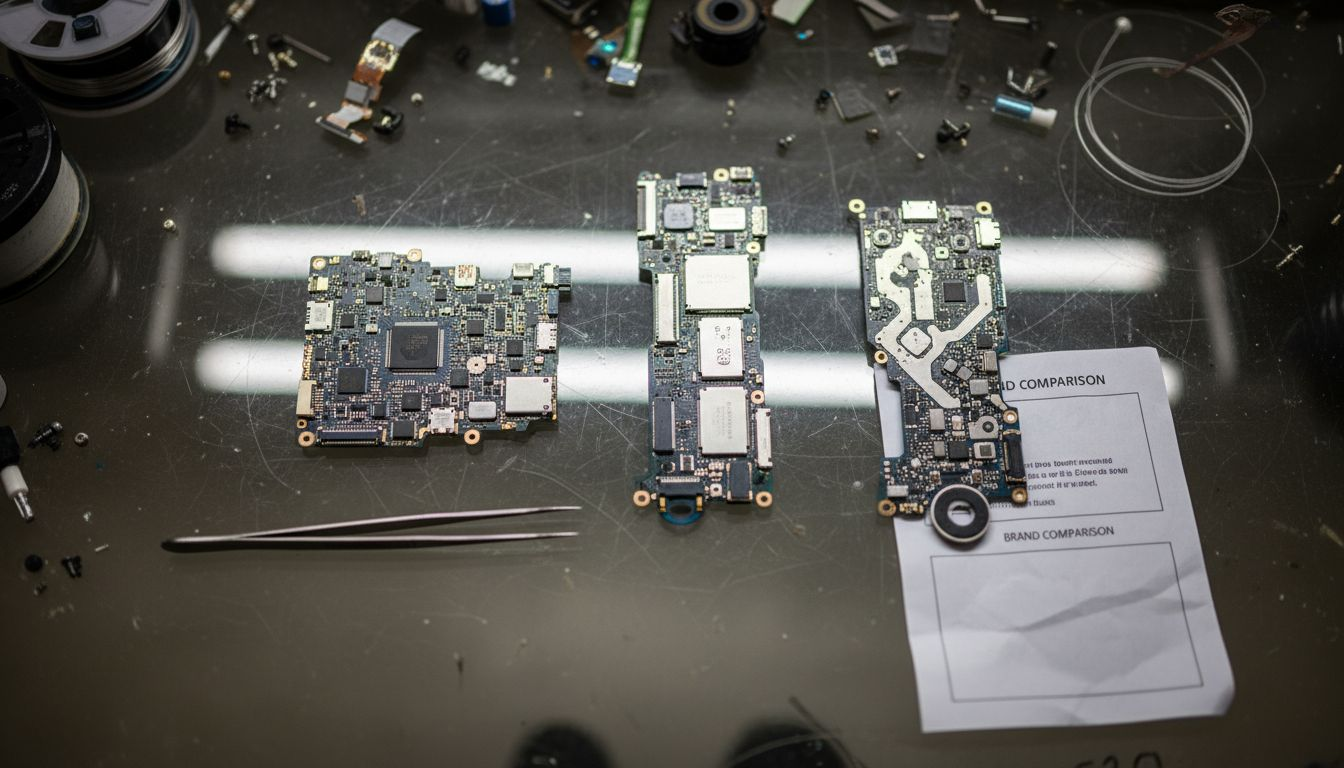
Rigid PCBs represent the most traditional motherboard configuration, featuring multiple layers of inflexible substrate materials that provide exceptional mechanical stability and robust electronic interconnectivity. These boards are typically constructed with multiple copper layers laminated together, enabling high-density component placement and sophisticated signal routing. Professional smartphone manufacturers like Apple and Samsung extensively employ multilayered rigid PCB designs to maximise internal component integration and maintain stringent performance standards.
Flexible and rigid-flex motherboards offer advanced engineering solutions for modern smartphone designs. Flexible PCBs enable intricate folding and bending capabilities, allowing manufacturers to create more compact and ergonomic device layouts. These circuit boards are particularly crucial in areas requiring dynamic movement, such as hinged components or displays with complex curvature. Rigid-flex technologies represent a sophisticated hybrid approach, combining the structural integrity of rigid boards with the adaptability of flexible substrates, facilitating unprecedented design innovations in contemporary smartphone engineering.
Here is a concise comparison of smartphone PCB types and their typical use cases:
| PCB Type | Key Properties | Typical Applications |
|---|---|---|
| Rigid | High stability, multilayered | Main logic board, core CPU area |
| Flexible | Bendable, fits tight spaces | Hinges, curved display connections |
| Rigid-Flex | Mixed stability and flexibility | Foldable designs, complex layouts |
Pro tip: When assessing smartphone motherboard compatibility, always verify the precise layer count and material specifications to ensure optimal repair and replacement outcomes.
Essential motherboard features for accurate repairs
Smartphone motherboard repairs demand exceptional precision and specialised knowledge, with comprehensive repair toolkit requirements forming the foundation of successful technical intervention. Professional technicians must understand the intricate landscape of electronic components, focusing on critical features that determine repair feasibility and long-term device functionality.
Key diagnostic features include robust solder connections, clear component labelling, and accessible circuitry design. Motherboards typically incorporate multiple signal layers, power management circuits, and intricate communication interfaces that require meticulous examination. Experienced repair professionals develop sophisticated visual and electrical diagnostic skills, learning to identify microscopic damage indicators such as thermal stress marks, microfractures in copper traces, and subtle component degradation that might compromise overall system performance.
The most critical motherboard features for accurate repairs involve component modularity, thermal management, and signal integrity. Advanced diagnostic tools like high-resolution microscopes, precision multimeters, and specialised thermal imaging equipment enable technicians to perform detailed component-level assessments. Understanding the specific architectural nuances of different smartphone manufacturers becomes crucial, as each brand implements unique motherboard design philosophies that impact repair strategies and component interconnectivity.
Pro tip: Invest in high-quality anti-static equipment and precision tools to minimise the risk of unintentional electrical damage during intricate motherboard repair procedures.
Diagnosing faults: methods and key challenges
Smartphone motherboard diagnostics represent a complex technical discipline, with intelligent fault detection techniques emerging as critical strategies for modern repair professionals. Advanced diagnostic methodologies now extend far beyond traditional visual inspection, incorporating sophisticated technological approaches that analyse intricate electrical signatures and power consumption patterns.
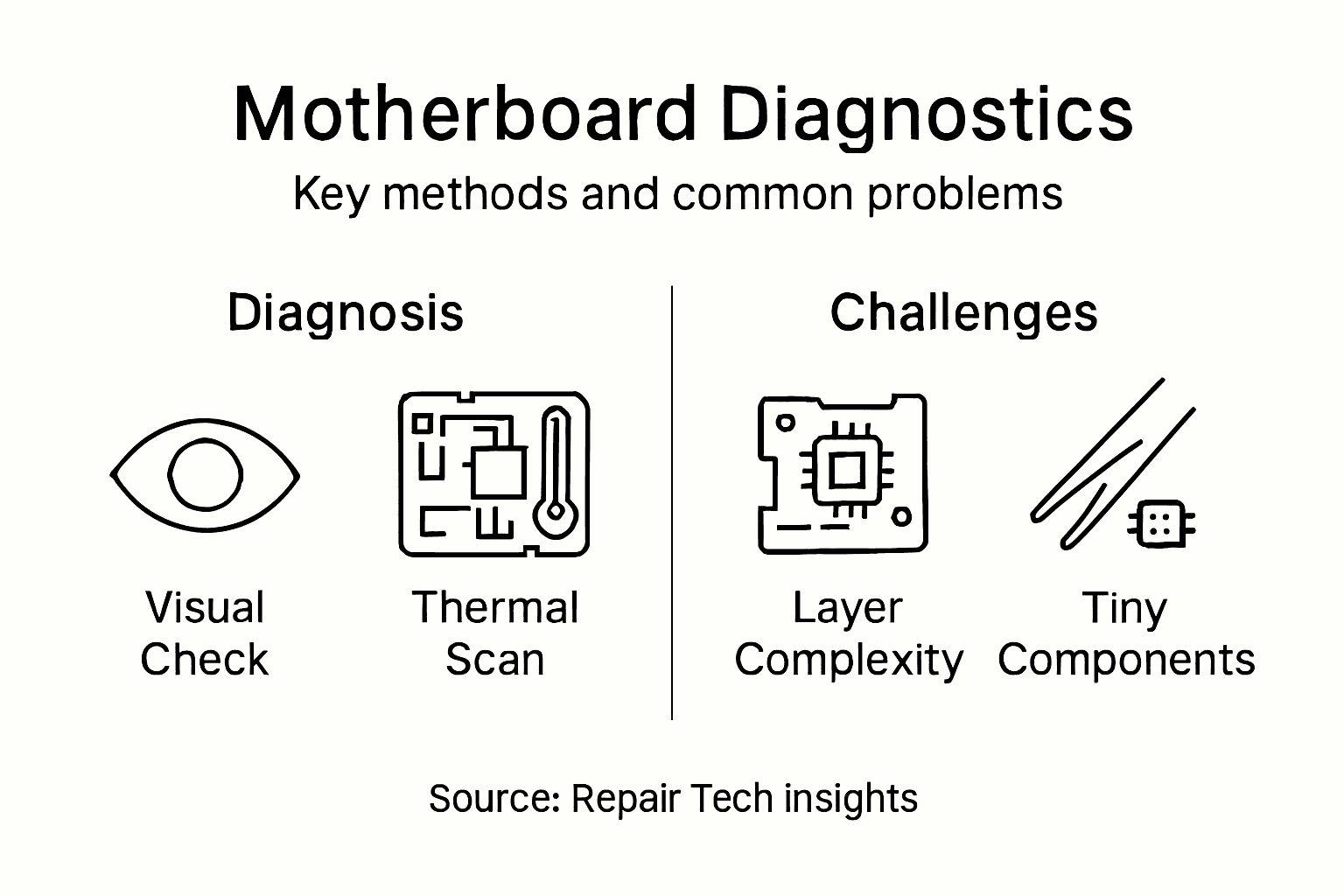
Diagnostic challenges arise from the increasingly complex multilayered circuit architectures found in contemporary smartphones. Technicians must navigate signal interference, microscopic component interactions, and nuanced performance anomalies that can manifest through subtle electrical characteristics. Professional-grade diagnostic processes typically involve comprehensive multistage assessments, including thermal imaging, electrical continuity testing, and advanced power consumption analysis to identify potential motherboard failures.
Modern diagnostic approaches leverage cutting-edge technologies such as machine learning algorithms and high-resolution diagnostic tools to decode complex motherboard fault patterns. These methods enable technicians to detect microscopic defects that might escape traditional diagnostic techniques, including hairline fractures in copper traces, intermittent component failures, and subtle power management irregularities. Understanding the underlying electrical and thermal dynamics of smartphone motherboards becomes crucial for accurate fault identification and successful repair interventions.
Pro tip: Develop a systematic diagnostic workflow that combines visual inspection, electrical testing, and thermal analysis to maximise your fault detection accuracy.
Risks, costs, and limits of DIY motherboard repair
DIY smartphone motherboard repairs present a minefield of potential complications, with significant technical challenges that can transform a well-intentioned repair attempt into a costly disaster. Professional technicians understand that these intricate electronic ecosystems require specialised knowledge, precision tools, and an intimate understanding of complex electronic architectures.
The financial risks of amateur motherboard repairs extend far beyond initial expectations. Inexperienced technicians often underestimate the microscopic precision required, potentially causing irreversible damage to sensitive electronic components. Typical failure modes include static electricity discharge, improper heat application, and accidental disconnection of critical circuit traces. These mistakes can transform a seemingly minor repair into a complete device replacement, dramatically increasing overall repair costs compared to professional intervention.
Warranty implications represent another critical consideration for DIY repair enthusiasts. Manufacturers frequently include clauses that immediately void device warranties upon unauthorized internal modifications. Professional repair centres possess specialised diagnostic equipment, calibrated tools, and technical certifications that enable them to perform repairs while maintaining manufacturer warranty conditions. This expertise ensures not just successful repair, but also preserves the device’s long-term reliability and operational integrity.
Below is a summary of common DIY motherboard repair risks and professional repair advantages:
| Factor | DIY Repair Risks | Professional Repair Advantages |
|---|---|---|
| Precision Tools | Often inadequate or lacking | Specialist, calibrated equipment |
| Warranty Impact | Frequently voids manufacturer | Usually preserves warranty |
| Success Rate | High failure risk, costly errors | Greater success, fewer device losses |
Pro tip: Always consult professional diagnostic services before attempting complex motherboard repairs, as the potential cost of mistakes far outweighs the perceived savings of a DIY approach.
Secure Smartphone Motherboard Repairs with Quality Parts from Buy2fix
Understanding the complexity of smartphone motherboards and the risks involved in DIY repairs emphasises the need for precision components and expert-grade tools. Whether you face challenges with multilayered rigid or flexible PCBs, Buy2fix offers a comprehensive selection of high-quality motherboard components and repair parts to support both professional technicians and DIY enthusiasts. Avoid costly mistakes from improper handling or substandard materials by sourcing from a trusted UK specialist.
Discover our full range of Mobile Phone Repair Parts including motherboard components designed for popular brands like iPhone, Samsung Galaxy, and Huawei. Take control of your repair success with quality assurance, UK mainland free shipping, and a one-year warranty for peace of mind. Visit Buy2fix today to equip yourself with the right parts and transform challenging motherboard repairs into reliable restoration projects.
Frequently Asked Questions
What is a smartphone motherboard and why is it important?
A smartphone motherboard is the main printed circuit board that connects and allows communication between all crucial electronic components in a mobile device. It plays a vital role in the device’s performance, reliability, and functionality.
What are the common types of smartphone motherboards?
There are three primary types of smartphone motherboards: rigid, flexible, and rigid-flex. Rigid boards offer excellent stability, flexible boards allow for intricate designs, and rigid-flex boards combine the advantages of both, catering to advanced smartphone designs.
What features should I look for in a smartphone motherboard for repairs?
Key features include robust solder connections, clear component labelling, and accessible circuitry design. Additionally, understanding the specific architecture and electrical dynamics is crucial for accurate repairs.
What are the risks involved in DIY smartphone motherboard repairs?
DIY smartphone motherboard repairs carry significant risks, including potential irreversible damage to sensitive components and voiding of warranties. Professional repair services utilise specialised tools and knowledge to ensure higher success rates and maintain device reliability.
Recommended
Let customers speak for us
item was packaged safely, no damage. it’s now October and since replacing it in January i’ve had no issues.

Great

They had what I was looking for ... ordering was easy, payment was easy, delivery was as promised.
-

Absolutely love this case! Heavy, sturdy and full coverage

Thank You! I really love it! 😊

For Garmin Forerunner 165 20mm Two Color Textured Silicone Watch Band(Teal)

For Samsung Galaxy S26+ 5G R-JUST Sliding Camera Life Waterproof Holder Phone Case(Black)

I ❤️ love it, it's absolutely amazing I'm sooo happy 😊

Great

I saw this item and it was just what I was looking for. I found it here but not in Amazon or e-bay. However, it was in UK, I was surprised to find that they were able to ship it to the US. Excellent company, would do business with again

This is great for when out and about, to sharpen either coloured pencils, or watercolour pencils….would order again.

Great items would bye again

I have purchased several items from this store before. Recently, I encountered an issue with my latest order. After reporting the problem to customer support, they were consistently attentive and made every effort to resolve the situation. Upon investigation, they acknowledged the issue and promptly fixed it. This experience has increased my level of trust in this store.
Thank you so much. I'm so happy.
