

Fix cracked phone screen UK 2026: Save up to 60%
Professional UK screen repairs can cost up to £200, but buying parts yourself can reduce this to under £80. Phone screen repair costs vary widely depending on your device model, screen type, and repair method. Understanding these factors helps you make cost-effective decisions without compromising quality. This guide breaks down typical UK repair costs, explains the differences between screen types, and weighs DIY versus professional repair options to help you choose the best approach for your situation and budget.
Table of Contents
- Typical Costs And Repair Price Ranges
- Types Of Replacement Screens: Oem, Aftermarket, And Refurbished
- Diy Repair Costs And Risks
- Warranty And Consumer Rights In The Uk
- Where To Source Quality Parts In The Uk
- Common Misconceptions About Repair Costs And Quality
- Making The Best Choice: Diy Vs Professional Repair
- Explore Buy2fix For Quality Repair Parts And Guidance
Key takeaways
| Point | Details |
|---|---|
| Professional repair costs | Professional screen repair costs UK range from £50 to £200 depending on model and screen type. |
| OEM vs aftermarket screens | OEM screens cost up to 50% more but offer better durability than aftermarket alternatives. |
| DIY savings and risks | DIY repair cost savings can reach 60% but carry a 35% risk of installation issues. |
| Warranty protection | One-year warranties are common on quality aftermarket parts and comparable to professional services. |
| UK supplier benefits | Purchasing from reputable UK suppliers ensures quality and consumer rights protections. |
Typical costs and repair price ranges
UK professional repair costs typically range between £50 and £200 depending on phone model. Budget and mid-range devices usually fall into the £50 to £100 bracket, while premium flagship phones push costs higher. High-end phones can exceed £180 for professional screen replacement.
Several factors drive these price variations. Labour rates account for a significant portion of professional repair costs, typically between £30 and £60 per repair. Screen technology plays an equally important role, with OLED displays costing substantially more than LCD equivalents.
Here’s what influences your total bill:
- Phone model: Newer flagship models command higher prices due to complex assembly and expensive components
- Screen type: OLED screens cost 25% to 40% more than LCD alternatives
- Repair location: High street shops often charge more than independent technicians
- Parts quality: OEM components add a premium of 20% to 50% over aftermarket options
Buying phone screen replacement parts types directly can save 30% to 40% compared to full professional service. You pay only for the component itself, eliminating labour charges entirely. This approach works best when you’re comfortable with technical tasks or have experience with similar repairs.
Understanding these baseline costs helps you evaluate repair quotes effectively. When a technician provides an estimate, you’ll know whether the price reflects fair market rates or includes unnecessary markups. Budget accordingly by researching your specific model’s typical phone screen repair cost guide before committing to any repair option.
Types of replacement screens: oem, aftermarket, and refurbished
Three main screen categories dominate the UK replacement market, each offering distinct quality and cost profiles. OEM screens cost 20% to 50% more than aftermarket but generally offer superior quality and durability. These original equipment manufacturer parts match your phone’s factory specifications exactly.
OEM screens deliver better colour accuracy, touch sensitivity, and longer lifespan. They’re manufactured to the same standards as your phone’s original display, ensuring seamless integration with device sensors and software. The premium price reflects this precision engineering and quality assurance.
Aftermarket screens have improved dramatically in recent years. Modern aftermarket options often include one-year warranties and perform adequately for most users. Quality varies significantly between suppliers, so choosing reputable sources matters enormously.
Refurbished screens can be up to 40% cheaper but quality varies significantly. These recycled displays come from damaged phones with intact screens. Whilst budget-friendly, they offer shorter expected lifespans and inconsistent performance compared to new alternatives.
| Screen Type | Cost vs OEM | Durability | Warranty |
|---|---|---|---|
| OEM | Baseline | Excellent | Manufacturer backed |
| Aftermarket | 20-50% less | Good to very good | Usually 1 year |
| Refurbished | 40-60% less | Variable | Limited or none |
OLED screens, common in premium models, cost around 25% more than LCD equivalents regardless of type. This technology gap affects all three categories proportionally. OLED displays offer superior contrast and battery efficiency but demand higher manufacturing precision.
Choosing the right screen type balances upfront cost with expected durability. Consider how long you plan to keep your device. If you’re upgrading within a year, aftermarket screens provide excellent value. For longer-term use, OEM parts justify their premium through reliability and performance.
Pro Tip: Request detailed warranty terms before purchasing any replacement screen. A strong warranty indicates supplier confidence in their product quality and protects you against premature failures.
Check replacement screen quality certifications when comparing options. Reputable suppliers provide transparency about screen origins and manufacturing standards, helping you make informed choices between cost and quality.
DIY repair costs and risks
DIY kits can reduce repair costs by up to 60%. You’ll pay only for the replacement screen and basic tools, typically totalling £30 to £80 depending on your device model. This approach eliminates labour charges entirely, delivering substantial savings for successful repairs.
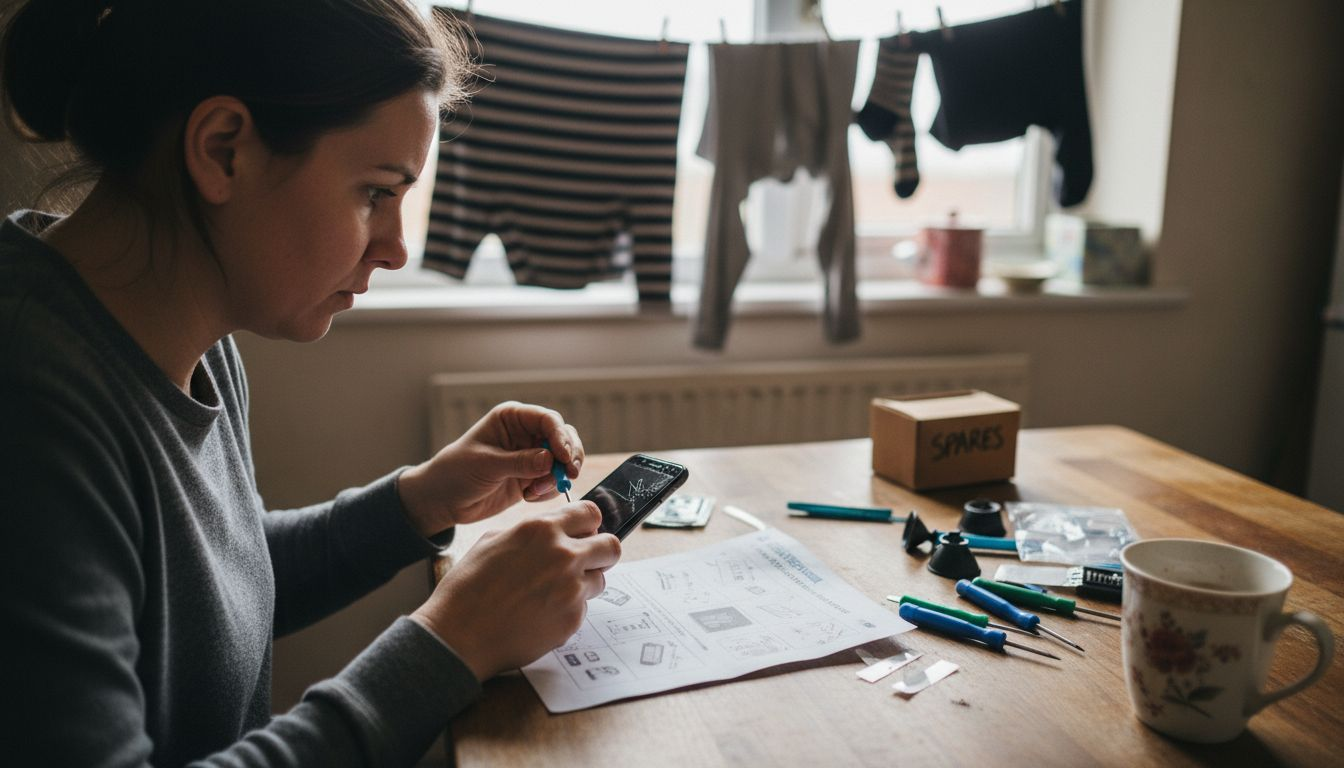
However, 35% of UK DIY users report installation issues, contrasting with 90% success for professionals. Common problems include damaged flex cables, misaligned components, and adhesive failures. These mistakes often require professional intervention to correct, sometimes costing more than the original professional repair would have.
Several factors determine DIY success rates:
- Technical skill level: Basic electronics knowledge significantly improves outcomes
- Tool quality: Proper equipment prevents component damage during disassembly
- Repair complexity: Newer phones with more integrated components increase difficulty
- Guide clarity: Detailed instructions with visual aids reduce error rates
Time investment also affects total DIY costs. First-time repairs typically take 1 to 3 hours, whilst professionals complete identical work in 30 to 60 minutes. Consider whether your time is worth the savings, especially if you’re repairing during work hours or facing urgent deadlines.
Professional repairs carry warranties covering workmanship, typically ranging from 90 days to one year. DIY repairs lack this protection, leaving you responsible for any installation errors. If something goes wrong, you’ll purchase replacement parts at your own expense.
Pro Tip: Watch multiple video tutorials for your specific phone model before attempting DIY repair. Different guides highlight various challenges and techniques, giving you a fuller picture of potential complications.
Quality parts and detailed guides improve DIY outcomes substantially. Invest in screen replacements from DIY phone screen repair risks conscious suppliers who provide installation support and clear return policies. This safety net protects your investment if the repair exceeds your skill level.
Warranty and consumer rights in the uk
The Consumer Rights Act 2015 requires repairs to meet satisfactory quality standards. This legislation protects you whether you purchase replacement parts or pay for professional service. Repairs must be fit for purpose, match their description, and remain durable for a reasonable period.
One-year warranties are common on UK aftermarket parts, comparable to professional shop coverage. Reputable suppliers back their screens against manufacturing defects and premature failures. This protection provides peace of mind similar to professional repair guarantees.
Professional repairs usually include workmanship warranties covering the installation process. These guarantees address issues arising from improper fitting, incorrect calibration, or faulty adhesive application. Coverage typically lasts 90 days to one year depending on the repair shop’s policies.
DIY repairs may void manufacturer or retailer warranties on your device. Phone manufacturers often refuse warranty claims when detecting third-party repairs or non-original components. However, UK consumer law still provides some protection even after DIY repairs.
Key warranty considerations include:
- Parts defects: Covered by supplier warranties regardless of who performs installation
- Installation errors: Only covered when professionals complete the repair
- Device warranties: May be voided by unauthorised repairs, though Consumer Rights Act 2015 still applies
- Proof of purchase: Essential for claiming warranty protection on parts or services
Understanding these protections helps avoid unexpected repair costs. Always request written warranty terms before purchasing parts or authorising repairs. Review what’s covered, the claim process, and any conditions that might void protection.
When buying replacement screens, verify the supplier’s warranty on UK phone repair parts explicitly covers your intended use. Some warranties apply only to professional installations, whilst others protect DIY users equally. This distinction significantly affects your actual level of protection.
Document your repair with photos and receipts. This evidence proves you used quality parts and followed proper procedures if warranty claims arise later. Thorough documentation strengthens your position under consumer protection laws.
Where to source quality parts in the uk
UK retailers like Buy2fix provide quality assurance and include warranties with parts. Reputable suppliers stock both OEM and high-quality aftermarket screens backed by solid return policies. They test components before shipping, reducing your risk of receiving defective products.
Purchasing from UK warehouses reduces delivery times to 1 to 3 business days compared to international shipping. Faster delivery means less time without your device and quicker resolution if parts arrive damaged or incorrect. You also avoid potential customs delays and import duties.
Avoid suppliers with unclear return policies or no warranty coverage. These red flags often indicate substandard parts or unreliable business practices. Saving a few pounds upfront isn’t worth the risk of defective screens or non-existent customer support.
Evaluate potential suppliers using these criteria:
- Warranty coverage: Minimum one year on replacement screens
- Return window: At least 30 days for unopened or defective items
- Customer reviews: Verified feedback from actual buyers
- Technical support: Available help for installation questions
- Compliance: Clear adherence to UK consumer protection laws
Check supplier reviews and certifications before placing orders. Look for consistent positive feedback about product quality and customer service. Certifications or memberships in trade organisations indicate professional standards and accountability.
Buying locally supports your consumer rights under UK law. Domestic purchases simplify dispute resolution through familiar legal frameworks. You’re protected by the Consumer Rights Act 2015 regardless of where you buy, but enforcement is easier with UK-based sellers.
Compare prices across multiple UK quality phone parts sources to ensure competitive rates. However, don’t let price alone guide your decision. The cheapest option often compromises on quality, warranty coverage, or customer support, potentially costing more in the long run.
Common misconceptions about repair costs and quality
Many consumers assume all replacement screens perform identically regardless of source. This misconception leads to poor purchasing decisions and disappointing repair outcomes. OEM parts offer superior quality compared to many aftermarket variants, particularly in colour accuracy and touch sensitivity.
Another widespread myth suggests DIY repairs always deliver the cheapest solution. When factoring in error risks and tool costs, professional repairs sometimes prove more economical. Installation failures requiring professional correction can double your total expenses.
Warranty coverage differs significantly depending on parts source and repair type. Professional installations typically include workmanship guarantees, whilst DIY repairs rely solely on parts warranties. These distinctions affect long-term value considerably.
Here are the most damaging misconceptions:
- All aftermarket screens are low quality: Modern aftermarket options often match OEM performance at lower prices
- DIY repairs void all warranties permanently: Only manufacturer warranties may be affected; consumer law protections remain
- Professional repairs always use OEM parts: Many shops install aftermarket screens without disclosure
- Refurbished screens perform like new: These recycled displays have shorter lifespans and variable quality
- Higher prices guarantee better quality: Cost doesn’t always correlate with performance; reputation matters more
Assuming identical quality or warranty terms across all options leads to regret. Research specific suppliers and their product offerings rather than making broad assumptions. Quality varies enormously even within the same category of replacement screens.
Recognising these nuances prevents unexpected repair failures and expenses. Read detailed product descriptions and warranty terms before purchasing. Ask suppliers direct questions about screen origins, testing procedures, and support policies to make repair cost misconceptions UK informed choices.
Making the best choice: diy vs professional repair
DIY repair suits those confident with basic technical skills and willing to accept higher failure risk for cost savings. If you’ve successfully completed similar repairs or enjoy electronics projects, DIY offers substantial financial benefits. Your comfort level with delicate components and following detailed instructions determines success likelihood.
Professional repair is recommended when device complexity is high or warranty preservation matters. Newer flagship phones integrate screens tightly with other components, increasing damage risk during DIY attempts. If your phone remains under manufacturer warranty, professional service from authorised centres preserves that coverage.
Professional repair success rates are about 90% versus 65% for DIY repairs in the UK. This gap reflects the expertise and specialised tools professionals bring to repairs. They’ve completed hundreds of similar jobs, developing techniques that minimise component damage.
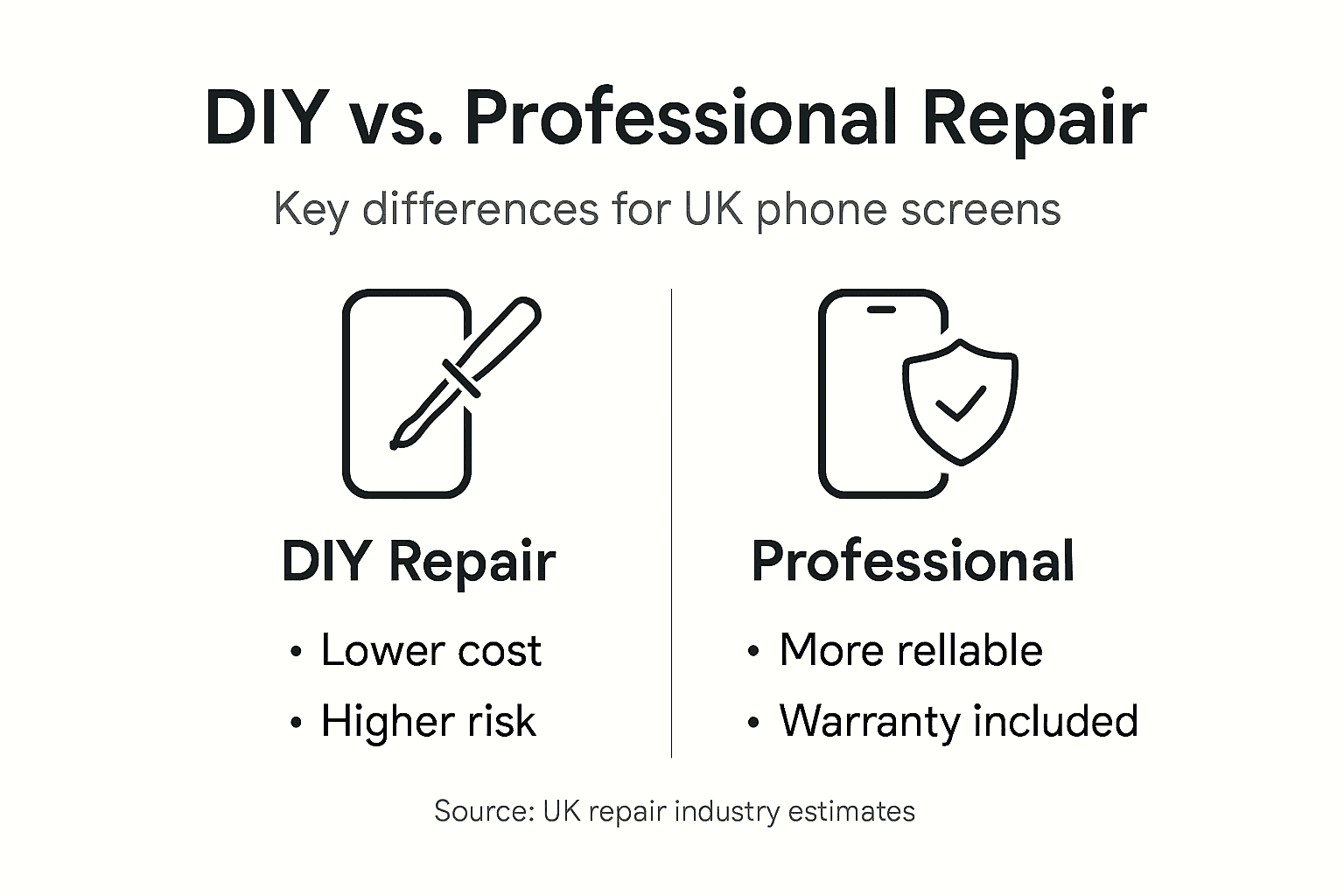
Durability and performance of repaired screens tend to be better with professional installation and OEM parts. Proper calibration ensures touch sensitivity matches factory specifications. Correct adhesive application prevents dust intrusion and screen lifting over time.
| Factor | DIY Repair | Professional Repair |
|---|---|---|
| Cost | £30-£80 | £80-£200 |
| Success Rate | 65% | 90% |
| Time Required | 1-3 hours | 30-60 minutes |
| Warranty Coverage | Parts only | Parts plus workmanship |
| Skill Required | Moderate to high | None |
Consider total cost including tools, time, risk of damage, and warranty when deciding. Basic toolkits cost £10 to £25, but you’ll use them for future repairs. Calculate the value of your time spent researching, practising, and completing the repair.
Knowing your priorities and realistic capabilities leads to the most satisfying repair outcome. Assess honestly whether you have the patience and steady hands for delicate work. Watch tutorial videos for your specific model to gauge difficulty before committing.
Pro Tip: If choosing DIY, purchase screens with hassle-free return policies. This safety net lets you attempt the repair whilst retaining the option to seek professional help if complications arise.
Weigh cost savings against peace of mind. Some people value the learning experience and satisfaction of successful DIY repairs beyond mere financial savings. Others prefer the convenience and reliability of DIY vs professional repair comparison professional service despite higher costs.
Explore buy2fix for quality repair parts and guidance
Buy2fix offers extensive OEM and aftermarket phone screen replacement parts with comprehensive warranties. The website features detailed guides helping DIYers navigate repair challenges safely. Fast UK shipping and knowledgeable support simplify sourcing quality parts at competitive prices.
Explore mobile phone repair basics to build essential skills before attempting complex repairs. These resources cover tool selection, safety precautions, and common pitfalls. Understanding fundamentals increases your success rate substantially.
Browse choosing phone parts for repair guidance to identify the right components for your device. Detailed compatibility information prevents costly ordering mistakes. The Buy2fix UK repair parts store connects you to affordable, reliable solutions tailored for UK consumers seeking quality and value.
Frequently asked questions
How long does a typical phone screen repair take?
Professional repairs usually take 30 minutes to 2 hours depending on device complexity. Simple LCD replacements complete quickly, whilst flagship phones with integrated components require more time. DIY repairs vary widely from 1 to 4 hours based on your experience level and phone model.
Are refurbished screens reliable for long term use?
Refurbished screens can be cost effective but quality varies considerably. Expect shorter lifespans than OEM or high-quality aftermarket options. They work adequately for temporary solutions or older devices you plan to replace soon, but aren’t ideal for long-term reliability.
What tools do I need for a DIY screen replacement?
Basic toolkits include precision screwdrivers, plastic pry tools, suction cups, and replacement adhesive. Most repairs require only these essentials. More complex devices may need specialised equipment like heat guns for adhesive softening or spudgers for delicate connector work.
Can using aftermarket screens void my phone warranty?
Using aftermarket parts may void manufacturer warranties, particularly if damage results from the replacement. However, the Consumer Rights Act 2015 still protects your repair quality rights. Authorised service centres preserve manufacturer coverage if warranty protection matters for your situation.
Is it worth repairing a cracked screen on older phones?
Weigh repair costs against device value carefully. When repairs exceed 50% of your phone’s resale price, replacement often makes more financial sense. Consider also whether your device still receives software updates and meets your performance needs before investing in repairs.
Recommended
Let customers speak for us
I ❤️ love it, it's absolutely amazing I'm sooo happy 😊

Great

I saw this item and it was just what I was looking for. I found it here but not in Amazon or e-bay. However, it was in UK, I was surprised to find that they were able to ship it to the US. Excellent company, would do business with again

This is great for when out and about, to sharpen either coloured pencils, or watercolour pencils….would order again.

Great items would bye again

I have purchased several items from this store before. Recently, I encountered an issue with my latest order. After reporting the problem to customer support, they were consistently attentive and made every effort to resolve the situation. Upon investigation, they acknowledged the issue and promptly fixed it. This experience has increased my level of trust in this store.
Thank you so much. I'm so happy.

très bien

BC70 Car Bluetooth 5.0 FM Transmitter Radio Adapter Dual Display Wireless Handsfree Call MP3 Music Player QC3.0 PD USB Charger

A quite sturdy cover, if you are looking for full protection and a more business-like style, this cover perfectly fulfills its purpose.
The shipping was fast, and it was delivered in perfect condition.

For LG TV Bluetooth Handheld Infrared Voice Multi-Function Remote Control(AKB75855501)

Tusen tack för bästa service och produkt som jag vänlig önskar dig tack

Works correctly and no issues so far

Took a while to get here but it was all good, watch looks brand new after replacement

What a fantastic 👏🏻 stylish case that has helped my phones temperature in the heatwave!!
Perfect 👌🏻 also it's cool as f##k
