

How to identify genuine parts for smartphone repair
TL;DR:
- Genuine parts identification involves verifying part numbers, security features, physical quality, and sourcing from authorized dealers. Counterfeit components often have poor logos, incorrect markings, and subpar packaging, which can be detected through physical and security inspection. Combining multiple verification methods helps ensure the replacement parts are authentic and reliable.
Genuine parts identification is the process of verifying that a replacement component meets the original manufacturer’s specifications, tolerances, and quality standards. For DIY smartphone repair enthusiasts and professional technicians, knowing how to identify genuine parts is the difference between a repair that lasts and one that fails within weeks. Counterfeit components flood the market, and they are not always obvious at first glance. The good news is that a structured approach, covering part numbers, security features, packaging, and sourcing channels, gives you reliable ways to confirm authenticity before a single screw is turned.
What are the key indicators of genuine smartphone parts?
The primary method for identifying genuine parts involves verifying part numbers, scanning official QR codes, and inspecting physical build quality. Counterfeit parts frequently have blurry logos, spelling errors, or poor-quality packaging, while OEM components have consistent finishes and tight manufacturing tolerances. That gap in quality is often visible before you even open the box.
Security features to check first
Manufacturers embed several layers of protection into genuine components. Holographic stickers, UV markings, and embossed logos are standard security features, and some brands hide verification codes that you can confirm via their official website or customer support line. A hologram that smears when you tilt it, or a QR code that leads nowhere, is a clear warning sign.
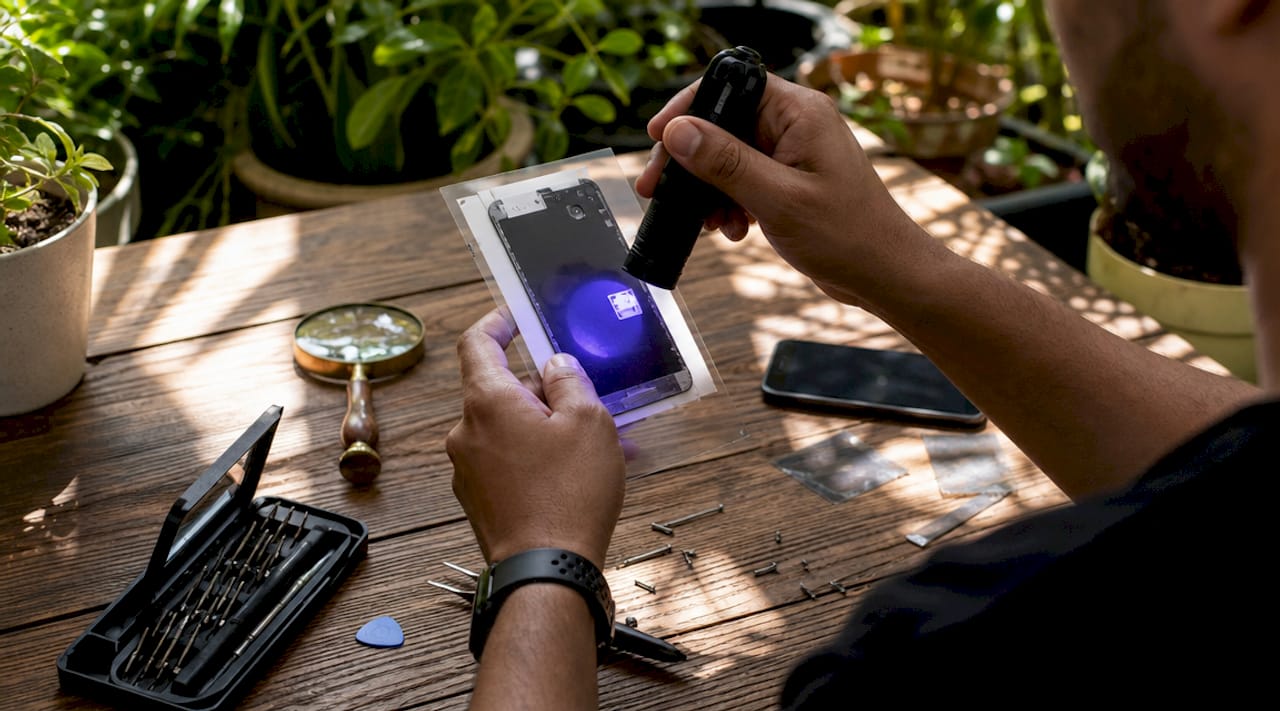
Genuine parts typically have tamper-evident seals that cannot be resealed once broken. Fakes rarely replicate this feature convincingly. Run your fingernail along the seal edge. If it lifts cleanly or shows signs of re-application, treat the part with suspicion.
Physical quality checks
Authentic parts feel different in the hand. The weight is consistent with the original, the finish is uniform, and connectors sit flush without play. Counterfeits often feel lighter, have rough edges, or show uneven colour across the surface. For iPhone and Samsung Galaxy screens in particular, the ribbon cable on a genuine panel sits flat and is precisely the correct length. A cable that is too short or too long signals a non-original part.
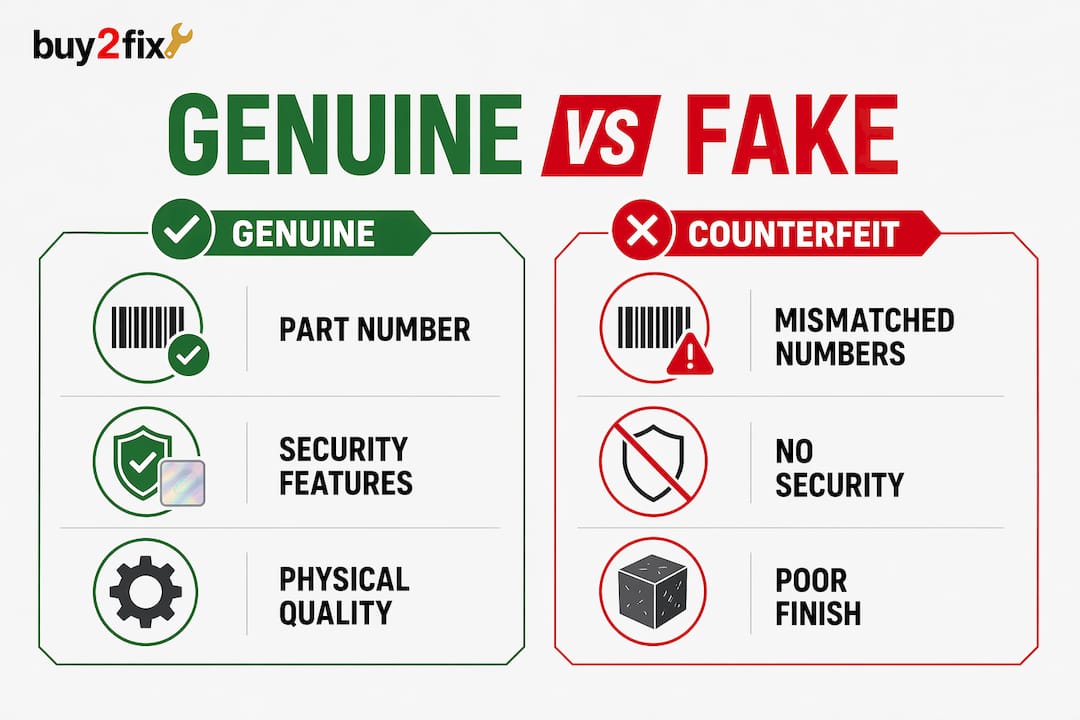
Packaging tells its own story. Sharp branding, accurate part numbers printed cleanly, and correct colour schemes are hallmarks of genuine components. Blurry text, off-brand fonts, or a box that feels flimsy compared to what you have seen before are all red flags.
Key signs of counterfeit parts at a glance:
- Blurry or pixelated manufacturer logos
- Spelling mistakes on packaging or labels
- QR codes that fail to scan or link to unrelated pages
- Tamper-evident seals that appear re-applied or are missing entirely
- Inconsistent weight or finish compared to the original part
- Incorrect colour schemes or font styles on the box
Pro Tip: Keep one original part from a previous repair as a physical reference. Comparing a new component side by side with a known genuine part is one of the fastest ways to spot a fake.
How to validate genuine parts through purchase channels and documentation
Purchasing through authorised dealers or official manufacturer channels guarantees authenticity and manufacturer warranties. That guarantee disappears the moment you buy from an unverified seller. Sourcing is not a secondary consideration. It is the foundation of genuine parts identification.
Follow this process when evaluating a supplier or purchase:
-
Confirm the seller’s authorisation status. Check whether the supplier is listed as an authorised distributor on the manufacturer’s official website. For brands like Apple, Samsung, and Huawei, this information is publicly available.
-
Request documentation before you pay. A legitimate supplier provides an invoice, a warranty certificate, and, where applicable, a certificate of conformity. Authentic parts accompany invoices and warranty cards, and any seller unwilling to provide these should be avoided.
-
Cross-reference the part number. Use the part number on the packaging to search the manufacturer’s official parts catalogue or support portal. If the number returns no result, the part is either counterfeit or incorrectly labelled.
-
Scrutinise the price. Genuine parts rarely come at suspiciously low prices. A Samsung Galaxy S-series AMOLED screen offered at a fraction of the standard market rate is almost certainly not genuine. Price is not the only indicator, but a dramatic discount is a reliable warning sign.
-
Check supplier reviews and community feedback. Repair technician forums, trade groups, and verified review platforms carry honest assessments of parts suppliers. A supplier with consistent positive feedback from professional technicians carries far more weight than anonymous five-star ratings.
Pro Tip: When in doubt, use the manufacturer’s official part verification tool or call their trade support line. Many brands, including Apple and Samsung, offer direct part number validation for registered repair professionals.
Reputable suppliers in the electronics repair sector, including those focused on minimising counterfeit risks through authorised dealer networks, consistently report that documentation is the single most reliable differentiator between genuine and fake parts at the point of purchase.
How to physically inspect and compare smartphone replacement parts
A structured physical inspection catches what packaging checks miss. The table below outlines the key inspection points, what to look for in a genuine part, and the common signs of a counterfeit.
| Inspection point | Genuine part | Counterfeit sign |
|---|---|---|
| Part number | Matches OEM catalogue exactly | Missing, incorrect, or printed poorly |
| Connector type and fit | Sits flush, correct pin count | Loose fit, wrong pin layout |
| Ribbon cable length | Precisely matches original | Too short, too long, or kinked |
| Surface finish | Uniform, smooth, consistent colour | Rough edges, uneven colour, visible seams |
| Weight | Matches original component | Noticeably lighter or heavier |
| Security markings | Hologram, UV mark, embossed logo present | Absent, smeared, or poorly replicated |
The OEM part number is more reliable than product titles when identifying precision parts. Cross-referencing with the device model and physically comparing the new part with the removed original catches subtle discrepancies that a title or description would never reveal.
Tools you need for a proper inspection
You do not need specialist laboratory equipment. A magnifying glass or jeweller’s loupe (10x magnification is sufficient), a digital scale, the manufacturer’s parts reference guide, and the original removed component give you everything needed for a thorough check. Good lighting matters more than most technicians expect. Counterfeits often reveal themselves under a bright, angled light source that exposes uneven finishes or poor print quality.
Discrepancies in connector size or ribbon cable length are telltale signs a part may not be genuine. These differences are small, sometimes less than a millimetre, but they cause real problems during installation and can damage the device’s motherboard connectors if forced. Always measure before fitting.
For a deeper understanding of what separates OEM from aftermarket components, the Buy2fix guide on OEM vs aftermarket parts covers the technical distinctions in practical terms.
Common mistakes when identifying genuine parts
The most frequent error is treating price as the primary authenticity indicator. Price matters, but it is one signal among many. A part priced correctly can still be counterfeit, and a discounted part from a verified authorised clearance sale can be entirely genuine.
Mistakes that lead to buying fake parts:
- Skipping the part number cross-check because the packaging looks convincing
- Failing to compare the new part physically against the removed original
- Ignoring QR code or serial number verification because it feels time-consuming
- Assuming a seller is legitimate based on a professional-looking website alone
- Accepting “OEM quality” labelling at face value without checking supplier credentials
The phrase “OEM quality” deserves particular scrutiny. It is a marketing term, not a certification. Remanufactured electronic components carry higher callback risks than new OEM parts because they may contain older circuits that are difficult for DIY technicians to verify. A board described as “OEM quality remanufactured” is not the same as a new, original component.
Pro Tip: Never rely on a single verification method. Combine part number checks, physical inspection, security feature review, and supplier validation every time. Each layer catches something the others might miss.
Overlooking supplier credentials is another costly mistake. A supplier without verifiable authorisation, clear contact details, or a returns policy is a risk not worth taking. The Buy2fix resource on identifying genuine phone parts outlines the specific checks that separate trustworthy suppliers from unreliable ones.
Key takeaways
Genuine parts identification requires combining part number verification, physical inspection, security feature checks, and authorised sourcing. No single method is sufficient on its own.
| Point | Details |
|---|---|
| Part number verification | Cross-reference the OEM part number against the manufacturer’s catalogue before purchasing. |
| Security features | Check for holograms, UV markings, and tamper-evident seals that cannot be resealed. |
| Physical inspection | Compare weight, connector fit, and ribbon cable length against the original removed part. |
| Authorised sourcing | Buy only from verified dealers who provide invoices, warranty cards, and return policies. |
| Price as a signal | Suspiciously low prices indicate counterfeit risk, but correct pricing alone does not confirm authenticity. |
The OEM vs aftermarket question is more nuanced than most guides admit
I have seen technicians at both ends of the spectrum. Some insist on OEM for every single component, regardless of cost or availability. Others reach for the cheapest aftermarket option without a second thought. Neither approach is right.
The honest position is this: for safety-critical or sensor-dependent components, OEM is the only sensible choice. Face ID modules, proximity sensors, and battery management circuits on iPhones are the clearest examples. Fit a non-genuine part in these areas and you will face software errors, reduced functionality, or outright device rejection. Critical safety or sensor components require OEM parts to ensure compatibility and avoid errors. That is not a preference. It is a technical reality.
For components like back glass, charging port brackets, or speaker grilles, a quality aftermarket part from a verified supplier is often perfectly adequate. The key word is verified. The aftermarket is not the problem. Unverified sourcing is.
What concerns me most in 2026 is how convincing counterfeit packaging has become. A fake Samsung Galaxy screen can arrive in a box that looks almost identical to the genuine article. The part number is close but not exact. The hologram is present but does not scan correctly. These are not amateur operations. They are deliberate, and they catch experienced technicians off guard.
My advice is to build a verification habit rather than relying on instinct. Instinct gets better with experience, but a checklist catches what instinct misses on a busy day. Use trusted channels, request documentation every time, and never skip the physical comparison step. The few minutes it takes will save hours of rework and protect your reputation with customers.
— Adewale
Genuine smartphone parts, sourced with confidence at Buy2fix
Buy2fix stocks replacement parts for iPhone, Samsung Galaxy, Huawei, Xiaomi, OPPO, and a wide range of other devices, all subject to quality checks before dispatch. Whether you are a DIY technician replacing a cracked screen at home or a professional workshop handling multiple repairs daily, the Buy2fix parts catalogue gives you access to verified components with clear product information, free UK mainland shipping, and a 30-day return policy. Every listing includes part numbers and compatibility details so you can cross-reference before you buy. For technicians who need assurance alongside selection, that combination of transparency and policy support makes a practical difference on every job.
FAQ
What is the fastest way to verify a part is genuine?
Scan the QR code on the packaging using the manufacturer’s official verification tool, then cross-reference the printed part number against the OEM catalogue. These two steps together confirm authenticity faster than any physical check alone.
Are OEM and genuine parts the same thing?
OEM (Original Equipment Manufacturer) parts are produced by the original manufacturer or an authorised supplier to the same specification. Genuine parts and OEM parts refer to the same category, as opposed to aftermarket or counterfeit components.
Can a part look genuine but still be fake?
Yes. Counterfeit parts increasingly replicate packaging, holograms, and part numbers with high accuracy. Physical inspection of connector fit, ribbon cable length, and weight, combined with supplier verification, is necessary to catch well-made fakes.
Why do counterfeit parts cause device problems?
Counterfeit components do not meet the original manufacturer’s tolerances or software compatibility requirements. This causes issues ranging from reduced battery life and screen calibration errors to complete feature loss, particularly for sensor-dependent functions like Face ID.
How do I know if a supplier is authorised?
Check the manufacturer’s official website for a list of authorised distributors or service partners. A legitimate supplier also provides invoices, warranty documentation, and a clear returns policy. Absence of any of these is a reliable warning sign.
Recommended
Let customers speak for us
Well made part very strong easy to fit great value for the money

Well packed, with fast shipping :)

Exactly what the doctor ordered…great color, comfort, and durability. Trust this watch band!

Brilliant strap, second purchase, bought bracelet before. Excellent value. Thank you

Great item for splitting your Audio signal

Outstanding product!
Next level customer service.

Very satisfied but the delivery needs to get more faster...

Good price,quick delivery

Best phone case ever! This is my second one as I broke my first. Would defo recommend

Great fitting Apple Watch bands

For Apple Watch Ultra 3 / 2 / 1 49mm RedPepper Armor Metal Case Integrated Silicone Watch Band(Steel Black White)

Good price and quick postage

Perfect fit.

Absolutely necessary

Second Purchase and still a very happy customer. Keep up the good work.
