

Tablet Repair Parts: Ensuring Device Longevity
Over 30 percent of british tablet users report frustration with repairs due to unreliable replacement parts and inconsistent service. Whether you rely on your device for studies, work, or daily life, knowing what goes into professional tablet repair can make a real difference. With insights from respected sources and a clear breakdown of each repair component, this guide helps you understand what separates a lasting fix from ongoing hassle.
Table of Contents
- What Tablet Repair Parts Entail
- Types of Tablet Components Replaced
- Quality Differences in Replacement Parts
- Sourcing and Testing Replacement Parts
- Costs, Common Issues, and Mistakes
Key Takeaways
| Point | Details |
|---|---|
| Importance of Part Availability | Successful tablet repairs hinge on the availability of components and the technician’s technical knowledge. |
| Quality of Replacement Parts | The choice between OEM, high-quality aftermarket, and standard aftermarket parts significantly affects repair reliability and device lifespan. |
| Common Repair Issues | Major repair challenges include screen damage, power system failures, and structural issues, which account for the majority of repairs. |
| Sourcing and Testing | Rigorous sourcing and testing of replacement parts are essential to ensure compatibility and performance, reducing the risk of further device failures. |
What Tablet Repair Parts Entail
Tablet repair involves a complex ecosystem of specialised components designed to restore device functionality and extend its operational lifespan. From displays to internal circuitry, each part plays a critical role in maintaining the tablet’s performance. Research by the Open Repair Alliance reveals that successful repairs depend significantly on part availability and technical knowledge.
The primary tablet repair parts typically encompass several key categories:
-
Display Components
- LCD/OLED screens
- Touch digitiser panels
- Screen glass and protective layers
-
Electrical Systems
- Motherboards
- Battery assemblies
- Charging ports
- Power management circuits
-
Structural Elements
- Rear housing and frames
- Side buttons
- Volume and power control mechanisms
Fraunhofer IZM’s research highlights that tablet repairability varies dramatically based on design choices. Manufacturers who use modular designs with removable screws and standardised components significantly improve repair potential. This approach allows technicians to replace specific parts without compromising the entire device’s structural integrity.
Understanding these repair parts requires technical expertise and precision. Professional repair technicians must not only recognise component specifications but also comprehend intricate interactions between different tablet subsystems. Successful repairs demand a systematic approach, appropriate tools, and genuine replacement parts that match the device’s exact model and specifications.
Types of Tablet Components Replaced
Navigating the complex world of tablet repairs requires understanding the critical components that frequently need replacement. Modern tablets comprise sophisticated electronic systems where individual parts can significantly impact overall device performance. When considering tablet repairs, technicians and DIY enthusiasts must recognise the most commonly replaced components.
Key tablet components that typically require replacement include:
-
Display Elements
- LCD/OLED screens
- Touch digitiser panels
- Screen protective glass layers
-
Power Management Components
- Lithium-ion battery assemblies
- Charging port connectors
- Power management integrated circuits
-
Mechanical Structures
- Rear casing and frame sections
- Buttons and control mechanisms
- Hinges and structural supports
Professional repair technicians often recommend specific diagnostic approaches for tablet screen replacement to ensure precise identification of faulty components. Battery replacement represents another critical repair category, with lithium-ion power units experiencing gradual performance degradation over time. Understanding these component interactions helps technicians diagnose and resolve complex tablet malfunctions effectively.

Each tablet component requires specialised knowledge and precision during replacement. Technicians must consider factors like compatibility, electrical specifications, and mechanical tolerances. Successful repairs demand not just technical skills but also access to high-quality replacement parts that match the specific tablet model’s exact requirements. By maintaining a systematic approach and using genuine components, repair professionals can restore tablets to optimal functioning conditions.
Quality Differences in Replacement Parts
Navigating the complex landscape of tablet repair parts requires a nuanced understanding of quality variations that can dramatically impact device performance and longevity. Comprehensive market analysis reveals significant disparities in component reliability, with high-quality parts demonstrating substantially lower defect rates compared to standard market offerings.
Replacement parts can generally be categorised into three primary quality tiers:
-
Original Equipment Manufacturer (OEM) Parts
- Identical to original manufacturer specifications
- Highest reliability and compatibility
- Typically most expensive option
-
High-Quality Aftermarket Parts
- Engineered to match OEM specifications
- Moderate price point
- Rigorous quality control processes
-
Standard Aftermarket Components
- Lower cost alternatives
- Variable quality and performance
- Higher potential for compatibility issues
Understanding these differences between OEM and aftermarket parts becomes crucial for technicians and repair professionals. The quality of replacement components directly influences device functionality, with superior parts ensuring optimal performance and minimising potential future repair requirements. Professionals must carefully evaluate component sourcing, considering factors like manufacturing precision, material quality, and technical specifications.
Ultimately, selecting replacement parts represents a delicate balance between cost-effectiveness and long-term reliability. While budget-friendly options might seem attractive initially, investing in higher-quality components can prevent recurring issues and extend the tablet’s operational lifespan. Experienced technicians recommend conducting thorough compatibility assessments and sourcing parts from reputable suppliers who maintain stringent quality control standards.
Sourcing and Testing Replacement Parts
Successful tablet repair hinges on selecting and verifying replacement components with meticulous precision. Technicians must develop a comprehensive strategy for sourcing high-quality parts that ensures device functionality and longevity. Understanding how to choose appropriate repair components represents a fundamental skill for professionals and enthusiasts alike.
Key considerations for sourcing replacement parts include:
-
Supplier Verification
- Established reputation in electronics repair market
- Consistent quality track record
- Transparent sourcing and manufacturing processes
-
Component Compatibility
- Exact model number matching
- Electrical specification alignment
- Physical dimension precision
-
Testing Protocols
- Visual inspection for manufacturing defects
- Electrical continuity testing
- Functional performance verification
Professional repair technicians recommend implementing rigorous testing protocols before installation. This involves conducting comprehensive diagnostic assessments to validate component integrity, including electrical resistance measurements, visual microscopic examinations, and simulated performance tests. Systematic verification helps prevent potential device failures and ensures optimal repair outcomes.
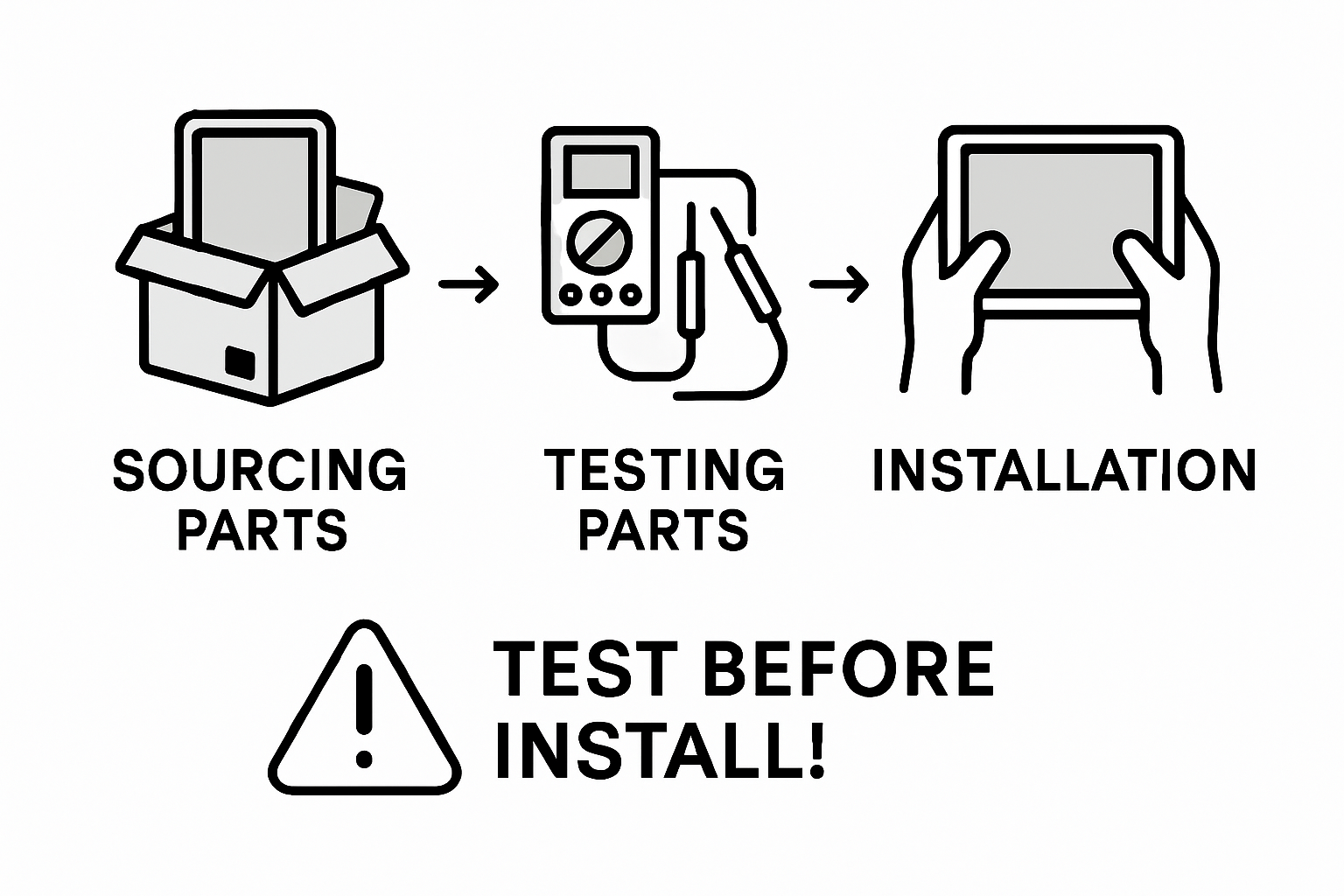
Ultimately, successful part sourcing demands a combination of technical knowledge, supplier relationships, and meticulous testing methodologies. While cost considerations matter, prioritising quality and compatibility ultimately proves more economical than risking device performance with substandard replacement components. Experienced professionals invest time in developing reliable sourcing networks and maintaining stringent quality control standards.
Costs, Common Issues, and Mistakes
Comprehensive data from the Open Repair Alliance reveals critical insights into tablet repair challenges. Technicians and users must understand the nuanced landscape of potential device issues, associated repair costs, and common mistakes that can compromise tablet functionality.
The most prevalent tablet repair issues include:
-
Screen Damage (17% of repairs)
- Cracked or shattered display panels
- Touch sensitivity problems
- Potential internal connectivity issues
-
Power System Failures (16.7% of repairs)
- Battery degradation
- Charging port malfunctions
- Power management circuit problems
-
Connectivity and Structural Challenges
- Charging port failures
- Button mechanism wear
- Structural integrity compromises
Navigating these repair challenges requires understanding potential common repair mistakes beginners frequently encounter. Cost considerations play a pivotal role in repair decisions, with professional intervention typically ranging from £50 to £250 depending on tablet model and specific component requirements. DIY repairs can reduce expenses but demand technical expertise and precise diagnostic skills.
Ultimately, successful tablet repair demands a strategic approach balancing technical knowledge, financial prudence, and careful component selection. Experienced technicians recommend investing in quality replacement parts, utilising proper diagnostic tools, and maintaining a systematic approach to troubleshooting. By understanding potential pitfalls and developing methodical repair strategies, users can effectively extend their tablet’s operational lifespan while minimising unnecessary expenditure.
Extend Your Tablet’s Life with Quality Repair Parts from Buy2fix
Tablet repairs often face challenges such as finding precise replacement components like LCD screens, batteries, and charging ports that match exact model specifications. This article highlights the importance of sourcing high-quality parts to avoid common issues like shortened device lifespan or recurring malfunctions. Whether you are a professional technician or a DIY enthusiast, understanding tablet part quality and compatibility is vital to restore full functionality and maintain your device’s performance.
Buy2fix specialises in supplying premium tablet and laptop repair parts with a comprehensive inventory including LCD screens, back covers, flex cables, and more. We offer rigorously tested, best quality aftermarket and genuine parts ensuring reliability and long-term device longevity. Enjoy benefits like free UK Mainland shipping and a one-year warranty, making us a trusted choice for your tablet repairs. Discover our full range of parts on tablet and laptop parts and explore expert guidance to avoid common repair mistakes at our repair tips blog.
Don’t compromise on your tablet’s future. Start your repair project today with confidence by visiting Buy2fix to find the exact parts your tablet needs. Ensure quality, compatibility, and peace of mind with every purchase.
Frequently Asked Questions
What are the most common tablet repair parts that need replacement?
The most common tablet repair parts that need replacement include display elements like LCD/OLED screens and touch digitiser panels, power management components such as lithium-ion battery assemblies and charging port connectors, and structural elements like rear housings and buttons.
How does the quality of replacement tablet parts affect repair success?
The quality of replacement tablet parts directly impacts repair success, with higher-quality parts ensuring better reliability, compatibility, and overall device performance. Investing in original equipment manufacturer (OEM) or high-quality aftermarket parts can prevent future issues and enhance the tablet’s longevity.
What are effective strategies for sourcing tablet repair parts?
Effective strategies for sourcing tablet repair parts include verifying suppliers’ reputations in the electronics repair market, ensuring precise model and specification compatibility, and implementing rigorous testing protocols to validate component integrity before installation.
What are the common mistakes to avoid when repairing a tablet?
Common mistakes to avoid when repairing a tablet include misdiagnosing the issue, using incompatible or low-quality replacement parts, and skipping thorough testing of new components prior to installation. Adopting a systematic approach and having the right tools can significantly improve repair outcomes.
Recommended
- 7 Common Tablet Repair Mistakes and How to Avoid Them – buy2fix
- Tablet Battery Replacement Guide: Step-by-Step Instructions – buy2fix
- 10 Essential Tips for Extend Phone Lifespan Tips – buy2fix
- 7 Essential Tips for Repairing and Reusing Old Cell Phones – buy2fix
- Akkus reparieren Guide: So bringen Sie Ihre Akkus zurück ins Leben - accu.blog
Let customers speak for us
For Samsung Galaxy A26 SM-A266B Original Earpiece Speaker with Cable

Very good communication throught. Good product

Well made part very strong easy to fit great value for the money

Well packed, with fast shipping :)

Exactly what the doctor ordered…great color, comfort, and durability. Trust this watch band!

Brilliant strap, second purchase, bought bracelet before. Excellent value. Thank you

Great item for splitting your Audio signal

Outstanding product!
Next level customer service.

Very satisfied but the delivery needs to get more faster...

Good price,quick delivery

Best phone case ever! This is my second one as I broke my first. Would defo recommend

Great fitting Apple Watch bands

For Apple Watch Ultra 3 / 2 / 1 49mm RedPepper Armor Metal Case Integrated Silicone Watch Band(Steel Black White)

Good price and quick postage

