

What is IPS LCD? A clear guide for 2026
TL;DR:
- IPS LCD technology uses horizontally aligned liquid crystals to ensure consistent color and wide viewing angles across screens. It offers superior color accuracy and stability compared to TN and VA panels, making it ideal for professional and consumer applications, despite some inherent limitations like IPS glow. For repairs, verifying panel specifications such as lamination type, subpixel layout, and Delta E ratings is essential for optimal results and customer satisfaction.
IPS LCD, or In-Plane Switching Liquid Crystal Display, is a screen technology defined by horizontally aligned liquid crystals that rotate sideways under voltage to produce consistent colour and 178-degree viewing angles across the full panel. That single structural difference separates IPS from every other LCD variant on the market. You will find IPS panels inside iPhone and Samsung Galaxy smartphones, Dell and LG monitors, iPad tablets, and a broad range of professional displays. Professional IPS models achieve a Delta E under 2, which is the threshold at which colour error becomes invisible to the human eye. For technicians sourcing replacement screens and for consumers choosing a new device, understanding what IPS LCD technology actually does at a physical level makes every purchasing and repair decision sharper.
What is IPS LCD and how does it work?
Standard LCD panels rely on a backlight shining through a layer of liquid crystals sandwiched between polarising filters. The crystals act as shutters, twisting or rotating to control how much light passes through. What separates IPS from older TN (Twisted Nematic) panels is the direction of that rotation.
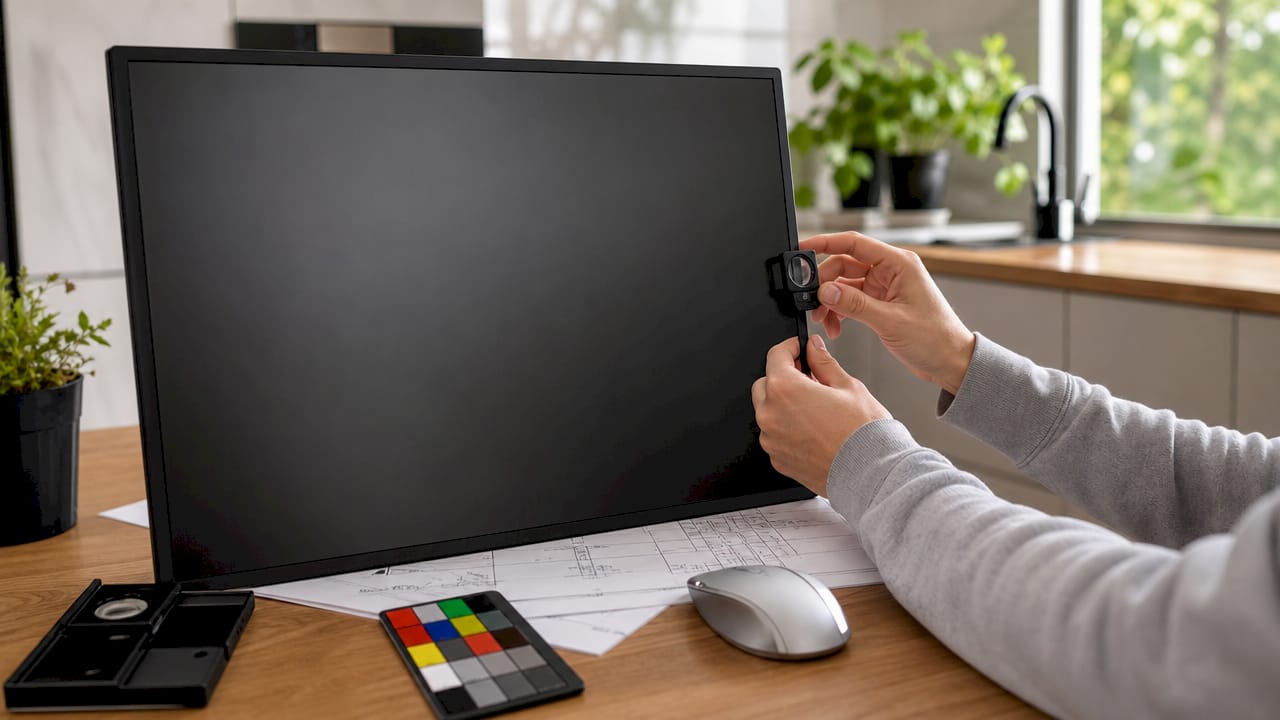
In a TN panel, crystals twist perpendicularly between the two glass substrates. Viewing the screen from an angle causes the twist to appear distorted, which is why TN displays shift colour and contrast dramatically when you move off-centre. IPS panels solve this by aligning the crystals horizontally, parallel to the glass surface. When voltage is applied, the crystals rotate sideways within that plane rather than twisting out of it. The result is that light passes through at a consistent angle regardless of where you are sitting relative to the screen.
This horizontal alignment does carry one trade-off. IPS panels average 85% light transmittance compared to roughly 90% for TN panels. That small efficiency loss is the price of stable colour at wide angles, and for most professional and consumer applications it is a worthwhile exchange.
Response times are another consideration. IPS panels typically achieve 4ms grey-to-grey response compared to 1 to 2ms for TN panels. Modern overdrive technologies in displays from manufacturers such as LG and ASUS have narrowed this gap considerably, but it remains a relevant data point for anyone choosing a panel for fast-motion content.
Pro Tip: When assessing a replacement IPS panel for a smartphone or tablet repair, check the manufacturer’s stated response time and transmittance figures rather than relying solely on the brand name. Panel quality varies significantly even within the IPS category.
What are the main benefits of IPS LCD compared to TN and VA panels?
The three dominant LCD panel types are IPS, TN, and VA (Vertical Alignment). Each optimises for different performance characteristics, and understanding where IPS wins and where it concedes helps you match the right screen to the right application.
| Feature | IPS | TN | VA |
|---|---|---|---|
| Viewing angle | 178 degrees | 90 to 170 degrees | 160 to 178 degrees |
| Colour gamut | 95 to 100% sRGB | 72% NTSC typical | 85 to 95% sRGB |
| Response time | ~4ms | 1 to 2ms | 4 to 8ms |
| Black levels | Moderate | Poor | Excellent |
| Colour accuracy (Delta E) | Under 2 (professional) | 3 to 5 typical | 2 to 4 typical |
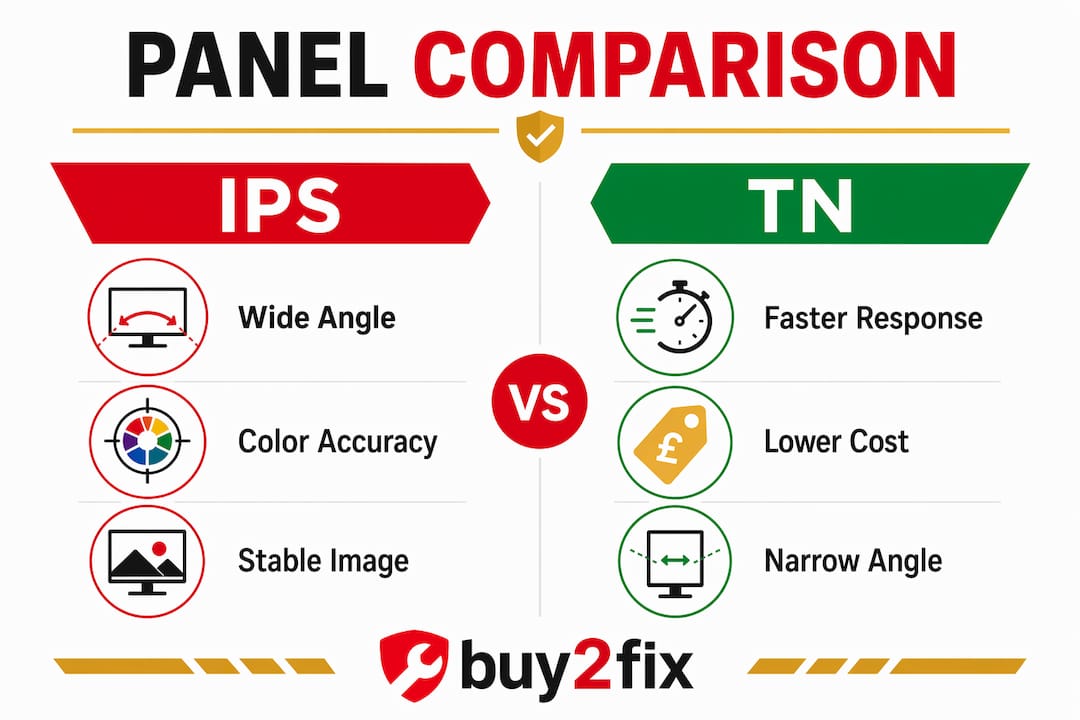
The colour accuracy advantage is the most commercially significant. An Adobe study found designers using 99% sRGB IPS panels made 22% fewer colour errors compared to those working on 72% NTSC TN screens. Fewer errors in colour-critical work translates directly to less rework, fewer client revisions, and faster project delivery.
Viewing angle consistency matters beyond professional design. Consumers report 40% fewer complaints about viewing angle issues with IPS televisions during group viewing compared to TN alternatives. This makes IPS the practical choice for living rooms, meeting rooms, and any environment where multiple people view the screen simultaneously from different positions.
VA panels offer superior black levels and contrast ratios, which gives them an edge in dark-room cinema viewing. However, VA panels suffer from noticeable colour shift at moderate off-axis angles, which limits their usefulness in collaborative settings. IPS maintains Delta E shifts under 2.5 even at 60-degree angles, a performance level VA cannot consistently match.
For technicians, the practical implication is clear. When a customer brings in a device used for photo editing, graphic design, or medical imaging, an IPS replacement panel is the correct specification. Fitting a TN panel to save cost will produce visible colour inaccuracy that the customer will notice immediately.
Pro Tip: For choosing the right panel in a repair context, always confirm the original panel specification before ordering a replacement. Substituting a VA or TN panel into a device originally fitted with IPS will produce a noticeably different visual result.
What are the known limitations of IPS LCD technology?
No display technology is without compromise, and IPS LCD is no exception. Understanding its limitations prevents misdiagnosis during repairs and sets accurate expectations for end users.
The most discussed issue is IPS glow. This appears as a hazy, silver or grey sheen visible in the corners of the screen when viewing dark content from an angle. IPS glow is caused by light passing through the liquid crystals at oblique angles and is an inherent characteristic of the in-plane switching alignment. It is not a manufacturing defect and cannot be resolved by replacing the panel. Many technicians and users incorrectly diagnose IPS glow as backlight bleed, which is a separate issue caused by light leaking around the edges of the backlight assembly. Confusing the two leads to unnecessary panel replacements and frustrated customers.
Other limitations worth knowing include:
- Light transmittance loss. The horizontal crystal alignment reduces light throughput to approximately 85%, requiring slightly brighter backlights to achieve the same perceived brightness as a TN panel. This can marginally affect battery life in portable devices.
- Subpixel layout variation. Subpixel arrangements vary across IPS panels, with RGB stripe layouts delivering sharper font rendering than PenTile or alternative arrangements. Professionals requiring precise text clarity should verify the subpixel layout before selecting a panel.
- Calibration requirements. Professional IPS panels require display-specific colour profiles to achieve their rated Delta E accuracy. A panel used without calibration may still outperform a TN screen, but it will not reach its stated specification without a proper profile applied.
- Parallax in touch devices. IPS panels in touch devices can suffer parallax issues if the touch layer is not fully laminated to the display glass. This creates a visible gap between the touch point and the displayed cursor or stylus mark, which is particularly noticeable in tablets and drawing devices.
Understanding these limitations as distinct, diagnosable characteristics rather than signs of panel failure is what separates a competent technician from one who replaces parts unnecessarily.
How is IPS LCD used in modern devices and what do technicians need to know?
IPS LCD technology is now the default panel type across the majority of consumer and professional devices. Smartphones from Apple, Samsung, Huawei, Xiaomi, and OPPO use IPS panels in mid-range and many flagship models. Laptop displays from Dell, Lenovo, and HP frequently specify IPS for productivity-focused lines. Tablets including the iPad and numerous Android alternatives rely on IPS for colour consistency across their touch interfaces.
For technicians servicing these devices, a structured approach to panel identification and replacement produces better outcomes:
- Identify the original panel specification. Check the device’s service manual or the manufacturer’s display specification sheet. Note whether the original panel is standard IPS, Nano IPS, or PLS (Plane-to-Line Switching, Samsung’s IPS variant). Each has different colour gamut and response time characteristics.
- Verify lamination type. Confirm whether the original display uses full lamination or an air-gap assembly. Replacing a fully laminated panel with an air-gap equivalent will introduce parallax and reduce touch accuracy in stylus-capable devices.
- Check subpixel layout. For devices used in professional colour work or precise text rendering, confirm the replacement panel uses the same subpixel arrangement as the original. This detail is often absent from generic part listings but is available in panel datasheets.
- Apply calibration profiles post-repair. Where the device supports display calibration, apply the appropriate colour profile after fitting a new IPS panel. This is particularly relevant for MacBook and iPad repairs where colour accuracy is a selling point of the original device.
- Educate the customer on IPS glow. Before returning a repaired device, inform the customer that any visible corner glow in dark scenes is a normal characteristic of IPS technology. This prevents unnecessary callbacks and builds trust in your diagnosis.
Not all IPS panels are identical. Nano IPS, developed by LG, uses nano-sized particles on the backlight to extend colour gamut coverage beyond standard sRGB into DCI-P3. PLS panels from Samsung offer slightly higher brightness and wider viewing angles than standard IPS at a lower manufacturing cost. Knowing these variants helps you source the correct replacement and explain the difference to customers who ask why two panels with “IPS” in the description carry different price points.
IPS LCD technology is the industry standard for productivity and content creation devices in 2026, a position it has earned through a combination of colour fidelity, viewing angle stability, and improving cost-effectiveness. For repair professionals, this means IPS panel knowledge is not optional. It is a core competency.
Key takeaways
IPS LCD technology delivers superior colour accuracy and viewing angle stability because its liquid crystals rotate horizontally, maintaining consistent light transmission across the full 178-degree viewing range.
| Point | Details |
|---|---|
| Core IPS principle | Horizontal crystal rotation produces stable colour at wide angles, unlike TN or VA panels. |
| Colour accuracy benchmark | Professional IPS panels achieve Delta E under 2, the threshold for invisible colour error. |
| Known limitation: IPS glow | Corner glow in dark scenes is inherent to IPS alignment, not a defect requiring panel replacement. |
| Technician priority | Always verify lamination type and subpixel layout before ordering a replacement IPS panel. |
| Panel variants matter | Nano IPS and PLS differ from standard IPS in gamut and brightness; source accordingly. |
Why IPS LCD still earns its place in 2026
I have spent considerable time working with display technology across repair and retail contexts, and one pattern keeps repeating itself: people underestimate how much panel type affects the end-user experience. Customers return devices complaining of “washed out colours” or “the screen looks different from the old one” almost always because a non-IPS panel was fitted as a cost-saving measure during repair.
The argument that OLED has overtaken IPS is partially true at the premium end of the market. OLED offers perfect blacks and faster pixel response. But OLED also brings burn-in risk, higher replacement cost, and brightness limitations in direct sunlight. For the vast majority of devices in active daily use, including mid-range smartphones, office monitors, and tablets, IPS LCD remains the more practical and cost-effective specification. The light scattering trade-off in IPS is genuinely worth accepting for the viewing angle and colour consistency you receive in return.
The misconception I encounter most often is that all IPS panels perform the same. They do not. A budget IPS panel from an unverified supplier will not achieve the Delta E under 2 that a calibrated professional panel delivers. When sourcing replacement parts, the panel specification matters as much as the panel type. Treat “IPS” as a category, not a quality guarantee.
My advice: learn the specific panel variant fitted in the devices you service most frequently, keep calibration profiles accessible for post-repair setup, and always explain IPS glow to customers before they leave your workshop. Those three habits will eliminate the majority of display-related callbacks.
— Adewale
Find IPS LCD replacement parts and repair guides at Buy2fix
Buy2fix stocks replacement LCD screens for a wide range of devices including iPhone, Samsung Galaxy, Huawei, Xiaomi, and OPPO models, with panel specifications clearly listed so you can confirm IPS compatibility before ordering. Whether you are a DIY buyer replacing a cracked screen at home or a professional technician working through a repair queue, the Buy2fix catalogue gives you the product detail you need to make the right choice. Explore the LCD screen technology guide for a deeper look at panel types and their repair implications, or browse the full repair parts catalogue for current stock and pricing. Free UK mainland shipping applies to all eligible orders.
FAQ
What does IPS LCD stand for?
IPS LCD stands for In-Plane Switching Liquid Crystal Display. It refers to a display technology where liquid crystals are aligned horizontally and rotate within that plane to produce consistent colour and wide viewing angles.
How does IPS LCD differ from OLED?
IPS LCD uses a backlight and liquid crystal layer to produce images, while OLED generates light at the pixel level with no backlight required. OLED achieves deeper blacks and faster response, but IPS LCD offers better outdoor visibility, lower burn-in risk, and lower replacement cost.
Is IPS LCD good for gaming?
IPS LCD is suitable for most gaming use cases, with modern panels achieving response times close to 1ms with overdrive enabled. Competitive gamers who prioritise the fastest possible response may still favour TN panels, but IPS delivers better colour and viewing angle performance for the majority of gaming scenarios.
What causes IPS glow and is it a defect?
IPS glow is caused by light passing through the liquid crystal layer at oblique angles, producing a hazy sheen in dark scenes when viewed off-axis. It is an inherent characteristic of IPS technology and is not a manufacturing defect or a sign that the panel requires replacement.
What should I check when buying a replacement IPS LCD panel?
Verify the panel’s Delta E rating, subpixel layout, lamination type, and whether it matches the original specification (standard IPS, Nano IPS, or PLS). A guide for repair experts can help you confirm the correct specification for the device you are servicing.
Recommended
Let customers speak for us
The acid test of any company is how they respond when things go wrong. The Buy2Fix team were efficient in dealing with my emails and resolved the issue to my complete satisfaction

For Samsung Galaxy A26 SM-A266B Original Earpiece Speaker with Cable

Very good communication throught. Good product

Well made part very strong easy to fit great value for the money

Well packed, with fast shipping :)

Exactly what the doctor ordered…great color, comfort, and durability. Trust this watch band!

Brilliant strap, second purchase, bought bracelet before. Excellent value. Thank you

Great item for splitting your Audio signal

Outstanding product!
Next level customer service.

Very satisfied but the delivery needs to get more faster...

Good price,quick delivery

Best phone case ever! This is my second one as I broke my first. Would defo recommend

Great fitting Apple Watch bands

For Apple Watch Ultra 3 / 2 / 1 49mm RedPepper Armor Metal Case Integrated Silicone Watch Band(Steel Black White)

Good price and quick postage
