

Choosing Quality Replacement Screens: Ensuring Reliable Mobile Repairs
Many british DIY smartphone repair fans know that more than 50 percent of failed device fixes are linked to poor screen quality, especially with replacement parts for popular brands like iPhone and Samsung. Choosing the right screen goes beyond what meets the eye, directly impacting touch sensitivity, durability, and overall user satisfaction. This guide uncovers crucial features, compatibility essentials, and technical details every repair enthusiast should weigh before sourcing a high-quality screen for their next project.
Table of Contents
- What Defines A Quality Replacement Screen
- Key Types Of Replacement Mobile Screens
- Essential Features And Compatibility Factors
- Testing, Certification, And Quality Standards
- Common Pitfalls And How To Avoid Them
Key Takeaways
| Point | Details |
|---|---|
| Screen Quality Attributes | Essential attributes include touch sensitivity, colour accuracy, brightness consistency, and structural integrity to enhance durability and user experience. |
| Screen Technology Options | The primary types include LCD, OLED, and AMOLED, each offering distinct visual qualities and durability pertinent to repair needs. |
| Compatibility Factors | Ensure proper device model specificity, technical performance specifications, and physical characteristics for successful screen replacements. |
| Testing and Certification | Rigorous testing and certification processes validate screen quality, requiring technicians to verify specifications and compliance before purchase. |
What Defines A Quality Replacement Screen
When sourcing smartphone display replacements, discerning mobile repair enthusiasts understand that screen quality represents far more than simple visual appearance. A superior replacement screen combines multiple critical technical specifications and performance characteristics that determine long-term durability and user experience.
The fundamental attributes defining screen quality include touch sensitivity precision, colour reproduction accuracy, brightness consistency, and structural integrity. Professional repair technicians meticulously evaluate screens across several key dimensions: understanding common screen replacement issues reveals that substandard components can compromise device functionality and user satisfaction. Manufacturing origin, panel technology, and component sourcing play pivotal roles in determining overall screen performance.
Specifically, high-quality replacement screens demonstrate several distinguishing characteristics:
- Original colour calibration matching device specifications
- Touch response identical to factory-installed displays
- Robust glass composition resistant to micro-scratches
- Seamless integration with device digitiser circuits
- Consistent brightness levels across entire display surface
- Compatible connector interfaces matching original manufacturer standards
Beyond technical specifications, reputable screen replacements should include comprehensive quality control processes, precise manufacturing tolerances, and rigorous testing protocols. Component origins matter significantly - screens manufactured using original equipment manufacturer (OEM) specifications or high-grade aftermarket processes consistently outperform low-cost alternatives.
Pro Tip: Screen Verification: Always request detailed technical specifications and request certification documentation when purchasing replacement smartphone displays to ensure you receive a genuinely high-quality component.
Key Types Of Replacement Mobile Screens
Mobile screen replacement technology has evolved dramatically, offering repair enthusiasts multiple options for restoring device displays. Understanding the different display technologies reveals a complex landscape of screen replacement possibilities, each with unique characteristics and performance attributes.
The primary categories of mobile screen replacements include LCD (Liquid Crystal Display), OLED (Organic Light Emitting Diode), and AMOLED (Active-Matrix Organic Light Emitting Diode) panels. Each technology presents distinct advantages and challenges for smartphone repair professionals:
-
LCD Screens
- More affordable replacement option
- Consistent colour reproduction
- Lower power consumption
- Suitable for budget-friendly repairs
-
OLED Screens
- Superior colour contrast and vibrancy
- Deeper black levels
- Thinner panel design
- Higher manufacturing costs
-
AMOLED Screens
- Enhanced colour saturation
- Individually lit pixels
- Energy-efficient performance
- Premium display quality
Manufacturing origins significantly impact screen replacement quality. Professional technicians must consider factors like panel source, manufacturing tolerances, and component compatibility when selecting replacement displays. Understanding phone screen replacement techniques becomes crucial in navigating these complex technological nuances.
Here’s a summary of key differences in mobile screen technologies:
| Technology Type | Visual Quality | Durability | Power Usage |
|---|---|---|---|
| LCD | Moderate | High | Low |
| OLED | Excellent | Medium | Moderate |
| AMOLED | Superior | Medium | Lowest |
Pro Tip: Screen Technology Assessment: Always verify the exact screen technology compatible with your specific smartphone model before purchasing a replacement to ensure optimal performance and seamless integration.
Essential Features And Compatibility Factors
Selecting the right replacement screen demands meticulous attention to multiple technical and performance considerations. Choosing the right replacement screen requires understanding a complex array of compatibility factors that extend far beyond simple visual appearance.
Key compatibility factors smartphone repair enthusiasts must carefully evaluate include:
-
Device Model Specificity
- Exact model number matching
- Precise connector type alignment
- Circuit board compatibility
- Hardware integration requirements
-
Technical Performance Specifications
- Native resolution matching
- Colour reproduction accuracy
- Touch sensitivity calibration
- Refresh rate consistency
- Viewing angle performance
-
Physical Characteristics
- Precise dimensional tolerances
- Glass durability ratings
- Flex cable specifications
- Mounting point alignment
Professional technicians understand that screen replacement involves more than simple part swapping. Critical considerations like connector pin configuration, voltage requirements, and firmware compatibility can dramatically impact successful installation. Minor variations in manufacturing tolerances might render an otherwise seemingly perfect screen completely non-functional.
The nuanced world of mobile screen replacements demands comprehensive knowledge of both hardware specifications and technological interdependencies. Understanding how to choose phone parts becomes crucial in navigating these complex technical landscapes, ensuring reliable and consistent repair outcomes.
Pro Tip: Compatibility Verification: Always cross-reference your specific smartphone model’s exact screen specifications with potential replacement components, checking connector type, resolution, and manufacturing standards before purchasing.
Testing, Certification, And Quality Standards
The realm of mobile screen replacement demands rigorous testing protocols to ensure reliability and performance. Advanced durability testing procedures represent the critical foundation for maintaining high-quality replacement components in the smartphone repair ecosystem.
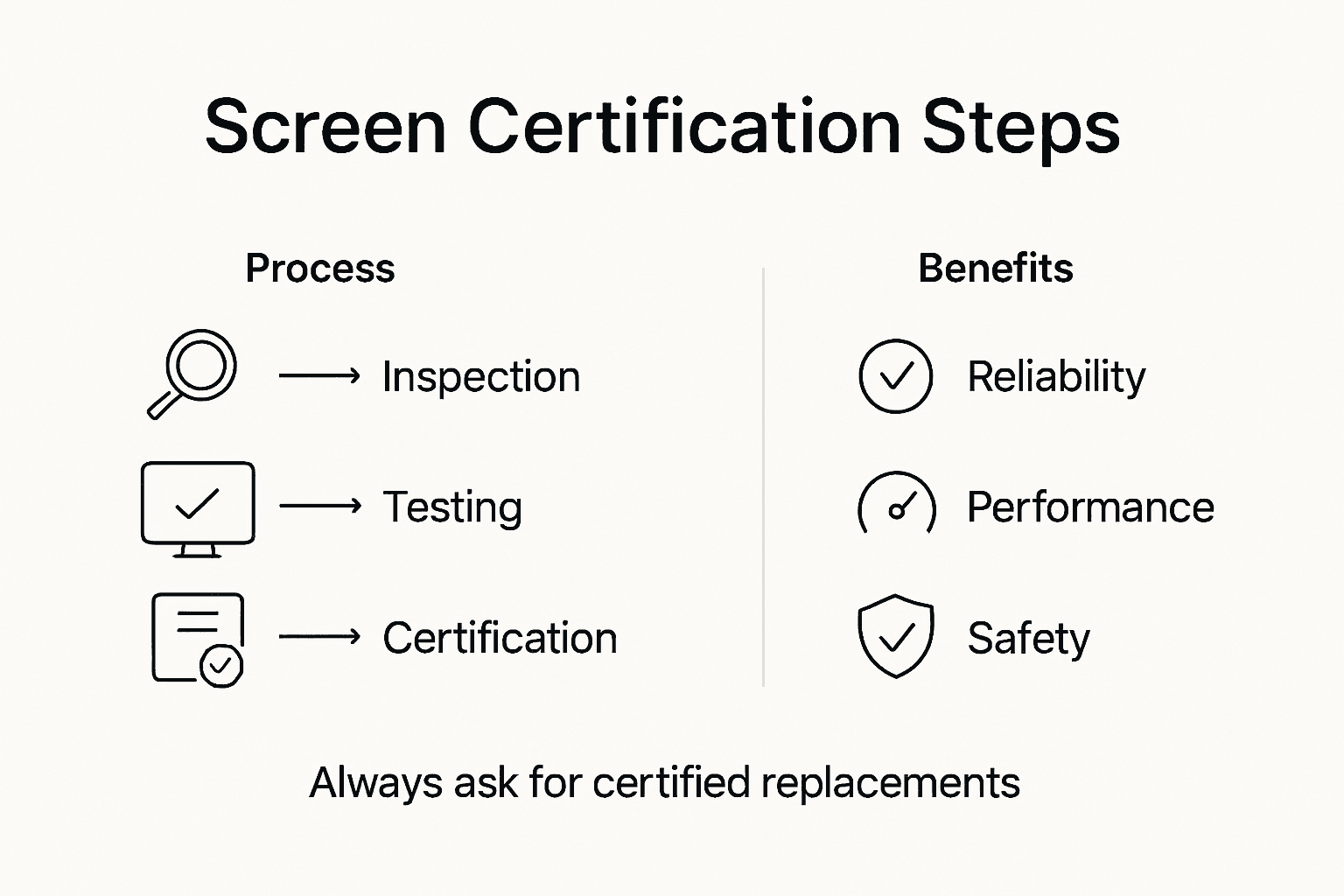
Quality Certification Processes encompass multiple comprehensive evaluation stages:
-
Laboratory Performance Testing
- Environmental stress simulations
- Temperature tolerance assessments
- Shock and vibration resistance analysis
- Accelerated life cycle testing
-
Technical Validation Criteria
- Touch sensitivity precision measurements
- Colour accuracy calibration
- Electrical signal integrity checks
- Structural integrity evaluations
-
Compliance Standard Verification
- International manufacturing standards compliance
- Electronic component safety regulations
- Performance consistency benchmarks
- Manufacturing traceability documentation
Professional repair technicians understand that certification goes beyond surface-level assessments. Each replacement screen undergoes multiple rigorous examinations to validate its functional equivalence to original manufacturer specifications. Understanding how to choose phone parts becomes crucial in recognising genuine quality markers.
The intricate world of screen replacement requires meticulous attention to technical details, ensuring that every component meets exacting performance standards. Reputable manufacturers invest significant resources in developing comprehensive testing frameworks that simulate real-world usage conditions and potential stress scenarios.
Pro Tip: Certification Verification: Always request detailed certification documentation and testing reports when purchasing replacement screens, examining specific performance metrics and compliance standards before making a final selection.
The following table highlights essential quality verification steps for replacement screens:
| Verification Step | Purpose | Technician Benefit |
|---|---|---|
| Request specification sheet | Confirms technical compatibility | Reduces risk of returns |
| Examine certification | Validates manufacturing quality | Assures reliable performance |
| Check for manufacturer logo | Verifies authenticity | Ensures original part sourcing |
Common Pitfalls And How To Avoid Them
Mobile screen replacement presents numerous technical challenges that can derail even the most well-intentioned repair attempts. Common screen replacement mistakes reveal a complex landscape of potential errors that demand careful navigation and professional approach.
Critical Repair Pitfalls Include:
-
Structural Damage Risks
- Improper tool selection
- Excessive force during disassembly
- Mishandling sensitive electronic components
- Static electricity exposure
-
Technical Compatibility Issues
- Incorrect screen model matching
- Overlooking connector variations
- Misinterpreting technical specifications
- Ignoring firmware compatibility requirements
-
Installation Performance Problems
- Inadequate workspace preparation
- Poor flex cable management
- Insufficient grounding procedures
- Neglecting electrostatic discharge protection
Professional repair technicians understand that successful screen replacement demands precision, technical knowledge, and meticulous attention to detail. Beginner phone repair mistakes often stem from underestimating the complexity of modern smartphone hardware integration.
Successful screen replacement requires comprehensive understanding of device-specific nuances, precise technical skills, and systematic approach to component handling. Each smartphone model presents unique challenges, demanding individualised repair strategies and deep technical comprehension.
Pro Tip: Mistake Prevention: Always work in a clean, well-organised environment with appropriate anti-static equipment, and thoroughly research your specific device model’s unique repair requirements before attempting any screen replacement.
Ensure Reliable Mobile Repairs with Quality Replacement Screens from Buy2fix
Choosing a quality replacement screen is critical to restoring your mobile device to optimal performance. This article highlights the challenges of compatibility, technical specifications, and certification that every repair technician or DIY enthusiast must consider. At Buy2fix, we understand how vital precision and reliability are for mobile screen replacements. That is why we offer only the best quality aftermarket or genuine parts, including LCD, OLED, and AMOLED screens, meticulously tested to meet stringent quality standards.
Take the next step toward flawless mobile repairs by exploring our extensive inventory of mobile phone repair parts designed for all major brands, from iPhone to Samsung Galaxy. Benefit from free UK mainland shipping, a one-year warranty, and a 30-day return policy to shop with confidence. Don’t compromise on screen quality or compatibility – visit Buy2fix today and ensure your repair job delivers lasting results.
Frequently Asked Questions
What are the key attributes of a quality replacement screen?
A quality replacement screen exhibits touch sensitivity precision, colour reproduction accuracy, brightness consistency, and structural integrity. High-quality screens also match the original specifications of the device and undergo rigorous testing to ensure durability and reliability.
How can I determine if a replacement screen is compatible with my smartphone?
To ensure compatibility, verify the device model specificity, including the exact model number, connector type, and circuit board requirements. Additionally, check the technical specifications such as native resolution and touch sensitivity calibration before purchasing.
What are the different types of mobile screens available for replacement?
The main types of mobile screens include LCD (Liquid Crystal Display), OLED (Organic Light Emitting Diode), and AMOLED (Active-Matrix Organic Light Emitting Diode). Each type has its own advantages, such as cost-effectiveness for LCDs or superior colour vibrancy for OLED and AMOLED screens.
Why is screen certification important when selecting a replacement?
Screen certification is vital because it confirms that the replacement component meets rigorous performance and safety standards. Quality certification processes include laboratory testing for durability, touch sensitivity, and colour accuracy, ensuring that the replacement screen functions reliably and effectively.
Recommended
- Understanding Choosing Screen Replacements for Devices – buy2fix
- Mobile Screen Replacement Guide: Achieve Pro Results – buy2fix
- Common Screen Replacement Issues – What Every Repairer Faces – buy2fix
- How to Install a New Phone Screen Like a Pro – buy2fix
- Akkus reparieren Guide: So bringen Sie Ihre Akkus zurück ins Leben - accu.blog
Let customers speak for us
Well made part very strong easy to fit great value for the money

Well packed, with fast shipping :)

Exactly what the doctor ordered…great color, comfort, and durability. Trust this watch band!

Brilliant strap, second purchase, bought bracelet before. Excellent value. Thank you

Great item for splitting your Audio signal

Outstanding product!
Next level customer service.

Very satisfied but the delivery needs to get more faster...

Good price,quick delivery

Best phone case ever! This is my second one as I broke my first. Would defo recommend

Great fitting Apple Watch bands

For Apple Watch Ultra 3 / 2 / 1 49mm RedPepper Armor Metal Case Integrated Silicone Watch Band(Steel Black White)

Good price and quick postage

Perfect fit.

Absolutely necessary

Second Purchase and still a very happy customer. Keep up the good work.
