


News
How much to fix cracked iPhone screen in UK 2026
Official Apple screen repairs in the UK now cost between £289 and over £389 depending on model, with newer OLED displays pushing prices even higher. For DIY enthusiasts, understanding the true cost of iPhone screen repairs goes beyond the sticker price. Part quality, warranty coverage, and installation method all dramatically influence what you ultimately pay and how long your repair lasts.
Table of Contents
- Cost Comparison Across iPhone Models And Repair Options
- Understanding Parts Quality And Functional Impact
- DIY Repair Risks And Quality Control Measures
- Warranty And Insurance Influence On Repair Costs
Key takeaways
| Point | Details |
|---|---|
| Repair costs vary significantly | Official Apple repairs cost £289-£389+, third-party pros charge £100-£250, and DIY kits start from £20-£80 |
| Parts quality affects functionality | Genuine OEM screens preserve True Tone and Face ID, whilst aftermarket quality ranges from premium to poor |
| DIY repairs carry real risks | Installation errors can cause permanent damage, and DIY work typically voids warranty and insurance coverage |
| Warranty impacts total cost | AppleCare+ reduces screen repairs to £30-£50 excess, making it far cheaper than out-of-pocket official repairs |
| Professional help reduces risk | Complex OLED models and inexperienced repairers benefit from professional installation with warranty protection |
Cost comparison across iPhone models and repair options
Your iPhone model and chosen repair method determine your final bill. The latest Pro and Max models feature sophisticated OLED technology, which drives up replacement costs across all repair routes. Standard models with LCD screens generally cost less to fix.
Official Apple repairs deliver genuine parts and factory-standard installation. You’ll pay £289 for older or standard models, climbing to £389 or more for Pro Max devices with advanced displays. These prices reflect the complexity of modern iPhone screens, where touch sensitivity, colour calibration, and biometric sensors are tightly integrated.
Third-party professional repairs cost £100-£250 with varying warranty terms. Many reputable UK shops offer premium aftermarket parts that closely match OEM performance at roughly half Apple’s price. You sacrifice official certification but gain significant savings with professional installation and often a 3-12 month warranty.
DIY kits present the cheapest upfront option at £20-£80, though this route demands technical confidence. These kits typically include the replacement screen, essential tools like spudgers and suction cups, and adhesive strips. What they don’t include is warranty protection or any guarantee your first attempt succeeds.
Repair cost breakdown by method:
- Official Apple: £289-£389+ (genuine OEM, warranty preserved, professional installation)
- Third-party professional: £100-£250 (aftermarket or OEM-style, limited warranty, expert fitting)
- DIY kit: £20-£80 (parts only, no warranty, self-installation risk)
- AppleCare+ excess: £30-£50 (if you have active coverage)
Pro Tip: Calculate the total cost of ownership, not just the upfront price. A £30 DIY screen that fails after two months costs more than a £120 professional repair with a one-year warranty.
Model complexity matters enormously. iPhone 14 Pro Max and newer devices use advanced OLED panels with ProMotion technology, making them costlier and trickier to replace than older LCD models. The iPhone SE (2022) remains the most affordable to repair at under £100 through third-party services.
For realistic UK pricing expectations, check UK iPhone screen repair costs 2026 guidance. Additionally, UK iPhone screen replacement pricing varies by region and shop reputation, so compare local quotes before committing.
Understanding parts quality and functional impact
Screen quality determines far more than just visual clarity. Modern iPhone displays integrate touch response, colour accuracy, ambient light sensing, and biometric authentication. Choosing the wrong replacement part can cripple features you rely on daily.
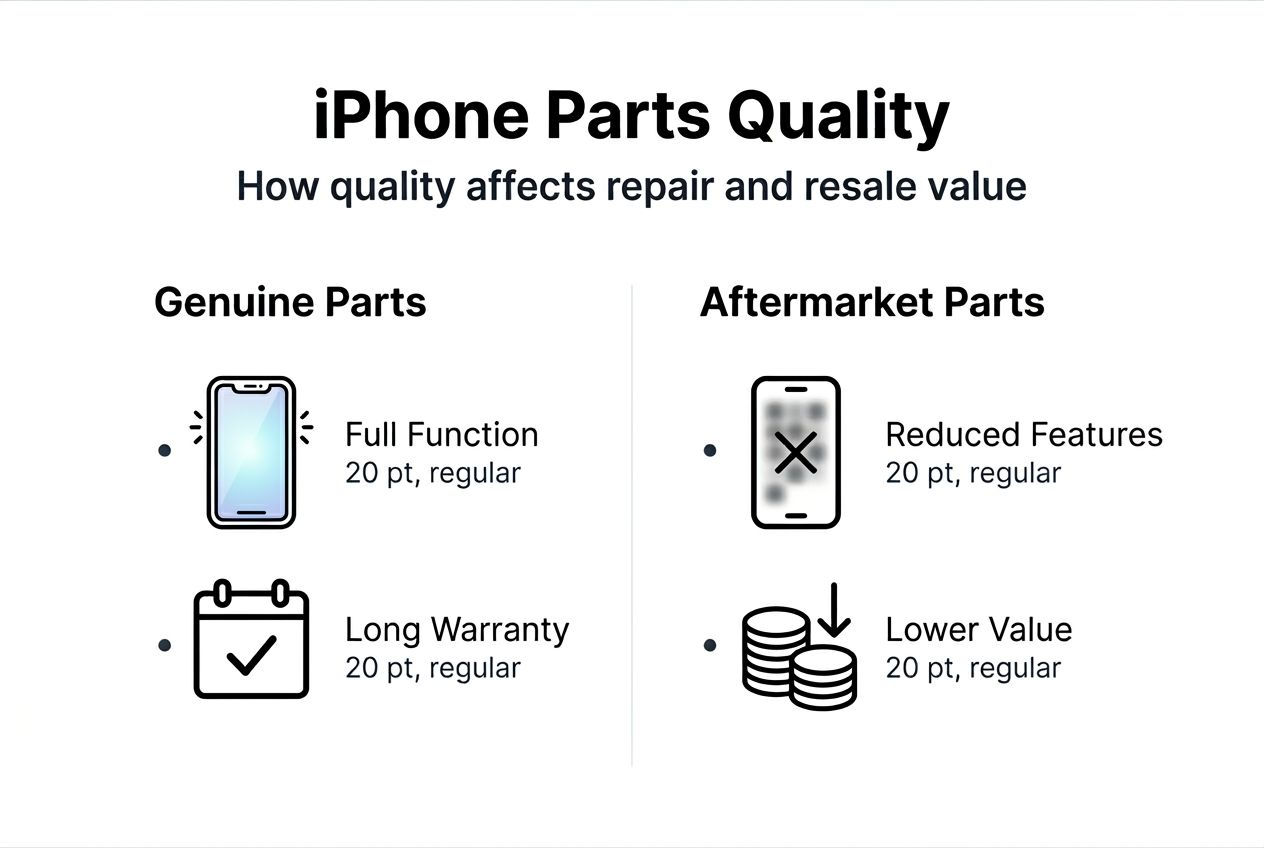
Genuine OEM parts preserve Face ID and True Tone functionality without recalibration. These screens match Apple’s original specifications precisely, ensuring your iPhone behaves exactly as it did before damage. You’ll maintain automatic brightness adjustment, accurate colour rendering, and seamless biometric unlocking.
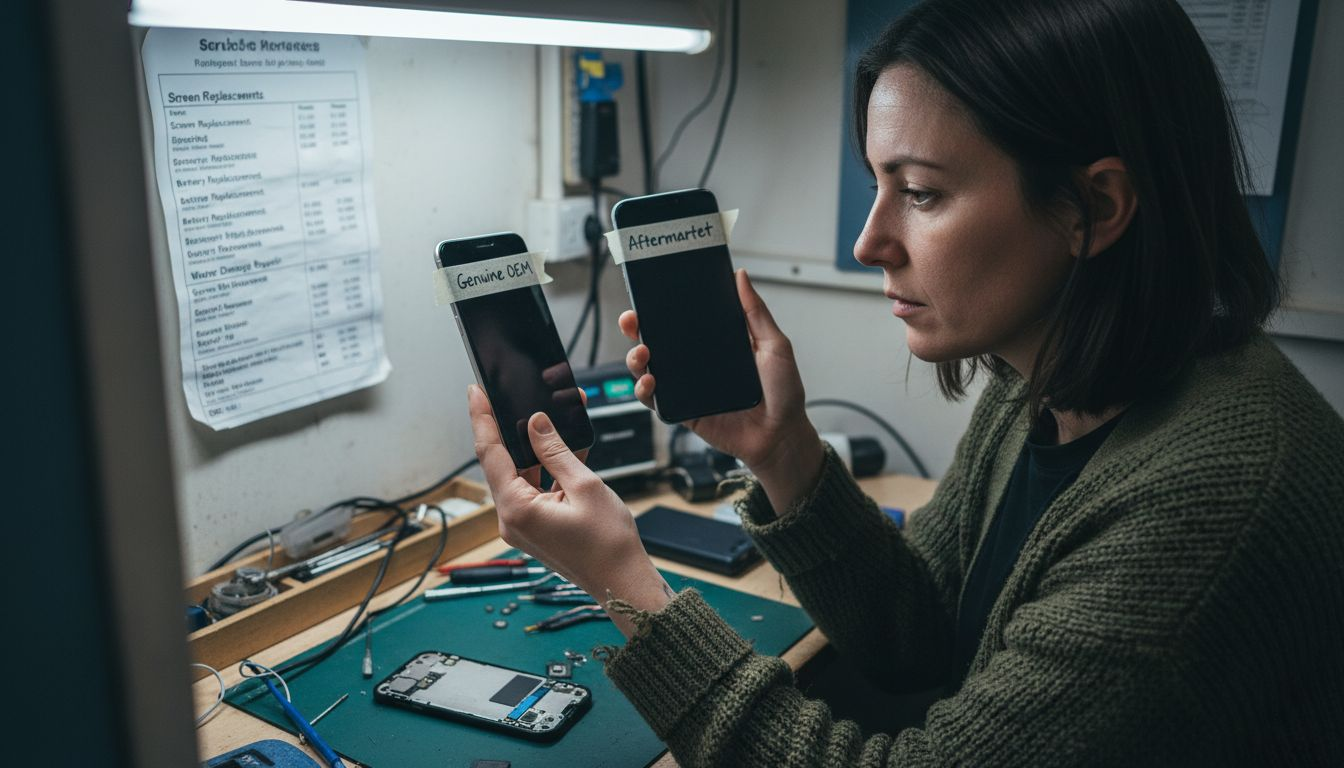
Aftermarket screens exist on a quality spectrum. Premium aftermarket options use high-grade materials and tight manufacturing tolerances, often matching OEM performance at lower cost. Mid-tier parts might display slight colour shifts or reduced touch sensitivity. Budget screens frequently suffer from poor viewing angles, rapid degradation, and compatibility issues with iOS updates.
Key quality indicators for replacement screens:
- True Tone compatibility (colour temperature adjustment)
- Original connector design (prevents fitment issues)
- Oleophobic coating (fingerprint resistance)
- Brightness levels matching OEM specs (typically 625-1200 nits)
- Touch sampling rate (120Hz for ProMotion models)
Warranty coverage correlates directly with part quality. Reputable suppliers offering 6-12 month warranties typically source better components than sellers providing no protection. If a vendor won’t guarantee their screen for at least 90 days, that’s a red flag about build quality.
Pro Tip: Ask suppliers specifically about True Tone and Face ID compatibility before purchasing. Some aftermarket screens work perfectly but require iOS recalibration, whilst others permanently disable these features.
Device resale value takes a hit with low-quality parts. Future buyers can detect aftermarket screens through settings, and poor replacements significantly reduce what you can charge. Investing in quality iPhone screen parts UK sources protects your iPhone’s long-term worth.
Lower-grade parts wear faster, developing dead pixels, touch issues, or backlight problems within months. This false economy forces a second repair, doubling your total expense and frustration.
DIY repair risks and quality control measures
Repairing your iPhone screen yourself offers maximum cost savings but carries substantial technical risk. Without proper experience, you can easily transform a cracked screen into a completely dead device worth only scrap value.
Installation errors causing permanent damage are alarmingly common among first-time DIY repairers. Ribbon cables tear easily when bent at wrong angles. Connectors snap if forced incorrectly. Adhesive applied poorly allows moisture ingress that corrodes internal components.
Common mistakes that destroy iPhones include disconnecting the battery improperly (causing logic board damage), over-tightening screws (cracking internal components), and static discharge from ungrounded work surfaces (frying circuits). Each error can cost hundreds to rectify professionally or render the device unrepairable.
Critical DIY failure points:
- Damaged ribbon cables from excessive force
- Stripped or broken screw threads
- Incorrect reassembly order causing connector damage
- Adhesive contamination on sensors or cameras
- Missing components lost during disassembly
DIY repairs void Apple warranty immediately. Even if you successfully replace the screen, any future issues require out-of-warranty service rates. AppleCare+ becomes worthless the moment you open the device yourself.
Professional installation removes these risks entirely. Technicians have proper tools, ESD-safe workstations, and hundreds of repairs under their belts. They also provide warranty coverage for their work, protecting you if something goes wrong days or weeks later.
Pro Tip: If you insist on DIY, invest in proper tools first. A quality toolkit with anti-static measures, precision drivers, and proper spudgers costs £15-£30 but prevents costly mistakes.
Quality control during DIY repairs demands methodical patience. Test every function before sealing the device: touch response across the entire screen, Face ID recognition, True Tone adjustment, ambient light sensor, and earpiece speaker. One oversight can mean disassembling everything again.
For guidance on when DIY makes sense, review DIY iPhone screen repair risks UK assessments. Older models with LCD screens present lower risk than modern OLED devices with integrated sensors.
Warranty and insurance influence on repair costs
AppleCare+ transforms screen repair economics completely. Without coverage, you face full commercial rates. With it, you pay minimal excess fees that make official repairs suddenly affordable.
AppleCare+ reduces screen repairs to £30-£50 excess in the UK. This flat rate applies regardless of your iPhone model, making it particularly valuable for Pro Max owners who would otherwise face £389 bills. You’re essentially pre-paying for future accidents through monthly premiums.
Without warranty protection, repair costs can exceed device replacement value for older models. An iPhone 11 worth £250 on the second-hand market doesn’t justify a £200 professional screen repair. At that point, replacement becomes the logical choice.
Warranty considerations by repair method:
- Official Apple: Preserves remaining manufacturer warranty and AppleCare+ eligibility
- Third-party professional: Voids Apple warranty but provides shop-specific coverage
- DIY repair: Eliminates all warranty protection immediately
Homeowners insurance and mobile-specific policies sometimes cover accidental damage. Check your excess amount and any
Recommended
Let customers speak for us
item was packaged safely, no damage. it’s now October and since replacing it in January i’ve had no issues.

Great

They had what I was looking for ... ordering was easy, payment was easy, delivery was as promised.
-

Absolutely love this case! Heavy, sturdy and full coverage

Thank You! I really love it! 😊

For Garmin Forerunner 165 20mm Two Color Textured Silicone Watch Band(Teal)

For Samsung Galaxy S26+ 5G R-JUST Sliding Camera Life Waterproof Holder Phone Case(Black)

I ❤️ love it, it's absolutely amazing I'm sooo happy 😊

Great

I saw this item and it was just what I was looking for. I found it here but not in Amazon or e-bay. However, it was in UK, I was surprised to find that they were able to ship it to the US. Excellent company, would do business with again

This is great for when out and about, to sharpen either coloured pencils, or watercolour pencils….would order again.

Great items would bye again

I have purchased several items from this store before. Recently, I encountered an issue with my latest order. After reporting the problem to customer support, they were consistently attentive and made every effort to resolve the situation. Upon investigation, they acknowledged the issue and promptly fixed it. This experience has increased my level of trust in this store.
Thank you so much. I'm so happy.
