


News
Common Mistakes in Phone Repairs – What Every DIYer Should Know
Smartphone repairs often seem simple until one wrong move leads to a costly mistake. For many in the United Kingdom aiming to tackle repairs themselves, understanding the difference between a minor fix and major damage lies in spotting common repair mistakes. From misusing tools to skipping key safety steps, these errors can affect everything from your device’s performance to its warranty standing. This guide offers practical knowledge to help you approach phone repairs with greater confidence and avoid falling into the same traps as others.
Table of Contents
- Defining Common Phone Repair Mistakes
- Types of Mistakes in DIY Repairs
- How Incorrect Parts and Tools Cause Damage
- Neglecting ESD and Data Safety Protocols
- Risks: Voiding Warranty and Further Device Damage
- Practical Ways to Prevent Common Repair Errors
Key Takeaways
| Point | Details |
|---|---|
| Common Mistakes | DIY smartphone repairs often include homework mistakes like skipping diagnostics and using incorrect tools, leading to device damage. |
| Importance of Preparation | Proper preparation, including workspace organisation and tool selection, is crucial for successful repairs. |
| Avoiding ESD Issues | Implementing electrostatic discharge precautions is essential to protect sensitive components during repairs. |
| Understanding Warranty Risks | Unauthorized repairs can void manufacturer warranties, resulting in significant liabilities for consumers. |
Defining Common Phone Repair Mistakes
Phone repairs can quickly turn from a straightforward task into a complex challenge for DIY enthusiasts. Understanding common repair mistakes is crucial for preventing costly errors and potential device damage. Smartphone repair requires precision, technical knowledge, and careful approach.
Most beginners encounter similar pitfalls when attempting device repairs. These mistakes often stem from lack of preparation, insufficient technical understanding, or rushing through the repair process. Common smartphone repair challenges demonstrate how even well-intentioned repair attempts can go wrong.
Key mistakes DIY repairers frequently make include:
- Skipping proper diagnostic steps before repair
- Working without appropriate tools
- Failing to ground themselves against static electricity
- Mishandling delicate internal components
- Not tracking small screws and parts during disassembly
- Applying excessive force when removing components
- Attempting repairs without watching tutorial videos first
Successful phone repairs require patience, methodical approach, and willingness to learn. Understanding these common errors helps prevent unnecessary device damage and expensive mistakes.
Pro tip: Always photograph each disassembly stage and organise screws systematically to ensure smooth reassembly.
Types of Mistakes in DIY Repairs
DIY smartphone repairs involve numerous potential pitfalls that can transform a simple maintenance task into an expensive disaster. Common mobile repair mistakes demonstrate the complexity of technical interventions, requiring precise skills and thorough understanding.
Based on comprehensive repair data, smartphone repair errors typically fall into several critical categories. Diagnostic mistakes represent a significant challenge, with technicians often misidentifying core device issues. According to research from openrepair, nearly 56% of repair attempts involve screen and battery complications that demand meticulous diagnostic procedures.
Key types of DIY repair mistakes include:
- Hardware Component Mishandling
- Diagnostic Procedure Errors
- Tool Selection and Usage Mistakes
- Electrostatic Discharge Risks
- Replacement Part Quality Issues
- Reassembly and Testing Failures
Specific mistake categories demand careful attention:
-
Tool-Related Mistakes
- Using incorrect screwdriver sizes
- Lacking precision instruments
- Applying inappropriate force
-
Technical Knowledge Gaps
- Insufficient understanding of device architecture
- Neglecting manufacturer-specific repair protocols
- Misinterpreting diagnostic signals
-
Component Handling Errors
- Improper static electricity management
- Mishandling delicate internal circuits
- Damaging sensitive connectors
Proper preparation and systematic approach can significantly reduce the risk of catastrophic repair failures.
Successful repairs require patience, technical knowledge, and a methodical approach. Understanding these common mistakes helps DIY enthusiasts minimise potential device damage and costly errors.
To better understand the impact of DIY repair mistakes, consider how different error types affect your phone:
| Mistake Type | Typical Consequence | Prevention Focus |
|---|---|---|
| Diagnostic Errors | Misidentification, wrong repairs | Careful testing, issue research |
| Tool Selection Mistakes | Parts damage, failed repairs | Use proper, device-specific tools |
| Component Mishandling | Broken connectors, circuit faults | Gentle handling, ESD precautions |
| Data Negligence | Lost personal information | Full device backup beforehand |
Pro tip: Invest in proper anti-static equipment and create a clean, organised workspace before attempting any smartphone repair.
How Incorrect Parts and Tools Cause Damage
Smartphone repair demands precision and specialised knowledge, with phone repair mistakes potentially leading to catastrophic device damage. Incorrect tools and replacement parts represent significant risks that can transform a simple repair into an expensive disaster.
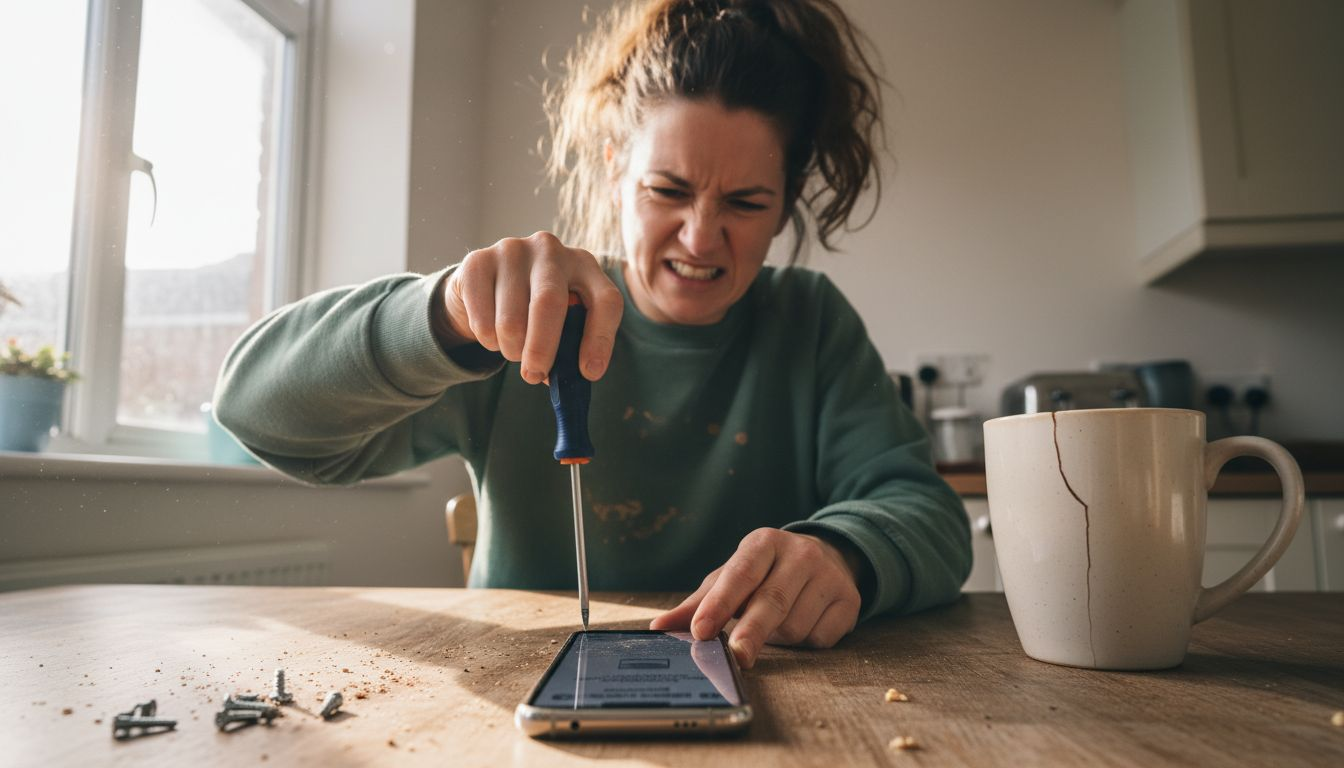
The consequences of using inappropriate repair equipment extend far beyond superficial damage. Precision instruments are critical for navigating the intricate internal architecture of modern smartphones, where even microscopic errors can compromise entire device functionality.
Risks associated with incorrect parts and tools include:
- Permanent circuit board damage
- Irreversible screen destruction
- Connector and port degradation
- Battery functionality impairment
- Electrical short-circuiting
- Voiding manufacturer warranties
Specific damage mechanisms arise from poor tool and part selection:
-
Mechanical Damage Risks
- Using household tools with incorrect dimensions
- Applying excessive force during component removal
- Employing non-specialised screwdrivers
-
Electrical Compatibility Issues
- Selecting non-standard replacement components
- Mismatched voltage and amperage specifications
- Inferior quality component manufacturing
-
Structural Integrity Challenges
- Incompatible mounting brackets
- Poor thermal conductivity in replacement parts
- Compromised device waterproofing
Precision is not optional in smartphone repairs – it’s the fundamental difference between successful restoration and complete device failure.
Understanding these potential pitfalls helps DIY enthusiasts approach repairs with greater caution and preparedness. Investing in quality tools and genuine replacement parts remains the most effective strategy for minimising repair-related risks.
Pro tip: Always purchase repair tools and components from reputable manufacturers with verified compatibility for your specific device model.
Neglecting ESD and Data Safety Protocols
Smartphone repair involves critical safety considerations beyond physical component handling, particularly regarding electrostatic discharge (ESD) and device data protection. Protecting mobile data during repairs requires comprehensive understanding of potential risks and systematic prevention strategies.
Electrostatic discharge represents a silent yet devastating threat to electronic components. Sensitive smartphone circuits can be permanently damaged by even minor electrical discharges imperceptible to human sensation, making proper grounding and protection essential during repair processes.
Key ESD and data safety protocols encompass multiple critical domains:
- Static electricity management
- Personal protective equipment requirements
- Data backup procedures
- Secure device isolation techniques
- Component handling best practices
- Professional workspace configuration
Specific risk mitigation strategies include:
-
Personal Protection Methods
- Using anti-static wrist straps
- Wearing non-conductive gloves
- Working on non-static generating surfaces
-
Data Security Protocols
- Complete device data backup before repair
- Enabling device encryption
- Disconnecting from cloud services
-
Electrical Safety Practices
- Discharging battery before component access
- Using specialised ESD-safe tools
- Maintaining controlled humidity environments
Electromagnetic sensitivity can transform a routine repair into an irreversible technological catastrophe.
Understanding and implementing comprehensive ESD and data safety protocols transforms amateur repairs from potential risks into professional-level interventions. Methodical preparation prevents costly mistakes and protects both device functionality and personal information.
Pro tip: Invest in a professional ESD protection kit and always backup device data before attempting any repair procedure.
Risks: Voiding Warranty and Further Device Damage
Navigating smartphone repairs involves understanding complex legal and technical implications, with phone repair warranty risks presenting significant challenges for DIY enthusiasts. Manufacturer warranty conditions represent intricate legal frameworks that can be easily compromised by unauthorized interventions.
Understanding warranty implications requires recognising the precise circumstances under which manufacturers invalidate device coverage. Repair-related risks extend beyond financial considerations, potentially leaving consumers with expensive, non-functional devices and zero manufacturer support.
Common warranty violation scenarios include:
- Unauthorized component replacements
- Opening device without professional certification
- Using non-genuine replacement parts
- Modifying internal device architecture
- Bypassing manufacturer-specified repair protocols
- Attempting repairs without proper documentation
Specific warranty compromise mechanisms involve:
-
Documentation Risks
- Lack of repair record maintenance
- Missing original purchase documentation
- Incomplete repair tracking
-
Technical Intervention Hazards
- Breaking manufacturer’s seal
- Damaging internal diagnostic markers
- Causing unintended cascading component failures
-
Legal Liability Challenges
- Invalidating remaining warranty periods
- Losing consumer protection rights
- Eliminating potential future repair options
Unauthorized repairs can transform a repairable device into an expensive paperweight.
Professional repair services offer structured approaches that preserve warranty protections while addressing device functionality concerns. Understanding these nuanced risks helps consumers make informed decisions about smartphone maintenance.
Pro tip: Always consult manufacturer guidelines and keep comprehensive repair documentation to protect potential warranty claims.
Practical Ways to Prevent Common Repair Errors
Successful smartphone repairs require meticulous preparation and systematic approaches. Common mobile repair prevention strategies demand comprehensive understanding and disciplined technical intervention.
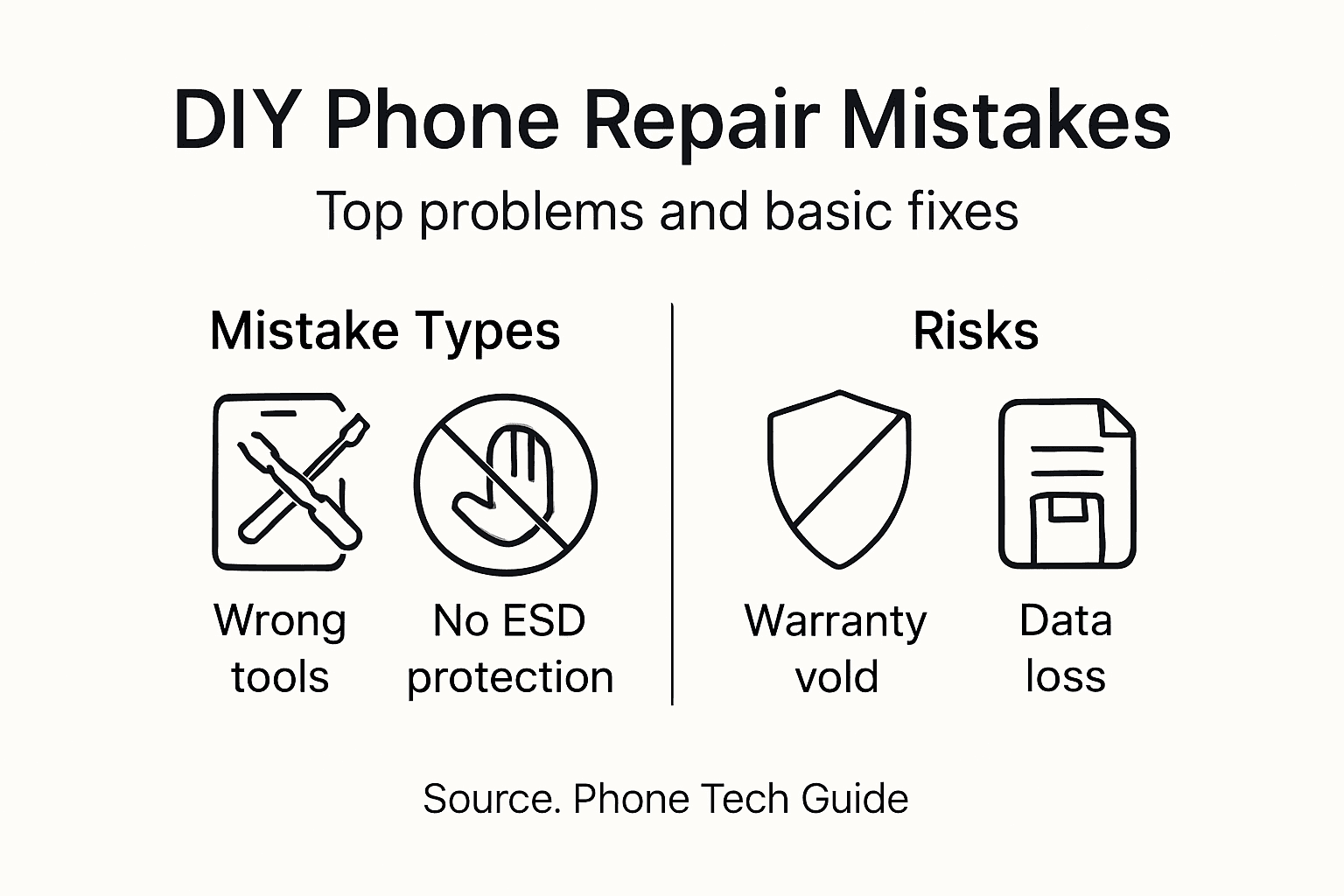
Preventative measures represent the cornerstone of successful DIY smartphone maintenance. Repair error prevention involves creating structured workflows that minimise potential technical complications and protect device integrity through methodical approaches.
Key preventative strategies include:
- Comprehensive pre-repair diagnostics
- Professional tool selection
- Systematic workspace organisation
- Detailed documentation practices
- Controlled environmental conditions
- Methodical component handling
Practical prevention techniques involve multiple strategic approaches:
-
Pre-Repair Preparation
- Researching specific device architecture
- Creating dedicated repair workspace
- Gathering appropriate specialised tools
- Preparing anti-static protection equipment
-
Diagnostic Protocols
- Conducting full device functionality assessment
- Identifying precise repair requirements
- Documenting existing device conditions
- Photographing disassembly stages
-
Technical Intervention Methods
- Using manufacturer-recommended tools
- Following precise component removal sequences
- Managing electrostatic discharge risks
- Tracking and labelling small components
Prevention is exponentially more cost-effective than attempting to rectify extensive repair damage.
Successful smartphone repairs demand patience, precision, and systematic approaches. Understanding and implementing these preventative strategies transforms potential repair disasters into controlled, professional interventions.
This table summarises essential DIY smartphone repair precautions for long-term success:
| Prevention Area | Key Action | Professional Reason |
|---|---|---|
| Workspace Organisation | Set up clean, lit, anti-static station | Minimises accidental component loss |
| Documentation | Photograph and label all steps | Eases reassembly, avoids errors |
| Tool Sourcing | Buy tools from reputable suppliers | Reduces tool-related damage risks |
| Component Tracking | Sort and label screws/parts methodically | Prevents misplacement during repair |
Pro tip: Create a dedicated repair workstation with proper lighting, anti-static mats, and organised component storage before beginning any device intervention.
Equip Yourself for Successful Phone Repairs with Buy2fix
The challenges highlighted in the article reveal how common mistakes such as using incorrect tools, mishandling sensitive components, and neglecting electrostatic discharge precautions can lead to costly damage and voided warranties. If you want to avoid these pitfalls, it is essential to rely on quality parts and professional-grade tools tailored specifically for your device. Our extensive range of mobile phone repair parts and specialised accessories can help you maintain control over your repairs and protect your valuable smartphone.
Why risk your phone with subpar components or improper equipment when you can source everything from reliable LCD screens, flex cables, and charging ports to anti-static kits all in one place At Buy2fix we offer UK mainland free shipping alongside a 30-day return policy and one-year warranty. Start your repair on the right foot by visiting our website today and discover how professional repair parts and accessories can transform your DIY experience. Don’t let common mistakes become your repair regret shop with confidence and get your device back to perfect condition now.
Frequently Asked Questions
What are the most common mistakes made during DIY phone repairs?
Common mistakes include skipping diagnostic steps, using inappropriate tools, failing to ground oneself against static electricity, mishandling delicate components, and not tracking screws during disassembly.
How can I prevent damage to my smartphone during a DIY repair?
To prevent damage, ensure you have the right tools, follow a methodical approach, manage static electricity, and backup your data before starting the repair process.
Why is it important to use the correct tools for phone repairs?
Using the correct tools is crucial because improper tools can damage sensitive components, lead to incorrect repairs, and potentially compromise the device’s functionality.
What precautions should I take to protect my device’s data when repairing it?
To protect your data, make a full backup of your device prior to starting the repair, enable device encryption, and disconnect from any cloud services before proceeding.
Recommended
- 7 Common Beginner Phone Repair Mistakes and How to Avoid Them – buy2fix
- Common Phone Repair Mistakes: Costly DIY Errors – buy2fix
- 7 Key DIY Phone Repair Pros Cons Every User Should Know – buy2fix
- Common Smartphone Repair Terms: What Every DIYer Needs – buy2fix
- Βήματα συντήρησης ηλεκτρονικών για άψογη λειτουργία στο σπίτι - ΞΥΔΑΣ ΕΥΡΑΓΟΡΑ - Οι καλύτεροι στην αγορά. Μεγάλες προσφορές στις Ηλεκτρικές Συσκευές
- Waarom Refurbished Elektronica Beste Keuze Is
Let customers speak for us
Looks great!

Snel en makkelijk besteld, vlotte levering !

item was packaged safely, no damage. it’s now October and since replacing it in January i’ve had no issues.

Great

They had what I was looking for ... ordering was easy, payment was easy, delivery was as promised.
-

Absolutely love this case! Heavy, sturdy and full coverage

Thank You! I really love it! 😊

For Garmin Forerunner 165 20mm Two Color Textured Silicone Watch Band(Teal)

For Samsung Galaxy S26+ 5G R-JUST Sliding Camera Life Waterproof Holder Phone Case(Black)

I ❤️ love it, it's absolutely amazing I'm sooo happy 😊

Great

I saw this item and it was just what I was looking for. I found it here but not in Amazon or e-bay. However, it was in UK, I was surprised to find that they were able to ship it to the US. Excellent company, would do business with again

This is great for when out and about, to sharpen either coloured pencils, or watercolour pencils….would order again.

Great items would bye again
