

Choosing Replacement Screens: Ensuring Seamless Device Repair
Most british repair enthusiasts know replacing a smartphone screen is more than just swapping glass. With over 60 percent of device failures linked to screen issues, choosing the right replacement can make the difference between a satisfied customer and repeat complaints. The crowded market for replacement screens brings complex technology and quality decisions that directly impact your repair results. Discover how choosing the right components and understanding key screen features can keep your british repairs sharp, reliable, and trusted.
Table of Contents
- Replacement Screens Defined And Debunked
- Screen Types And Device Compatibility Explained
- Key Features And Quality Standards Compared
- Installation Methods And Professional Recommendations
- Cost, Risks, And Common Pitfalls To Avoid
Key Takeaways
| Point | Details |
|---|---|
| Replacement Screens Are Essential | They provide a crucial solution for restoring device functionality, necessitating careful selection and testing. |
| Compatibility Is Critical | Exact matching of screen specifications is vital to prevent installation errors and ensure device performance. |
| Quality Standards Matter | Replacement screens must undergo rigorous assessment for durability, visual quality, and functional standards. |
| Installation Requires Expertise | Successful screen replacement needs a comprehensive understanding of device architecture and precise installation techniques. |
Replacement Screens Defined And Debunked
Replacement screens represent specialised electronic components designed to restore functionality to damaged mobile devices, providing a critical solution for repair professionals and DIY enthusiasts. These precision-engineered displays serve as direct substitutes for original manufacturer screens, addressing damage ranging from minor cracks to complete screen failures.
Understanding screen technology requires exploring different panel types and their unique characteristics. In-plane switching (IPS) screen technology represents a sophisticated display method that aligns liquid crystals parallel to glass surfaces, significantly improving colour reproduction and viewing angles. Modern replacement screens leverage advanced manufacturing techniques to match or exceed original device specifications, ensuring seamless integration and performance.
The quality of replacement screens varies dramatically across the market. Professional repair technicians must carefully assess multiple factors including display resolution, touch sensitivity, colour accuracy, and compatibility with specific device models. Research indicates potential challenges with screen-based technologies that extend beyond simple visual display, emphasising the importance of rigorous testing and selection criteria for replacement components.
Pro tip: Always verify screen compatibility through precise model number matching and conduct thorough functionality tests before final installation to prevent potential device performance issues.
Screen Types And Device Compatibility Explained
Mobile device screen technologies have evolved dramatically, presenting repair professionals with complex compatibility challenges. Display technologies range from traditional LCD to advanced OLED panels, each offering unique performance characteristics that impact repair strategies and component selection.
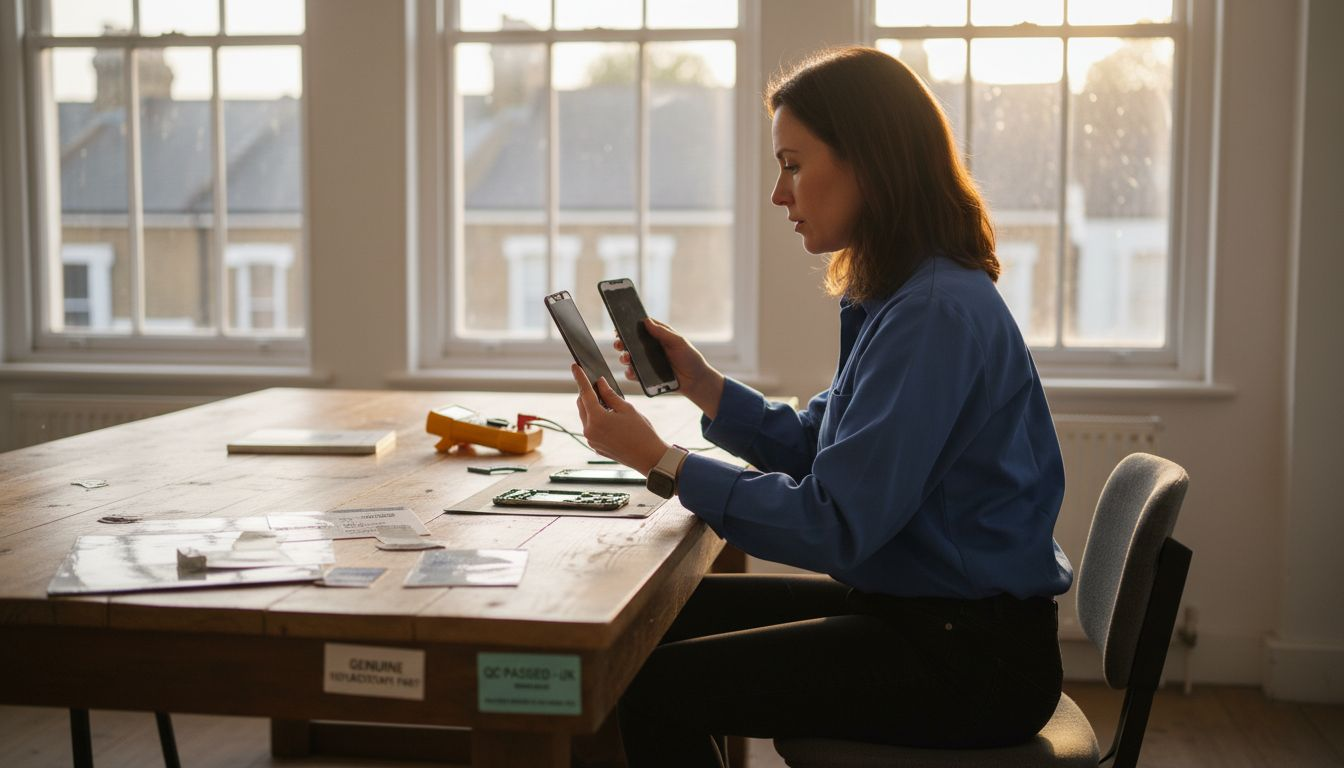
Understanding screen compatibility requires deep knowledge of device-specific requirements. High-definition smartphone displays demonstrate significant variation in technologies, including IPS LCD, AMOLED, and P-OLED configurations. These display types differ substantially in pixel density, resolution, and electrical specifications, meaning a universal replacement approach is ineffective. Repair technicians must meticulously match screen specifications, considering factors like aspect ratio, touch sensitivity, and connector design to ensure successful device restoration.
The landscape of screen replacement demands comprehensive technical understanding. Different manufacturers employ proprietary display technologies, creating intricate compatibility matrices. Professional repair technicians must navigate these complexities by maintaining updated component knowledge, investing in specialised diagnostic tools, and developing a systematic approach to screen selection that prioritises precise device matching over generic solutions.
Pro tip: Always cross-reference the original device’s exact model number with potential replacement screens and verify connector pin configurations before purchasing to prevent costly compatibility errors.
Here is a comparison of major mobile screen technologies for repair professionals:
| Screen Type | Core Strengths | Key Limitations |
|---|---|---|
| IPS LCD | Superb colour accuracy and wide viewing angles | Lower contrast, less energy efficient |
| AMOLED | Deep blacks, higher contrast, flexible designs possible | Prone to burn-in, higher cost |
| P-OLED | Thin, lightweight, highly flexible | Durability concerns, can be more expensive |
| Standard LCD | Reliable and cost-effective for mass market | Restricted viewing angle, moderate colour reproduction |
Key Features And Quality Standards Compared
Evaluating replacement screen quality requires a comprehensive understanding of multiple technical parameters that determine display performance. Comparison of display technologies reveals critical variations in key metrics, including contrast ratios, peak luminance, colour depth, and response times that directly impact visual experience and device functionality.
Display Quality Metrics typically encompass several crucial aspects:
- Contrast ratio
- Peak luminance
- Colour accuracy
- Response time
- Image persistence
- Energy consumption
Liquid-crystal display (LCD) technologies demonstrate remarkable complexity in their construction, with intricate pixel structures and illumination mechanisms that significantly influence screen performance. Professional repair technicians must understand these nuanced characteristics to select replacement screens that precisely match original device specifications, ensuring minimal deviation in visual quality and user experience.
Beyond technical specifications, quality standards also encompass durability, manufacturing precision, and compatibility with device-specific electrical and mechanical requirements. Experienced repair professionals prioritise screens that not only match visual characteristics but also meet stringent structural and functional standards, recognising that a superior replacement goes beyond surface-level appearance.
Pro tip: Invest in calibration tools to verify colour reproduction and response times when selecting replacement screens, as these metrics are crucial for maintaining device performance standards.
This summary highlights critical criteria in selecting high-quality replacement screens:
| Selection Criterion | Why It Matters | Professional Impact |
|---|---|---|
| Exact Device Compatibility | Prevents installation errors and malfunctions | Ensures seamless device operation |
| Colour and Brightness Matching | Preserves visual continuity for users | Enhances customer satisfaction |
| Structural Robustness | Minimises future breakage risk | Reduces return and rework rates |
| Touch Responsiveness | Sustains device interactivity | Supports modern app functionality |
Installation Methods And Professional Recommendations
Screen replacement requires a meticulous approach that transcends basic mechanical skills, demanding precision and comprehensive understanding of device-specific installation requirements. Installation techniques draw parallels with professional mounting strategies, where structural integrity and precise alignment are paramount to successful device restoration.
Critical Installation Considerations:
- Electrostatic discharge protection
- Precise connector alignment
- Adhesive and mounting mechanism compatibility
- Structural stress distribution
- Thermal management
- Signal integrity verification
Professional electrical installation standards emphasise systematic approaches that extend beyond simple component replacement. Repair technicians must approach screen installations as complex procedures requiring specialized tools, methodical disassembly techniques, and rigorous quality verification processes. This holistic methodology ensures not just visual restoration but comprehensive device functionality and reliability.
Successful screen replacement demands advanced technical skills, combining mechanical precision with electronic expertise. Professionals must understand intricate device architectures, manage delicate electronic connections, and maintain manufacturer-level quality standards throughout the installation process. This requires continuous training, investment in specialized tools, and a commitment to understanding evolving device technologies.
Pro tip: Always document each installation step with high-resolution photographs and maintain a detailed log of replacement components to facilitate future troubleshooting and ensure warranty compliance.
Cost, Risks, And Common Pitfalls To Avoid
Screen replacement represents a complex financial and technical investment that demands comprehensive risk assessment and strategic decision-making. Screen time and device usage carry significant health implications, extending beyond mere technical repair considerations to potential long-term physiological impacts.
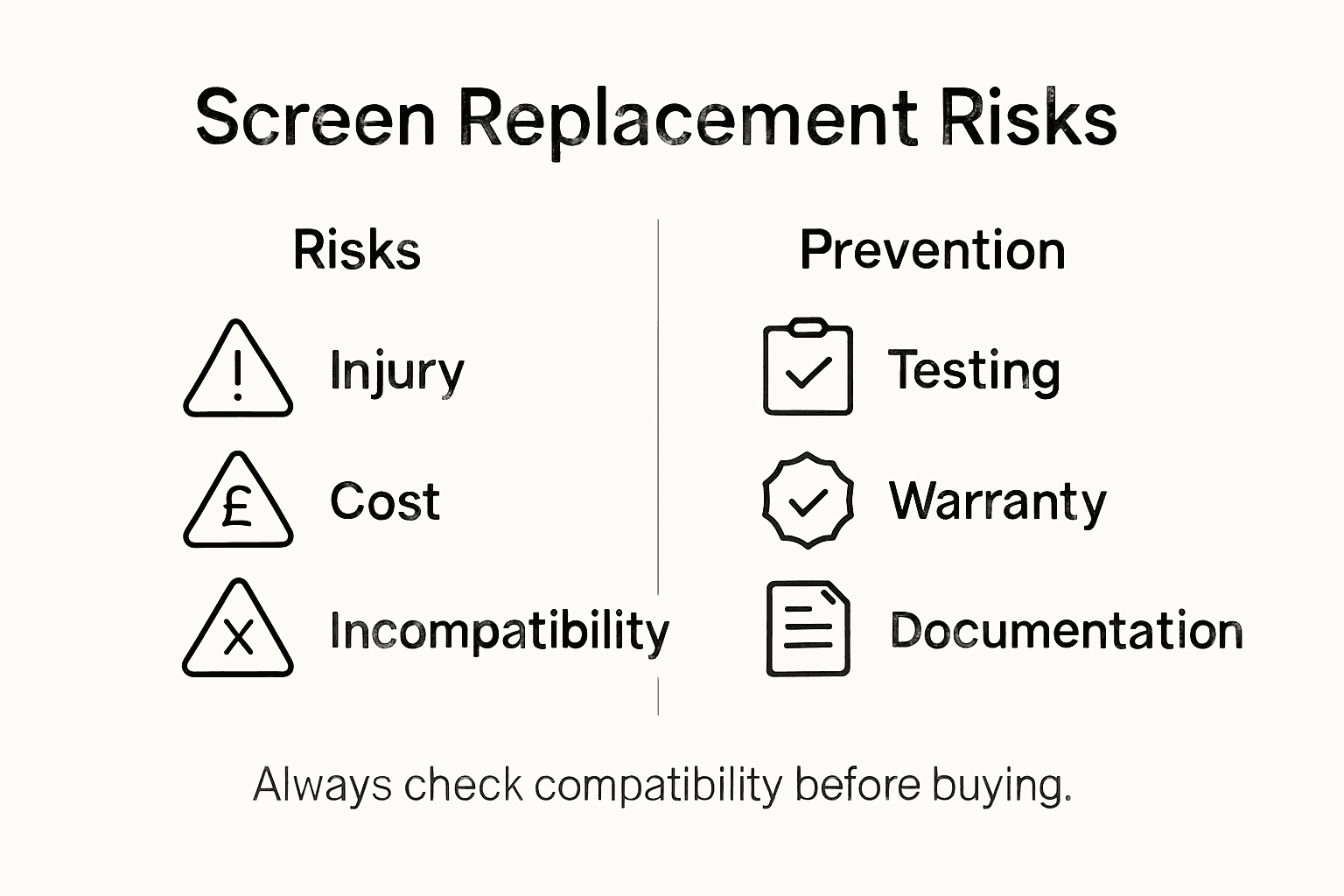
Financial and Technical Risks Include:
- Incorrect screen model selection
- Compromised device warranty
- Potential permanent device damage
- Unexpected compatibility issues
- Higher long-term repair costs
- Performance degradation
Medical research highlights substantial physical risks associated with improper screen usage and replacement, emphasising the importance of professional-grade replacements. Repair technicians must consider not just technical specifications but potential ergonomic and health consequences of substandard screen installations.
Navigating screen replacement requires a strategic approach that balances cost-effectiveness with quality assurance. Professionals must critically evaluate replacement screens across multiple dimensions, including manufacturer specifications, component quality, installation complexity, and potential long-term device performance implications. This holistic assessment helps mitigate financial risks and ensures sustainable device functionality.
Pro tip: Always request comprehensive documentation and warranty details when purchasing replacement screens, and maintain a rigorous testing protocol to verify complete functionality before finalising any repair.
Choose The Perfect Replacement Screen With Confidence
Repairing a device screen requires precise compatibility and high-quality parts to avoid pitfalls like performance issues and warranty loss. This article highlights key concerns costly errors and technical challenges faced when selecting replacement screens, such as matching exact model numbers, ensuring colour accuracy, and maintaining structural robustness. To meet these exacting demands Buy2fix offers a wide range of professionally tested mobile phone repair parts including LCD screens and display assemblies tailored for leading brands like iPhone, Samsung Galaxy, and more.
Explore our comprehensive inventory at Buy2fix where quality assurance and industry expertise combine. Benefit from free UK mainland shipping, a one-year warranty, and parts sourced for both professional technicians and DIY repair enthusiasts. Don’t risk device damage or compatibility failures. Start your repair journey by visiting Mobile Phone Repair Parts today to find replacement screens assured to deliver perfect fit and performance. Get reliable components now and restore your device to full functionality with confidence.
Frequently Asked Questions
What factors should I consider when selecting a replacement screen for my device?
When selecting a replacement screen, consider display resolution, touch sensitivity, colour accuracy, compatibility with your specific device model, and the manufacturing quality of the screen.
How do different screen technologies impact device repair choices?
Different screen technologies, such as IPS LCD, AMOLED, and P-OLED, have unique characteristics like pixel density and electrical specifications, affecting performance, durability, and compatibility with your device. It’s essential to match the specific requirements of your device to ensure optimal functionality.
What steps should I take to ensure compatibility before purchasing a replacement screen?
Always cross-reference the original device’s exact model number with potential replacement screens, verify connector pin configurations, and consider the aspect ratio and touch sensitivity to avoid compatibility errors.
Why is it important to conduct functionality tests after installing a replacement screen?
Conducting functionality tests ensures that the new screen performs as expected, verifying touch responsiveness, colour accuracy, and overall integration with the device to avoid performance issues and ensure user satisfaction.
Recommended
- Screen Replacement Best Practices: Ensuring Lasting Repairs – buy2fix
- Choosing Quality Replacement Screens: Ensuring Reliable Mobile Repairs – buy2fix
- Understanding Choosing Screen Replacements for Devices – buy2fix
- Mobile Screen Replacement Guide: Achieve Pro Results – buy2fix
- Akkus reparieren Guide: So bringen Sie Ihre Akkus zurück ins Leben - accu.blog
Let customers speak for us
Great

I saw this item and it was just what I was looking for. I found it here but not in Amazon or e-bay. However, it was in UK, I was surprised to find that they were able to ship it to the US. Excellent company, would do business with again

This is great for when out and about, to sharpen either coloured pencils, or watercolour pencils….would order again.

Great items would bye again

I have purchased several items from this store before. Recently, I encountered an issue with my latest order. After reporting the problem to customer support, they were consistently attentive and made every effort to resolve the situation. Upon investigation, they acknowledged the issue and promptly fixed it. This experience has increased my level of trust in this store.
Thank you so much. I'm so happy.

très bien

BC70 Car Bluetooth 5.0 FM Transmitter Radio Adapter Dual Display Wireless Handsfree Call MP3 Music Player QC3.0 PD USB Charger

A quite sturdy cover, if you are looking for full protection and a more business-like style, this cover perfectly fulfills its purpose.
The shipping was fast, and it was delivered in perfect condition.

For LG TV Bluetooth Handheld Infrared Voice Multi-Function Remote Control(AKB75855501)

Tusen tack för bästa service och produkt som jag vänlig önskar dig tack

Works correctly and no issues so far

Took a while to get here but it was all good, watch looks brand new after replacement

What a fantastic 👏🏻 stylish case that has helped my phones temperature in the heatwave!!
Perfect 👌🏻 also it's cool as f##k

I love it!
