


Nouvelles
Future of Mobile Accessories – Impact on Repair Trade
More than 60 percent of british mobile users now expect their devices to work seamlessly with advanced accessories like smart health monitors, wireless charging stations, and biometric authentication tools. For repair technicians in the United Kingdom, this shift means that keeping up with rapidly evolving accessory trends has never been more critical. This overview explores the latest innovations and dispels outdated myths, helping you align your services with the complex needs of today’s tech-savvy customers.
Table of Contents
- Defining Modern Mobile Accessories And Myths
- Key Types And Their Evolving Functions
- Innovations Shaping Accessory Performance
- Sustainability And Eco-Friendly Design Trends
- Legal Rights And Right-To-Repair Developments
- Challenges, Costs, And Common Mistakes
Key Takeaways
| Point | Details |
|---|---|
| Evolution of Accessories | Modern mobile accessories have advanced beyond basic functionalities and are now integral components with smart capabilities that enhance user experience. |
| Sustainability Trends | The industry is shifting towards eco-friendly designs using biodegradable materials, emphasising the importance of sustainable product lifecycle management. |
| Legal Developments | Regulatory frameworks, particularly in Europe, are focusing on repairability, requiring manufacturers to provide spare parts and repair information, promoting consumer rights. |
| Challenges in Repair | The mobile accessory repair sector faces significant challenges, including rising costs and technical knowledge gaps, necessitating ongoing professional development for technicians. |
Defining Modern Mobile Accessories and Myths
Mobile accessories have evolved dramatically beyond simple protective cases and charging cables. Understanding the contemporary landscape requires challenging existing misconceptions about their purpose, functionality, and technological significance. Consumer perceptions of mobile technology accessories are increasingly shaped by complex symbolic narratives that extend far beyond basic utility.
Today’s mobile accessories represent intricate ecosystems of technological integration rather than mere peripheral products. Smart functionality now dominates the market, with accessories performing advanced tasks such as health monitoring, environmental sensing, and seamless device connectivity. Repair technicians must recognise these emerging trends to remain competitive, understanding that modern accessories are intelligent interfaces bridging human interaction and digital technology.
The myths surrounding mobile accessories often revolve around perceived limitations and outdated assumptions about their capabilities. Contrary to traditional beliefs, contemporary accessories are not simply add-ons but sophisticated technological extensions that can enhance device performance, provide additional functionalities, and even compensate for primary device shortcomings. From wireless charging technologies to biometric authentication accessories, the market continues to challenge conventional understanding.
To clarify the changing landscape, here is a comparison of traditional versus modern mobile accessories:
| Aspect | Traditional Accessories | Modern Accessories |
|---|---|---|
| Main Purpose | Protection and charging only | Advanced functionality |
| Technology Integration | Minimal | High, with smart features |
| User Impact | Basic convenience | Enhances device experience |
| Business Opportunity | Low margin, predictable | Higher margin, competitive |
Professional Insight: Always stay updated on emerging accessory technologies by attending trade shows, following specialist technology journals, and networking with manufacturers to anticipate market shifts and maintain your competitive edge.
Key Types and Their Evolving Functions
Mobile accessories have transformed dramatically, moving far beyond traditional protective and utility-based designs. Global mobile phone accessories market research reveals an intricate landscape of technological innovation where product categories continuously expand their functional capabilities. Traditional accessories like cases, chargers, and screen protectors now integrate sophisticated technologies that redefine their core purpose.
The contemporary accessory ecosystem encompasses diverse product categories with increasingly complex functionalities. Wireless chargers now offer fast-charging capabilities with intelligent temperature management, while smart wearables track comprehensive health metrics beyond simple fitness monitoring. Market segmentation analyses demonstrate how accessories are transitioning from peripheral add-ons to essential technological interfaces that enhance device performance and user experience.
Key accessory types now include advanced categories that challenge traditional understanding. Biometric authentication accessories, augmented reality attachments, sustainable eco-friendly cases, and intelligent power management devices represent the cutting edge of mobile technology integration. These products are not merely supplementary but increasingly crucial components that extend device capabilities, provide additional functionalities, and create seamless technological ecosystems for users.
Professional Insight: Develop a comprehensive understanding of emerging accessory technologies by maintaining active relationships with manufacturers, participating in technology forums, and consistently investing time in continuous professional development.
Innovations Shaping Accessory Performance
The mobile accessory landscape is experiencing unprecedented transformation, driven by groundbreaking technological advancements that redefine performance capabilities. Mobile innovation reports highlight emerging technologies that are fundamentally reshaping how accessories interact with devices, moving beyond traditional peripheral functions to become intelligent, adaptive technological interfaces.

Key innovations are emerging across multiple domains of accessory performance. Artificial Intelligence is playing a pivotal role, enabling accessories to develop contextual awareness and predictive capabilities. Ultra-fast charging technologies now incorporate advanced thermal management systems, while modular design concepts allow accessories to dynamically reconfigure based on user requirements. These developments represent a significant leap from static, single-purpose attachments to sophisticated, intelligent technological extensions that can anticipate and respond to user needs.
The convergence of wireless technologies, miniaturisation, and smart integration is creating accessories that are more responsive and interconnected than ever before. Advanced sensor technologies enable accessories to collect and process complex data streams, providing enhanced functionality across health monitoring, environmental sensing, and device performance optimisation. This evolution transforms accessories from mere complementary products to critical components of a holistic technological ecosystem that extends device capabilities far beyond traditional boundaries.
Professional Insight: Continuously invest in professional training and attend technology conferences to stay ahead of emerging accessory innovations and understand their implications for repair and technological integration.
Sustainability and Eco-Friendly Design Trends
The mobile accessories industry is undergoing a transformative shift towards sustainable and environmentally conscious design principles. Research on eco-friendly mobile accessory fabrication demonstrates a critical movement towards reducing electronic waste and minimising carbon footprints through innovative material selection and manufacturing processes.
Advanced green composites are emerging as a revolutionary solution in accessory design, offering remarkable durability and environmental benefits. These sustainable materials enable manufacturers to create smartphone holders, protective cases, and other accessories that significantly reduce environmental impact while maintaining high performance standards. Manufacturers are increasingly exploring biodegradable polymers, recycled plastics, and natural fibre composites that provide structural integrity comparable to traditional petroleum-based materials.
For quick reference, the following table summarises innovative eco-friendly materials used in sustainable mobile accessories:
| Material Type | Environmental Benefit | Common Uses |
|---|---|---|
| Recycled Plastics | Reduces landfill waste | Phone cases, holders |
| Biodegradable Polymers | Minimises long-term pollution | Protective covers |
| Natural Fibres | Renewable resource | Charging cables, stands |
| Green Composites | Lower carbon footprint | Durable protective shells |
The sustainability trend extends beyond material selection to encompass comprehensive lifecycle considerations. Repair technicians and manufacturers are now focusing on modular design principles that facilitate easier repair, component replacement, and ultimate recyclability. This approach challenges the traditional linear consumption model by promoting circular economy concepts where accessories are designed with end-of-life recyclability as a fundamental design parameter, reducing electronic waste and promoting resource efficiency.
Professional Insight: Develop expertise in sustainable material technologies and circular design principles to position yourself as a forward-thinking repair professional who understands environmental responsibility.
Legal Rights and Right-to-Repair Developments
The landscape of mobile accessory repair is experiencing profound legal transformations, driven by global advocacy for consumer rights and technological sustainability. Global research on IoT device repair rights reveals a complex legal ecosystem emerging around consumers’ ability to repair and modify their electronic devices, challenging traditional manufacturer-controlled repair models.
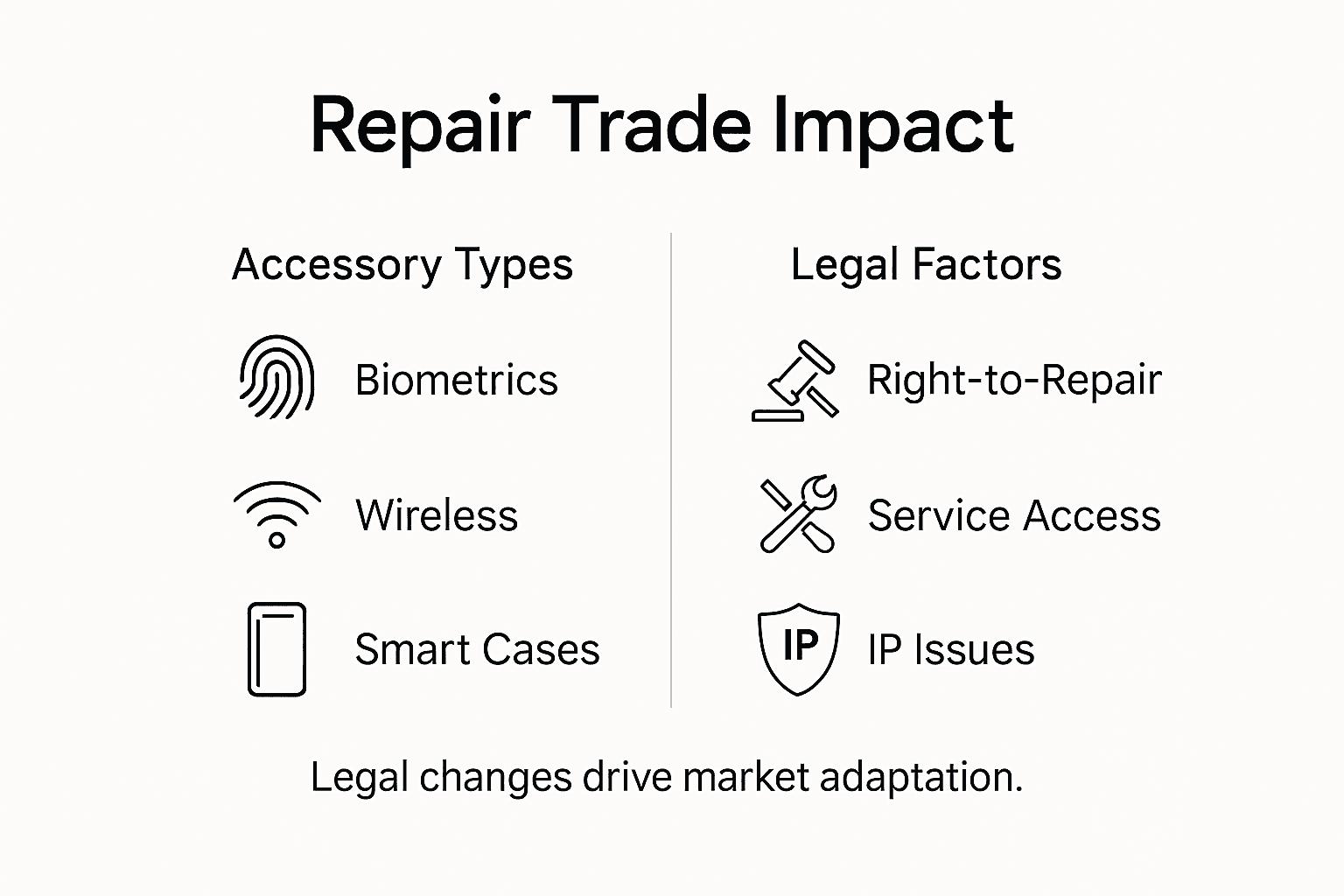
Repairability legislation is gaining momentum, particularly in European markets, where regulatory frameworks are establishing comprehensive guidelines for device maintainability. New EU regulations now mandate manufacturers to provide spare parts and repair information for smartphones and tablets for up to seven years. These developments represent a significant shift towards creating more transparent, accessible repair ecosystems that prioritise consumer choice and environmental sustainability.
The legal developments extend beyond mere component availability, addressing complex intellectual property challenges and technological barriers. Manufacturers are now required to design products with repairability in mind, confronting issues such as software locks, proprietary components, and deliberate design restrictions that historically prevented independent repair. This legislative approach aims to democratise repair processes, reduce electronic waste, and create more competitive markets for repair services and replacement components.
Professional Insight: Continuously update your legal knowledge about right-to-repair regulations to ensure your repair practices remain compliant and commercially competitive.
Challenges, Costs, and Common Mistakes
Global research on mobile phone repair challenges reveals a complex landscape where independent repair shops navigate increasingly difficult market conditions. The mobile accessory repair industry faces significant obstacles, including escalating spare parts costs, intense price competition, and stringent manufacturer restrictions that directly impact profitability and operational sustainability.
Technical competence remains a critical challenge, with repair knowledge gaps emerging as a primary barrier to successful mobile accessory restoration. Consumer and commercial research highlights that limited access to competent repair personnel and insufficient understanding of warranty rights significantly hamper repair success rates. Repair professionals must continuously invest in skill development, staying updated with rapidly evolving device technologies and complex repair methodologies.
Common mistakes in mobile accessory repair often stem from insufficient diagnostic skills, inadequate tool selection, and rushed repair processes. Technicians frequently encounter challenges such as misdiagnosing component failures, using inappropriate replacement parts, and lacking comprehensive understanding of device-specific repair protocols. These errors can lead to catastrophic outcomes, including complete device failure, voided warranties, and potential financial losses for both repair professionals and customers.
Professional Insight: Develop a systematic approach to diagnostics, invest in continuous training, and maintain a comprehensive inventory of high-quality, device-specific replacement components to minimise repair errors and enhance professional credibility.
Stay Ahead with High-Quality Mobile Repair Parts and Accessories
The rapidly evolving mobile accessory landscape presents clear challenges for repair professionals, including the need to master advanced technologies, navigate increasing repair complexities, and embrace sustainable, eco-friendly designs. At Buy2fix, we understand these pain points and provide a comprehensive, professional-focused solution to help you meet the demands of the future repair trade. Our extensive range includes premium mobile phone repair parts such as LCD screens, camera modules, and charging ports designed to support cutting-edge device functionality and facilitate compliance with right-to-repair regulations.
Take control of your repair business today by choosing Mobile Phone Repair Parts and Phone Cases & Accessories crafted for durability and modern requirements. With free UK Mainland shipping, a one-year warranty, and guaranteed quality control, you gain peace of mind and a strong competitive edge. Visit Buy2fix now and equip yourself with the latest components to excel in a fast-changing market before your competitors do.
Frequently Asked Questions
What are the main differences between traditional and modern mobile accessories?
Modern mobile accessories are no longer just about protection and charging; they now offer advanced functionalities such as health monitoring and environmental sensing, making them sophisticated extensions of devices compared to traditional accessories.
How do innovations in mobile accessories affect repairability?
Innovations often lead to increased complexity in design, which can impact repairability. With more sophisticated technologies and components, repairs may require specialised knowledge and tools, making it essential for technicians to stay updated and well-trained.
What role does sustainability play in the future of mobile accessories?
Sustainability is becoming increasingly important, with manufacturers focusing on eco-friendly materials and circular design principles that promote recyclability and reduce electronic waste, influencing both production and repair processes.
How is legislation affecting the mobile accessory repair market?
Legislation, particularly regarding repairability, is evolving to ensure consumers have access to spare parts and repair information. This shift is intended to create a more transparent repair ecosystem and challenges manufacturers to design products with repair in mind.
Recommended
- 7 Top Phone Accessory Trends 2025 for Tech Repair Pros – buy2fix
- 7 Must-Know Latest Mobile Repair Trends 2025 Revealed – buy2fix
- Mobile Phone Repair Basics: Essential Skills and Risks – buy2fix
- 7 Must-Know Latest Smartphone Recycling Facts for Repair Pros – buy2fix
- Was ist Akku-Reparatur? Vollständiger Leitfaden 2025 - accu.blog
Let customers speak for us
item was packaged safely, no damage. it’s now October and since replacing it in January i’ve had no issues.

Great

They had what I was looking for ... ordering was easy, payment was easy, delivery was as promised.
-

Absolutely love this case! Heavy, sturdy and full coverage

Thank You! I really love it! 😊

For Garmin Forerunner 165 20mm Two Color Textured Silicone Watch Band(Teal)

For Samsung Galaxy S26+ 5G R-JUST Sliding Camera Life Waterproof Holder Phone Case(Black)

I ❤️ love it, it's absolutely amazing I'm sooo happy 😊

Great

I saw this item and it was just what I was looking for. I found it here but not in Amazon or e-bay. However, it was in UK, I was surprised to find that they were able to ship it to the US. Excellent company, would do business with again

This is great for when out and about, to sharpen either coloured pencils, or watercolour pencils….would order again.

Great items would bye again

I have purchased several items from this store before. Recently, I encountered an issue with my latest order. After reporting the problem to customer support, they were consistently attentive and made every effort to resolve the situation. Upon investigation, they acknowledged the issue and promptly fixed it. This experience has increased my level of trust in this store.
Thank you so much. I'm so happy.
