

Screen Assemblies: Why Differences Matter for Repairs
Every British repair fan knows the satisfaction of bringing a cracked iPhone or Samsung display back to life with their own hands. Choosing the right screen assembly matters just as much as your skills, shaping both the quality of your work and the happiness of your customers. This guide breaks down important differences between screen types, price choices, and repair steps so you can confidently select the best components and reduce costly mistakes.
Table of Contents
- Screen Assemblies Defined And Explained
- Breakdown Of Common Assembly Types
- Key Features: LCD, OLED, Digitiser Layers
- OEM, Refurbished, And Aftermarket Compared
- Risks, Costs, And Mistakes To Avoid
Key Takeaways
| Point | Details |
|---|---|
| Understanding Screen Assemblies | Screen assemblies are complex components that integrate various technologies, ensuring optimal performance and user safety in electronic displays. |
| Types of Screen Assemblies | Familiarity with assembly types like Chip-On-Glass, Chip-On-Board, and Tape Automated Bonding is crucial for effective repairs and compatibility assessments. |
| Screen Quality Options | Distinguishing between OEM, refurbished, and aftermarket screens is vital for making informed decisions on replacements, considering quality and cost. |
| Common Repair Pitfalls | Technicians should avoid improper handling and preparation to prevent costly damages, ensuring a more successful repair outcome. |
Screen Assemblies Defined And Explained
A screen assembly represents a complex hardware component integrating multiple interconnected elements essential for modern electronic device displays. Unlike simple panels, these assemblies combine intricate technological layers that transform raw visual information into coherent images consumers interact with daily. Screen assemblies feature sophisticated engineering involving precise manufacturing techniques that merge electronic, mechanical, and optical components.
Typically, screen assemblies comprise several critical elements: the LCD panel itself, protective plastic casings, circuit boards, metal framing, and supporting electronic interfaces. The manufacturing process involves meticulous integration where each component must align perfectly to ensure optimal performance. Manufacturers employ both manual craftsmanship and robotic precision to construct these intricate display units, using advanced technologies like RFID tracking to maintain quality control and consistency.
The functional complexity of screen assemblies extends beyond mere visual display. Display Screen Equipment (DSE) guidelines emphasise not just technological performance but also user safety and ergonomic considerations. These assemblies must meet stringent standards addressing factors like radiation emissions, screen brightness, refresh rates, and potential user health impacts during prolonged interactions.
Pro tip: When examining screen assemblies for repair, always inspect the entire integrated unit rather than focusing solely on the visible display panel, as underlying structural and electronic components significantly influence overall functionality.
Breakdown Of Common Assembly Types
Screen assembly technologies represent a diverse landscape of engineering approaches, each with unique characteristics and applications. LCD assembly types demonstrate remarkable variation in design and functionality, with three primary configurations dominating the market: Chip-On-Glass (COG), Chip-On-Board (COB), and Tape Automated Bonding (TAB). These technologies differ significantly in their integration methods, complexity, and performance characteristics.
Chip-On-Glass (COG) assemblies represent a compact solution where the controller integrated circuit (IC) is mounted directly onto the LCD glass substrate. While offering minimal footprint and reduced component count, COG technologies present challenges in precise alignment and complex active area management. Conversely, Chip-On-Board (COB) configurations mount the controller IC on a printed circuit board attached to the glass’s rear, providing more standardised assembly processes and easier manufacturing workflows.
Display technology variations extend beyond assembly techniques, encompassing fundamentally different screen types such as LCD, OLED, and QLED. Each technology employs unique approaches to image generation: LCDs utilise backlighting and liquid crystal layers, while OLED displays feature self-emissive pixels that enable thinner, more energy-efficient designs. These distinctions profoundly impact screen assembly complexity, repair strategies, and overall device performance.
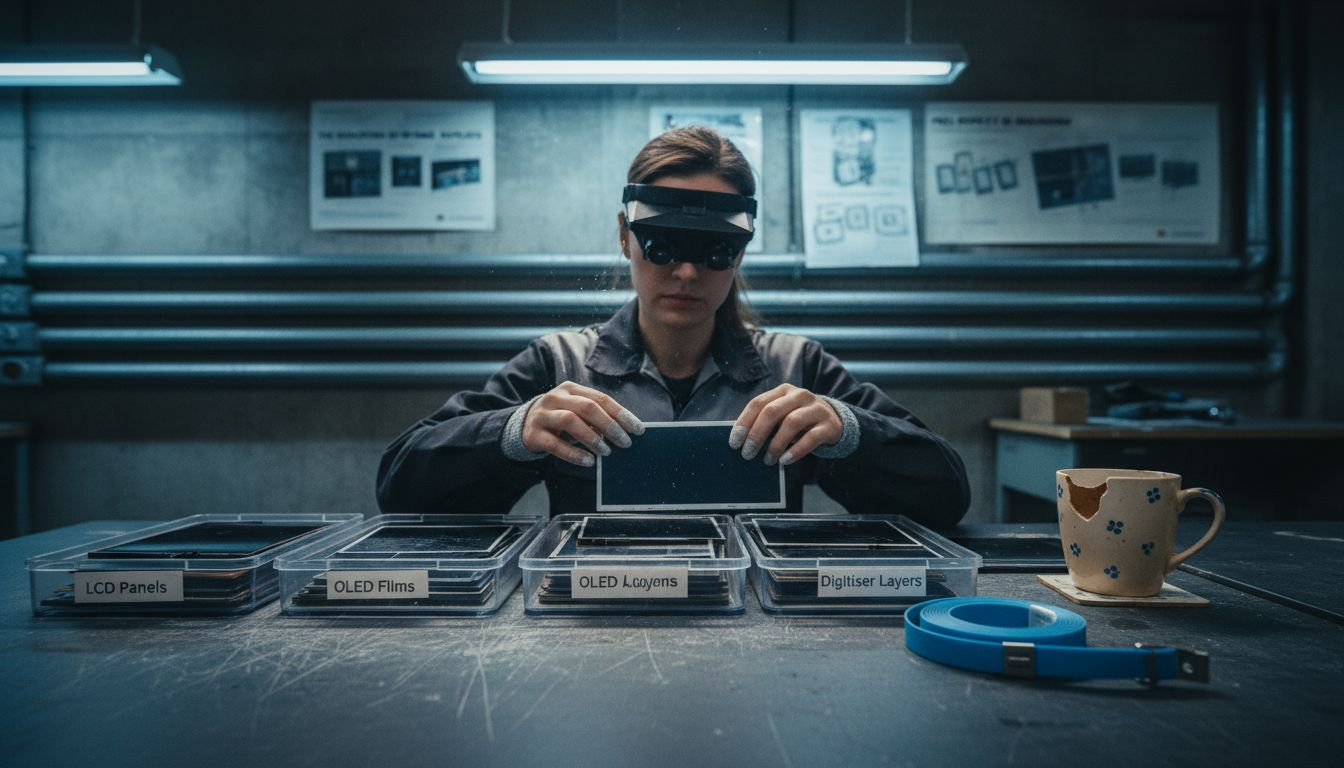
Pro tip: When selecting screen assemblies for repair, carefully assess the specific assembly type and underlying technology to ensure precise compatibility with the target device’s original specifications.
Below is a summary of key differences between common screen assembly types for quick reference:
| Assembly Type | Integration Method | Main Advantage | Repair Challenge |
|---|---|---|---|
| Chip-On-Glass (COG) | IC mounted on glass | Compact size, fewer parts | Delicate alignment required |
| Chip-On-Board (COB) | IC on rear PCB | Easier mass production | Increased assembly depth |
| Tape Automated Bonding (TAB) | Flexible tape connections | Suits curved designs | Tape fragility risk |
Key Features: LCD, OLED, Digitiser Layers
Display technologies represent a complex ecosystem of visual reproduction, with each screen type offering unique performance characteristics. Display technology fundamentals reveal critical distinctions between LCD and OLED screens that significantly impact user experience and repair strategies. LCD displays rely on LED backlighting and liquid crystal layers to generate images, creating a foundational approach to screen design that differs markedly from self-emissive display technologies.
OLED screens revolutionise visual reproduction by employing individually controllable pixels that generate light without external backlighting. This fundamental difference enables superior contrast ratios, deeper blacks, and more energy-efficient performance compared to traditional LCD technologies. Each pixel acts independently, allowing for more nuanced colour reproduction and dramatically reduced power consumption, particularly beneficial for mobile device battery management.
Touch input technologies introduce another critical layer of complexity through digitiser components. Modern capacitive digitisers detect electrical changes when human fingers interact with the screen, translating physical touch into precise digital signals. These sophisticated layers sit atop display technologies, serving as critical interfaces between user input and device processing, with variations including resistive and advanced capacitive designs that enable increasingly complex interaction mechanisms.
Pro tip: When conducting screen repairs, always verify the precise digitiser compatibility alongside display technology to ensure optimal functionality and seamless device performance.
OEM, Refurbished, And Aftermarket Compared
Screen replacement options represent a complex landscape of quality, performance, and cost considerations for repair enthusiasts. Screen quality categories demonstrate significant variations that directly impact device functionality and user experience. Original Equipment Manufacturer (OEM) screens stand as the gold standard, offering precise colour matching, optimal brightness, and guaranteed compatibility with the original device specifications.
Refurbished screens occupy a nuanced middle ground, utilising original components that have been carefully renewed and tested. These options provide a compelling balance between quality and affordability, typically delivering performance close to OEM standards at a reduced price point. Technicians and repair enthusiasts appreciate refurbished screens for their reliability and cost-effectiveness, especially when working with slightly older device models where OEM parts might be challenging to source.
Aftermarket screens represent the most diverse and variable category, ranging from remarkably high-quality third-party productions to budget options with potential performance compromises. These screens are manufactured by independent producers without direct authorisation from the original device manufacturer, presenting both opportunities and risks for repair professionals. While aftermarket screens can offer significant cost savings, they may introduce challenges related to colour accuracy, touch sensitivity, and long-term durability that discerning repair technicians must carefully evaluate.
Pro tip: Always conduct comprehensive testing and compare multiple screen samples before committing to a bulk purchase of aftermarket or refurbished screen assemblies to ensure consistent quality and performance.
The following table compares OEM, refurbished, and aftermarket screen options to help guide replacement decisions:
| Screen Type | Quality Level | Cost Range | Typical Use Case |
|---|---|---|---|
| OEM | Excellent, original fit | Highest | Premium repairs, warranty work |
| Refurbished | Good, tested parts | Moderate | Older models, budget repair |
| Aftermarket | Variable, unapproved | Lowest to mid | Cost-driven, broadest range |
Risks, Costs, And Mistakes To Avoid
Screen repair processes involve numerous potential pitfalls that can significantly impact device functionality and repair costs. Common screen replacement mistakes highlight critical errors that inexperienced technicians frequently encounter. Understanding these risks is essential for preventing costly damage and ensuring successful device restoration.
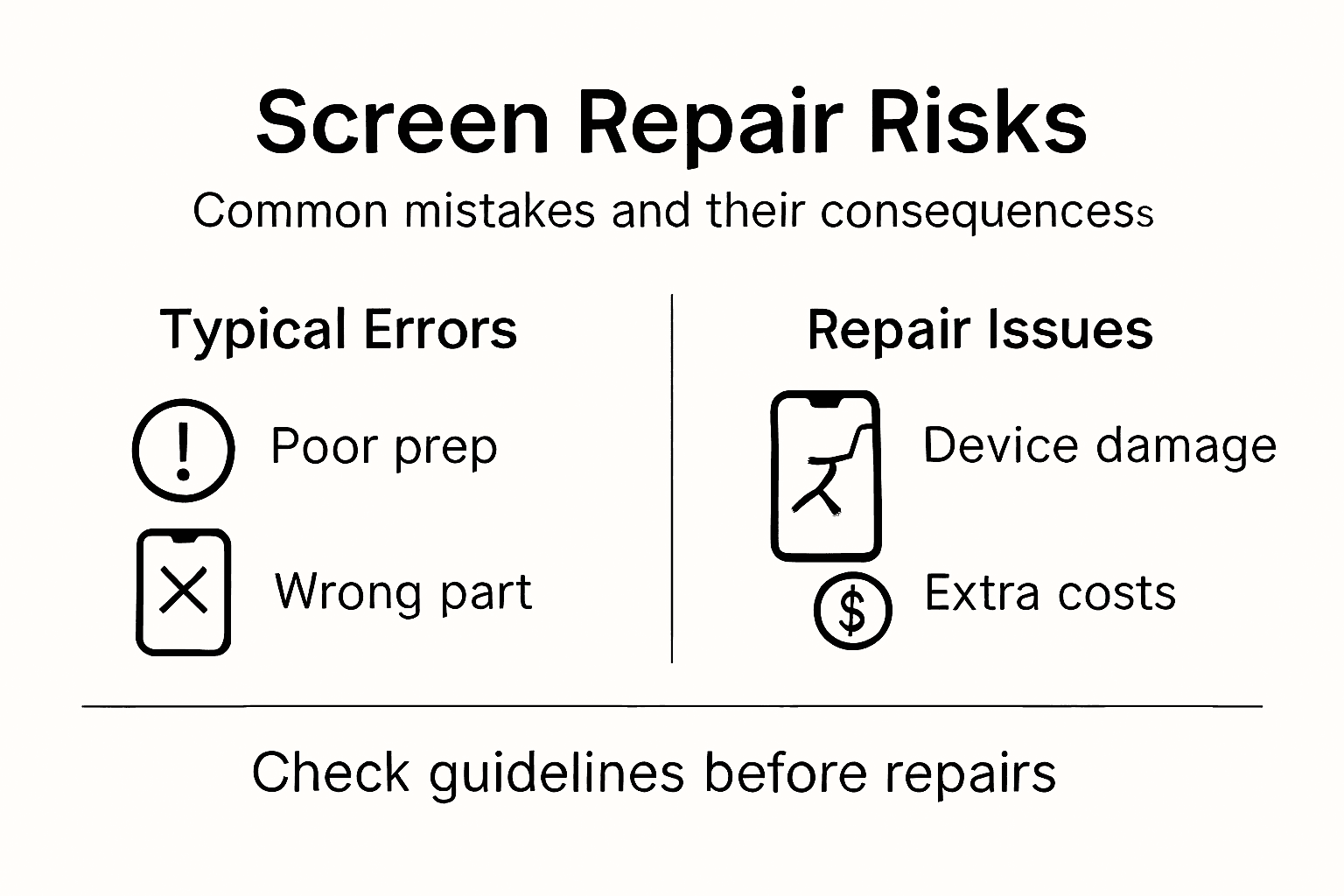
The most fundamental error involves improper preparation and handling of delicate electronic components. Neglecting to disconnect the battery before disassembly can lead to short circuits and permanent device damage. Technicians must exercise extreme caution when manipulating flex cables, which are incredibly fragile and prone to tearing. Excessive heat application during screen removal can compromise internal circuitry, while incorrect adhesive seal replacement compromises device waterproofing and structural integrity.
Financial risks extend beyond immediate repair costs, potentially resulting in complete device replacement if critical mistakes occur. Professional repair technicians recommend a methodical approach that includes careful component tracking, precise tool selection, and comprehensive pre and post-repair testing. Understanding the nuanced differences between screen assembly types, potential compatibility issues, and precise repair techniques can dramatically reduce the likelihood of expensive errors that transform a simple repair into a complete device replacement.
Pro tip: Invest in high-quality specialised tools and create a clean, organised workspace with proper anti-static protection to minimise the risk of accidental component damage during screen repairs.
Choose the Right Screen Assembly Parts for Flawless Repairs
Understanding the intricate differences between screen assembly types like Chip-On-Glass and Chip-On-Board is essential to avoid costly mistakes and ensure seamless device functionality. If you are tackling repairs, selecting compatible LCD screens and display assemblies that meet the precise technology demands of your device can make all the difference. At Buy2fix, we recognise the challenges of sourcing reliable parts that deliver excellent performance without compromising quality or fit.
Explore our expertly curated range of mobile phone repair parts including genuine and premium aftermarket components designed for leading brands like iPhone, Samsung Galaxy, and Huawei. Benefit from our free UK Mainland shipping and trusted quality assurance so every repair you undertake restores your device with confidence. Don’t risk errors with ill-fitting or low-grade screen assemblies. Visit Buy2fix now and find your perfect repair parts to get your device back to optimal condition today. For a focused search, browse our Mobile Phone Repair Parts collection and take the first step toward a professional-grade repair outcome.
Frequently Asked Questions
What is a screen assembly?
A screen assembly is a complex hardware component that combines multiple interconnected elements essential for displays in modern electronic devices, including LCD panels, protective casings, circuit boards, and electronic interfaces.
What are the main types of screen assemblies and their differences?
The primary types of screen assemblies include Chip-On-Glass (COG), Chip-On-Board (COB), and Tape Automated Bonding (TAB). COG involves mounting the controller IC directly on the glass for a compact design, while COB places it on a PCB at the rear, and TAB uses flexible tape connections for curved designs.
Why are OEM screens preferred for repairs?
OEM (Original Equipment Manufacturer) screens are preferred because they offer precise colour matching, optimal brightness, and guaranteed compatibility with original device specifications, ensuring the highest quality and performance for the device.
What common mistakes should be avoided during screen repairs?
Common mistakes during screen repairs include failing to disconnect the battery, mishandling fragile flex cables, applying excessive heat during removal, and improperly sealing adhesive, which can compromise device integrity and lead to costly damage.
Recommended
- Screen Assembly Explained: Impact on Device Repairs – buy2fix
- Choosing Replacement Screens: Ensuring Seamless Device Repair – buy2fix
- Common Screen Replacement Issues – What Every Repairer Faces – buy2fix
- Screen Replacement Best Practices: Ensuring Lasting Repairs – buy2fix
- Step by Step Phone Screen Protection: Keep Your Device Safe – StudioShake
Let customers speak for us
Great

I saw this item and it was just what I was looking for. I found it here but not in Amazon or e-bay. However, it was in UK, I was surprised to find that they were able to ship it to the US. Excellent company, would do business with again

This is great for when out and about, to sharpen either coloured pencils, or watercolour pencils….would order again.

Great items would bye again

I have purchased several items from this store before. Recently, I encountered an issue with my latest order. After reporting the problem to customer support, they were consistently attentive and made every effort to resolve the situation. Upon investigation, they acknowledged the issue and promptly fixed it. This experience has increased my level of trust in this store.
Thank you so much. I'm so happy.

très bien

BC70 Car Bluetooth 5.0 FM Transmitter Radio Adapter Dual Display Wireless Handsfree Call MP3 Music Player QC3.0 PD USB Charger

A quite sturdy cover, if you are looking for full protection and a more business-like style, this cover perfectly fulfills its purpose.
The shipping was fast, and it was delivered in perfect condition.

For LG TV Bluetooth Handheld Infrared Voice Multi-Function Remote Control(AKB75855501)

Tusen tack för bästa service och produkt som jag vänlig önskar dig tack

Works correctly and no issues so far

Took a while to get here but it was all good, watch looks brand new after replacement

What a fantastic 👏🏻 stylish case that has helped my phones temperature in the heatwave!!
Perfect 👌🏻 also it's cool as f##k

I love it!
