

Phone Camera Lens Care: Upgrade Your Photo Quality
Nearly half of british smartphone owners report disappointing photos due to dirty or scratched lenses. Anyone passionate about DIY repairs knows a smudge or speck of dust on a lens can ruin even the best shot. For british enthusiasts who want sharp images and a longer-lasting device, knowing exactly how to care for your phone camera lens makes all the difference. This guide shows how simple habits and the right tools help you avoid frustrating mistakes and truly protect your smartphone’s advanced optics.
Table of Contents
- What Is Phone Camera Lens Care?
- Types Of Smartphone Camera Lenses
- Proper Cleaning Techniques And Tools
- Protecting Your Lens From Damage
- Risks, DIY Errors, And What To Avoid
Key Takeaways
| Point | Details |
|---|---|
| Proper Lens Care | Regular cleaning and protective storage maintain the optical quality of smartphone camera lenses. |
| Types of Lenses | Understanding various lens types helps in selecting the right lens for specific photographic situations. |
| Effective Cleaning Techniques | Use microfibre cloths and specialised cleaning solutions to avoid damaging delicate lens surfaces. |
| Avoid DIY Errors | Steer clear of harsh chemicals and improper cleaning methods to prevent irreversible damage to the lens. |
What Is Phone Camera Lens Care?
Phone camera lens care involves systematic maintenance and protection strategies designed to preserve the optical quality and performance of smartphone camera lenses. Proper lens maintenance ensures that microscopic contaminants do not compromise your device’s imaging capabilities, preventing degradation of photo clarity and resolution.
At its core, phone camera lens care encompasses multiple techniques including regular cleaning, protective storage, and strategic handling to minimise potential damage. Professional photographers and smartphone enthusiasts understand that camera lenses are precision optical instruments requiring delicate treatment. Small particles of dust, fingerprint oils, makeup residue, and environmental pollutants can accumulate on lens surfaces, creating subtle but significant interference with light transmission and image sharpness.
The fundamental components of effective lens care include:
- Gentle cleaning with microfibre cloths
- Using specialised lens cleaning solutions
- Avoiding direct contact with harsh chemicals
- Storing devices in protective cases
- Preventing exposure to extreme temperatures
- Minimising direct sunlight and moisture contact
Effective camera lens maintenance is not merely about aesthetics but about preserving the sophisticated optical technology embedded within modern smartphones. Recommended lens protection strategies can significantly extend the functional lifespan of your device’s camera system.
Pro tip: Invest in a high-quality lens cleaning kit specifically designed for smartphone cameras to ensure safe and effective maintenance without risking accidental damage to delicate lens coatings.
Types Of Smartphone Camera Lenses
Smartphone camera technology has evolved dramatically, with manufacturers integrating multiple lens types to enhance photographic capabilities. Smartphone camera lenses typically include several distinct configurations designed to capture images with varying perspectives, magnifications, and visual characteristics.
The primary lens types found in modern smartphones encompass:
- Wide-angle lenses: Capturing broader scenes with expansive field of view
- Telephoto lenses: Enabling optical zoom and closer image capture without physical movement
- Macro lenses: Facilitating extreme close-up photography with remarkable detail
- Ultra-wide lenses: Providing substantially broader landscape and group scene photography
- Depth-sensing lenses: Supporting portrait mode and computational background blurring
These sophisticated lens assemblies are engineered using compound configurations of soft plastic convex lenses, allowing smartphone manufacturers to deliver diverse photographic capabilities within compact device profiles. Modern smartphones often incorporate multiple prime lenses with different focal lengths, enabling users to switch seamlessly between various photographic styles without carrying additional equipment.
Here’s a summary of common smartphone camera lens types and their typical photographic uses:
| Lens Type | Primary Usage | Typical Scenario |
|---|---|---|
| Wide-angle | Capturing broad scenes | Landscape or architecture |
| Telephoto | Isolating distant details | Wildlife or sports |
| Macro | Close-up fine detail | Flowers or insects |
| Ultra-wide | Expansive group shots | Events or travel |
| Depth-sensing | Creating background blur | Portrait photography |
Understanding these lens types empowers photographers to leverage their smartphone’s full imaging potential, selecting appropriate lens configurations for specific shooting scenarios ranging from sweeping landscapes to intricate macro details.
Pro tip: Experiment with your smartphone’s different lens modes in various lighting conditions to understand their unique strengths and optimal usage scenarios.
Proper Cleaning Techniques And Tools
Maintaining pristine smartphone camera lenses requires a strategic approach that balances thorough cleaning with gentle handling. Proper cleaning technique demands precision, specialised tools, and a methodical process to prevent potential damage to delicate optical surfaces.
Essential tools for effective smartphone camera lens maintenance include:
- Microfibre cloths: Ultra-soft, lint-free cleaning materials
- Specialised lens cleaning solutions: Alcohol-free, designed for optical surfaces
- Compressed air: For removing loose dust particles
- Lens cleaning swabs: Precision cleaning for stubborn microscopic debris
- Protective lens cleaning wipes: Single-use, pre-moistened cleaning options
The recommended cleaning process involves several critical steps to ensure optimal lens preservation. Begin by using compressed air to remove loose dust particles, preventing potential scratching during manual cleaning. Next, gently wipe the lens surface using a clean microfibre cloth, applying minimal pressure and using soft, circular motions. For more persistent smudges, apply a small amount of specialised lens cleaning solution directly to the microfibre cloth rather than onto the lens surface itself.
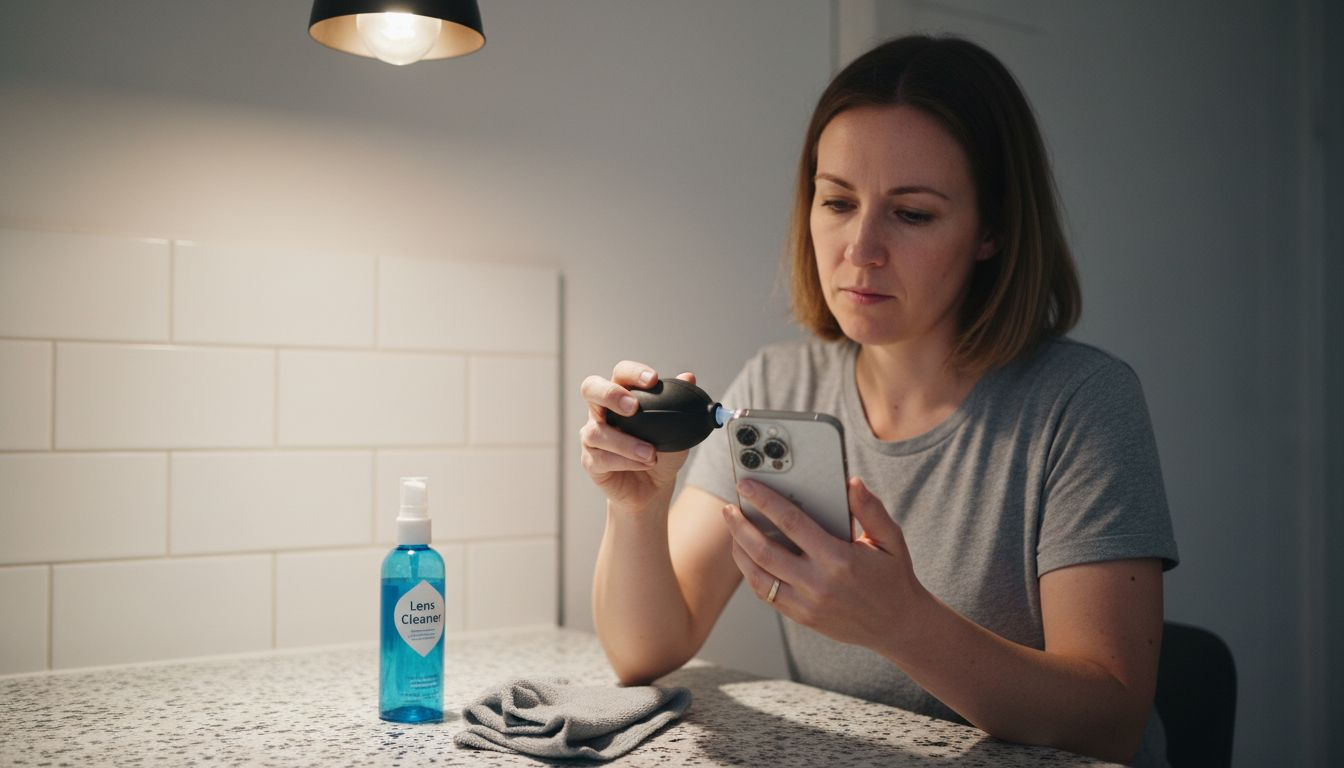
Avoid common mistakes such as using household cleaners, paper towels, or clothing fabrics, which can introduce scratches or leave residue that degrades image quality. Professional photographers and smartphone enthusiasts understand that lens maintenance is a delicate art requiring patience and precision.
For quick reference, here’s a comparison of cleaning tool effectiveness and safety for smartphone camera lenses:
| Cleaning Tool | Effectiveness | Safety for Lens Surface |
|---|---|---|
| Microfibre cloth | Very high | Safe, no scratches |
| Lens cleaning solution | High | Safe if alcohol-free |
| Compressed air | Moderate | Safe if used gently |
| Paper towel | Low | Risks scratches and residue |
| Household chemicals | Very low | Can damage coatings |
Pro tip: Always clean your smartphone camera lens in a well-lit, dust-free environment and store your microfibre cloths in sealed plastic bags to prevent contamination between uses.

Protecting Your Lens From Damage
Smartphone camera lenses represent sophisticated optical technologies that require meticulous protection against potential environmental and physical threats. Lens protection strategies involve a comprehensive approach encompassing physical barriers, careful handling, and proactive maintenance to preserve optical integrity and performance.
Key protective measures for smartphone camera lenses include:
- Protective phone cases: With raised bezels surrounding lens areas
- Dedicated lens covers: Removable protective shields
- Tempered glass lens protectors: Transparent, scratch-resistant films
- Camera lens caps: Removable plastic or silicone protective attachments
- Screen protectors with lens coverage: Comprehensive device protection
Physical device security extends beyond simple protective accessories. Users must develop conscious handling habits that minimise potential lens damage, including avoiding placing devices face-down on rough surfaces, keeping smartphones away from extreme temperature fluctuations, and preventing exposure to dust, moisture, and potential impact zones. Professional photographers and smartphone enthusiasts recognise that prevention represents the most cost-effective approach to maintaining camera lens quality.
Environmental factors pose significant risks to smartphone camera lenses. Sand, dust particles, moisture, and sudden temperature changes can compromise lens coatings and optical performance. Implementing a systematic approach to lens protection involves selecting appropriate protective gear, developing mindful handling techniques, and conducting regular visual inspections to identify potential damage early.
Pro tip: Invest in a high-quality smartphone case with raised lens protection and always store your device in a clean, temperature-controlled environment when not in use.
Risks, DIY Errors, And What To Avoid
Smartphone camera lens maintenance requires nuanced understanding of potential pitfalls that can permanently damage delicate optical surfaces. DIY lens care errors frequently stem from well-intentioned but misguided cleaning techniques that can cause irreversible damage to sensitive camera components.
Common DIY errors to avoid include:
- Using household cleaning chemicals
- Applying direct water or saliva to lens surfaces
- Cleaning with paper towels or rough fabrics
- Applying excessive pressure during cleaning
- Storing devices in high-humidity environments
- Neglecting professional maintenance
Safety protocols for optical component maintenance emphasise the critical importance of using manufacturer-recommended cleaning tools and solutions. Smartphone users often underestimate the complexity of camera lens surfaces, which feature sophisticated optical coatings that can be easily compromised by aggressive or inappropriate cleaning methods. Professional technicians understand that microscopic scratches or chemical interactions can dramatically reduce image quality and overall lens performance.
Risks associated with improper lens care extend beyond aesthetic concerns, potentially leading to complete camera module failure. Moisture intrusion, chemical degradation, and physical abrasion can create permanent optical distortions that render smartphone cameras functionally ineffective. Understanding these risks empowers users to adopt more cautious and precise maintenance approaches that preserve their device’s imaging capabilities.
Pro tip: Create a dedicated lens cleaning kit with manufacturer-approved microfibre cloths and specialised cleaning solutions, and resist the temptation to improvise with household materials.
Elevate Your Smartphone Photography With Professional Lens Care Solutions
Maintaining your phone camera lens is crucial to capturing sharp images and preserving your device’s optical performance. The article highlights common challenges such as dust, scratches, and improper cleaning techniques that degrade image quality. If you want to avoid risks like lens damage and ensure your smartphone camera keeps delivering stunning photos, investing in the right replacement camera lenses and protective accessories is essential.
At Buy2fix, we specialise in supplying high-quality camera lenses and modules that meet the demands of both DIY enthusiasts and professional technicians. Our extensive inventory includes genuine and aftermarket parts for popular brands, ensuring you get the best fit and performance. Protect your investment with our durable phone cases and lens covers, designed to shield fragile optics from scratches and environmental hazards.
Take control of your smartphone photography today by browsing our range of camera lenses and modules. Don’t wait until smudges or scratches ruin your next shot. Visit https://buy2fix.co.uk now to upgrade your lens care kit and enjoy sharper, clearer photos every time.
Frequently Asked Questions
How can I properly clean my smartphone camera lens?
To clean your smartphone camera lens, use a clean microfibre cloth to gently wipe the surface in soft, circular motions. For tougher smudges, you can apply a small amount of specialised lens cleaning solution to the cloth, not directly on the lens.
What tools are recommended for smartphone camera lens care?
Essential tools for smartphone camera lens care include microfibre cloths, specialised lens cleaning solutions, compressed air for dust removal, lens cleaning swabs for detailed cleaning, and pre-moistened lens cleaning wipes for convenience.
What types of smartphone camera lenses are available?
Common types of smartphone camera lenses include wide-angle lenses for expansive scenes, telephoto lenses for close-ups without physical movement, macro lenses for extremely close-up shots, ultra-wide lenses for very broad perspectives, and depth-sensing lenses for portrait effects.
How can I protect my smartphone camera lens from damage?
To protect your smartphone camera lens, use a phone case with raised bezels, consider a tempered glass lens protector, avoid placing your device face-down on rough surfaces, and keep your phone away from extreme temperatures, moisture, and dust.
Recommended
- Phone Camera Lens Repair Guide for DIY and Professionals – buy2fix
- iPhone 12 Camera Glass Cost: Repair and Quality Impact – buy2fix
- iPhone X Camera Problem: Complete Troubleshooting Guide – buy2fix
- 10 Essential Tips for Extend Phone Lifespan Tips – buy2fix
- Samsung Galaxy Camera Lens | High-Quality Photography – StudioShake
Let customers speak for us
I ❤️ love it, it's absolutely amazing I'm sooo happy 😊

Great

I saw this item and it was just what I was looking for. I found it here but not in Amazon or e-bay. However, it was in UK, I was surprised to find that they were able to ship it to the US. Excellent company, would do business with again

This is great for when out and about, to sharpen either coloured pencils, or watercolour pencils….would order again.

Great items would bye again

I have purchased several items from this store before. Recently, I encountered an issue with my latest order. After reporting the problem to customer support, they were consistently attentive and made every effort to resolve the situation. Upon investigation, they acknowledged the issue and promptly fixed it. This experience has increased my level of trust in this store.
Thank you so much. I'm so happy.

très bien

BC70 Car Bluetooth 5.0 FM Transmitter Radio Adapter Dual Display Wireless Handsfree Call MP3 Music Player QC3.0 PD USB Charger

A quite sturdy cover, if you are looking for full protection and a more business-like style, this cover perfectly fulfills its purpose.
The shipping was fast, and it was delivered in perfect condition.

For LG TV Bluetooth Handheld Infrared Voice Multi-Function Remote Control(AKB75855501)

Tusen tack för bästa service och produkt som jag vänlig önskar dig tack

Works correctly and no issues so far

Took a while to get here but it was all good, watch looks brand new after replacement

What a fantastic 👏🏻 stylish case that has helped my phones temperature in the heatwave!!
Perfect 👌🏻 also it's cool as f##k
