

Samsung Water Damage Repair Cost Explained
Over 40 percent of British smartphone owners have experienced worries about water damage, especially with delicate devices like Samsung models. Water may seem harmless, yet even a splash can begin a hidden chain reaction that affects performance in unexpected ways. Understanding the unique risks and silent warning signs of moisture exposure helps British users make smart choices, avoid costly surprises, and protect their devices from damage that might not be covered by warranty.
Table of Contents
- Defining Samsung Water Damage And Its Effects
- Types Of Water Damage Common To Samsung Devices
- How Technicians Diagnose Water-Damaged Samsungs
- Typical Repair Costs And Part Pricing
- Factors That Influence Your Final Bill
- Alternatives To Full Professional Repair
Key Takeaways
| Point | Details |
|---|---|
| Understanding Water Damage | Samsung devices can suffer from water damage even with water-resistant claims, necessitating swift preventive actions. |
| Types of Water Damage | Water damage can be immediate or progressive, with various types including saltwater, fresh water, humidity, and condensation impacts. |
| Diagnosis is Critical | Effective diagnosis of water damage requires advanced techniques, including visual inspections and electrical tests to assess damage levels. |
| Repair Costs Vary | Repair expenses can range dramatically based on the extent of damage and involved repair complexity, emphasising the importance of accurate diagnostics. |
Defining Samsung Water Damage and Its Effects
Water damage represents a complex challenge for modern smartphones, particularly for Samsung devices that often blend sophisticated design with advanced technological features. While many Samsung models boast impressive water-resistant technologies, the reality of liquid exposure is far more nuanced than simple marketing claims suggest.
Understanding water damage requires recognising that liquid intrusion can occur through multiple pathways, even in devices with apparent protective ratings. Liquid ingress can compromise internal electronic components through microscopic gaps, ports, or structural weaknesses. According to research evaluating smartphone water resistance, the limitations of ingress protection standards mean that no device is truly impervious to moisture damage. Water molecules can penetrate seemingly sealed environments, initiating corrosive processes that gradually degrade critical electronic circuits.
The effects of water damage manifest through several progressive stages of device deterioration. Initial exposure might trigger immediate short-circuiting, while prolonged moisture contact leads to gradual oxidation and component degradation. Typical symptoms include:
- Intermittent screen responsiveness
- Battery performance degradation
- Speaker or microphone malfunctions
- Unexpected system shutdowns
- Corrosion of internal metal connections
Most critically, water damage often progresses silently, with visible symptoms emerging weeks or months after initial exposure. Samsung’s replacement warranty guidelines typically do not cover liquid damage, making prevention and rapid response crucial for device longevity.
Types of Water Damage Common to Samsung Devices
Samsung smartphones encounter diverse water damage scenarios that extend far beyond simple liquid exposure. Consumer testing has revealed that advertised water resistance can be misleadingly optimistic, with many devices failing comprehensive water immersion tests. Water damage manifests through multiple critical pathways, each presenting unique challenges for device integrity and functionality.
The primary categories of water damage in Samsung devices include immediate and progressive liquid intrusion types. Immediate liquid damage occurs when substantial moisture instantly compromises electronic circuits, potentially causing immediate short-circuiting or component failure. In contrast, progressive liquid damage develops subtly, with moisture gradually corroding internal components over weeks or months. Research suggests that even minimal moisture exposure can trigger gradual degradation mechanisms that compromise device performance.
Specific types of water damage unique to Samsung devices include:
- Saltwater Corrosion: Particularly destructive, causing rapid oxidation of metal connections
- Fresh Water Infiltration: Slower but equally damaging, creating mineral deposits on circuitry
- Humidity-Based Damage: Microscopic moisture accumulation leading to internal component deterioration
- Condensation Damage: Temperature variations causing unexpected moisture condensation within device internals
Most critically, moisture-related device failures can occur through seemingly imperceptible entry points. Charging ports, speaker grilles, and microphone openings represent primary vulnerability zones where liquid can penetrate device internals, initiating progressive damage mechanisms that may not manifest immediately.
How Technicians Diagnose Water-Damaged Samsungs
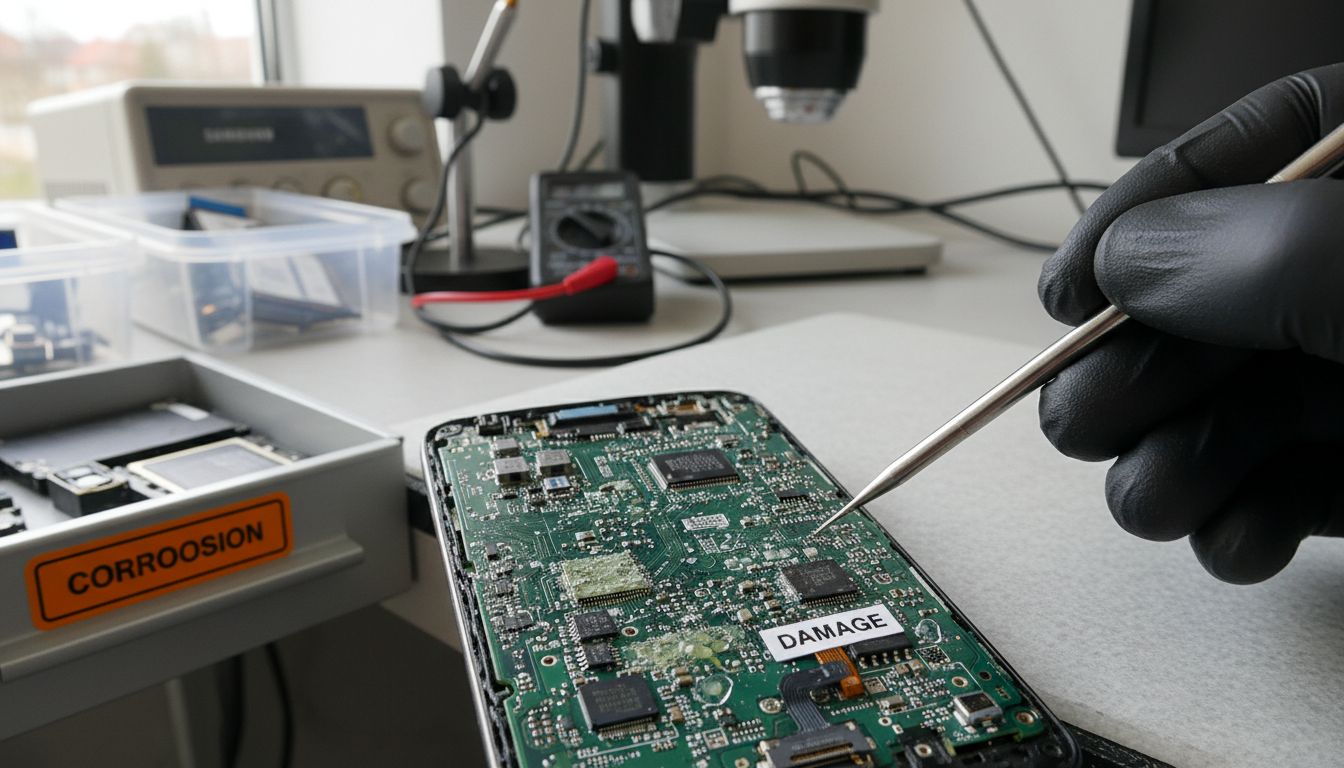
Diagnosing water damage in Samsung devices requires a sophisticated, multi-stage forensic approach that goes far beyond visual inspection. Advanced diagnostic techniques enable technicians to uncover the intricate ways moisture compromises electronic systems, revealing damage that might remain invisible to untrained observers.
Technicians employ a comprehensive diagnostic protocol that begins with visual and electrical assessments. Initial diagnostic steps involve carefully examining liquid contact indicators (LCIs), which change colour when exposed to moisture. They then conduct electrical continuity tests, measuring resistance across circuit boards to identify potential short-circuits or component degradation. Thermal imaging technology plays a crucial role, allowing technicians to detect subtle temperature variations that might indicate internal corrosion or electrical irregularities.
The diagnostic process typically involves several critical examination techniques:
- Visual Inspection: Checking for mineral deposits, oxidation, and discolouration
- Electrical Resistance Testing: Measuring current flow through critical components
- Microscopic Examination: Identifying microscopic corrosion and mineral buildup
- Component-Level Diagnostics: Isolating and testing individual electronic modules
- Functional Performance Assessment: Evaluating overall device responsiveness
Repair tool expertise becomes paramount during these intricate diagnostic procedures. Technicians must possess specialised equipment and profound understanding of Samsung device architectures to accurately determine the extent of water-induced damage, distinguishing between repairable and irretrievably compromised devices.
Typical Repair Costs and Part Pricing
Water damage repair costs for Samsung devices vary dramatically, with comprehensive research revealing price ranges spanning from £50 to over £500 depending on the severity of damage. Repair complexity plays a critical role in determining final pricing, with technicians assessing multiple factors that influence overall restoration expenses.
The pricing structure for Samsung water damage repairs typically breaks down across several diagnostic categories. Minor liquid exposure might require relatively inexpensive component cleaning or partial replacement, costing between £75 and £150. Moderate damage involving circuit board repairs or partial component replacement can escalate quickly, ranging from £200 to £350. Severe water damage requiring comprehensive motherboard reconstruction or complete device replacement potentially reaches £400 to £600, depending on the specific Samsung model and extent of internal corrosion.
Key factors influencing repair pricing include:
- Device model and age
- Extent of internal component damage
- Required replacement part specifications
- Labour complexity of repair procedure
- Warranty status and potential manufacturer coverage
Screen repair cost considerations intersect significantly with water damage assessments, as moisture intrusion frequently compromises display electronics. Professional technicians conduct meticulous diagnostics to provide accurate pricing, recognising that each water-damaged Samsung device presents unique restoration challenges and potential complications.
Factors That Influence Your Final Bill
Research into mobile device repairs reveals a complex ecosystem of factors that dramatically impact water damage repair costs for Samsung smartphones. Repair complexity extends far beyond simple component replacement, involving intricate diagnostics and specialised technical expertise that significantly influence the final billing structure.
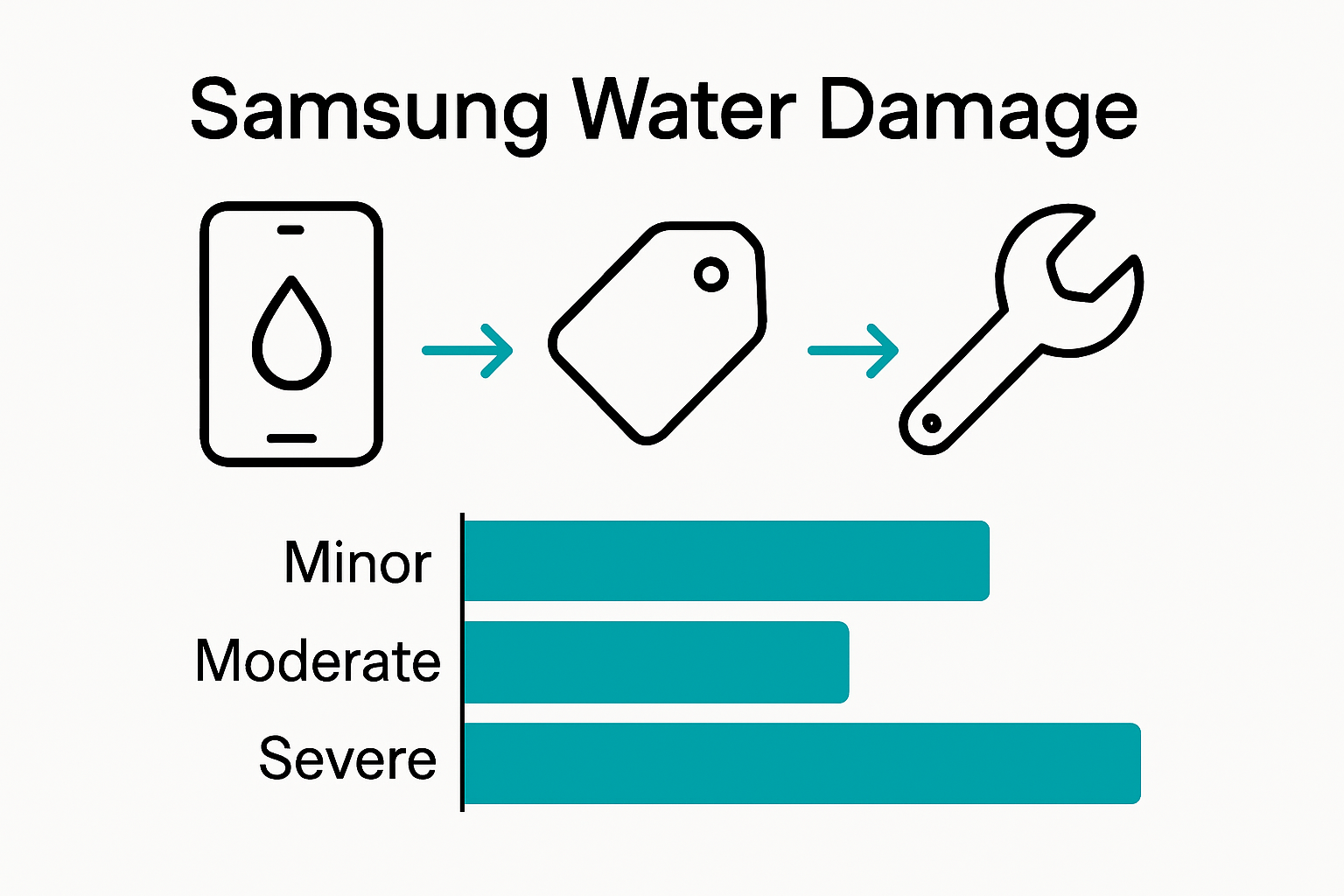
The primary determinants of repair expenses encompass multiple technical and procedural dimensions. Device age plays a critical role, with older Samsung models potentially requiring more labour-intensive restoration techniques. Damage severity creates substantial price variations, ranging from minor moisture exposure requiring basic cleaning to comprehensive system reconstruction. Professional technicians must meticulously evaluate internal component degradation, electrical system integrity, and potential long-term performance implications when calculating repair estimates.
Critical factors affecting repair pricing include:
- Model Specification: Different Samsung series have varying component costs
- Moisture Penetration Level: Extent of internal system contamination
-
Component Replacement Requirements
- Motherboard reconstruction
- Circuit board repair
- Individual component replacement
- Diagnostic Complexity: Time and expertise needed for thorough assessment
- Warranty Status: Potential manufacturer coverage implications
Phone screen repair considerations intersect significantly with water damage assessments, as moisture intrusion frequently compromises multiple electronic systems simultaneously. Professional repair centres recognise that each water-damaged Samsung device represents a unique technical challenge, requiring personalised diagnostic approaches and precision restoration techniques.
Alternatives to Full Professional Repair
Exploring alternative repair strategies offers Samsung device owners potential cost-saving options beyond traditional professional repair services. DIY repair approaches require careful consideration, with significant risks and potential rewards that demand thorough understanding and technical competence.
Initial self-intervention techniques can mitigate water damage progression, though they demand precision and knowledge. Immediate steps like powering off the device, removing the battery (if possible), and carefully drying external surfaces can potentially prevent further moisture intrusion. Emergency interventions might include using desiccant materials, silica gel packets, or controlled ambient drying techniques to extract moisture before permanent damage occurs.
Alternative repair strategies include:
-
Rice Drying Method:
- Place device in uncooked rice container
- Ensures moisture absorption
- Works best for minimal liquid exposure
-
Controlled Air Drying:
- Use fan or gentle room temperature
- Avoid direct heat sources
- Patience is crucial
-
Component-Level Cleaning:
- Isopropyl alcohol for gentle circuit cleaning
- Requires technical knowledge
-
Partial Component Replacement:
- Replacing specific damaged components
- More cost-effective than full device replacement
DIY repair approaches demand technical understanding and inherent risks. Professional consultation remains recommended for complex water damage scenarios, particularly with sophisticated Samsung models featuring intricate electronic architectures.
Protect Your Samsung Investment with Quality Repair Parts Today
Water damage to your Samsung device can cause complex, costly issues such as motherboard corrosion, screen faults, and charging port failures. This article highlights how even minor moisture exposure may lead to progressive damage that is difficult to spot early but expensive to fix later. If you face unexpected repair bills or want to avoid the frustration of prolonged malfunctions, sourcing reliable replacement parts is a vital step towards restoring your device’s performance.
At Buy2fix, we offer a wide range of high-quality Samsung repair components including LCD screens, charging ports, motherboard parts, and connectors to help you tackle water damage with confidence. Whether you are a DIY enthusiast or a professional technician, our cost-effective parts come with rigorous testing, a one-year warranty, and free UK mainland shipping for peace of mind. Don’t let water damage drain your wallet or patience – act now to repair your Samsung efficiently using genuine or best quality aftermarket components.
Explore our mobile phone repair parts for Samsung and other brands to find exactly what your device needs. Take the first step towards a fully functional Samsung device and avoid escalating repair costs by visiting us today.
Frequently Asked Questions
What are the typical costs for repairing water damage in Samsung devices?
Repair costs for water damage in Samsung smartphones typically range from £50 to over £500, depending on the severity of the damage and necessary repairs.
What factors influence the final repair bill for water-damaged Samsung smartphones?
Several factors influence repair costs, including the model and age of the device, the extent of internal damage, the complexity of the repair process, and whether any warranty coverage applies.
How do technicians diagnose water damage in Samsung devices?
Technicians diagnose water damage through a combination of visual inspections, electrical resistance testing, microscopic examinations, and functional performance assessments to evaluate the extent of the damage accurately.
Are there DIY methods for addressing water damage in Samsung devices?
Yes, DIY methods include powering off the device, using desiccants like rice or silica gel, and carefully drying components with isopropyl alcohol. However, these methods require caution and a certain level of technical knowledge.
Recommended
Let customers speak for us
Well made part very strong easy to fit great value for the money

Well packed, with fast shipping :)

Exactly what the doctor ordered…great color, comfort, and durability. Trust this watch band!

Brilliant strap, second purchase, bought bracelet before. Excellent value. Thank you

Great item for splitting your Audio signal

Outstanding product!
Next level customer service.

Very satisfied but the delivery needs to get more faster...

Good price,quick delivery

Best phone case ever! This is my second one as I broke my first. Would defo recommend

Great fitting Apple Watch bands

For Apple Watch Ultra 3 / 2 / 1 49mm RedPepper Armor Metal Case Integrated Silicone Watch Band(Steel Black White)

Good price and quick postage

Perfect fit.

Absolutely necessary

Second Purchase and still a very happy customer. Keep up the good work.
